World Center for Strategic Studies
From closed analysis to public debate
- MONTH
- YEAR

NATO’s Ankara Bargain: Europe Pays Up, America Steps Back
OSW’s analysis turns the Ankara NATO summit into a hard lesson in burden shifting.
Europe and Canada arrived with more spending, new procurement, bigger industrial plans and a promise to carry more of the continent’s defence.
Donald Trump got the show of allied mobilisation he wanted.
But the summit did not fix the transatlantic rupture.
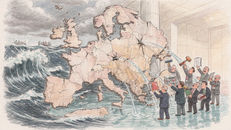
It confirmed the new reality: Europe is being pushed from loyal junior partner to first-line security provider.
Trump gets his deal
The summit followed a familiar survival tactic.
Allies stressed higher budgets, contracts, production lines and support for Ukraine, giving Washington a success story to claim. That helped defuse tensions after US pressure over Greenland and frustration with European support for America’s Iran operation.
But the relief is thin. Trump still criticised allies, and Washington is preparing to reduce the forces and key capabilities assigned to Europe’s defence.
That is the real message behind the smiles: NATO unity now comes with a withdrawal notice.
Europe spends more – but unevenly
The numbers are bigger than before.
European allies and Canada raised defence spending by 19% in 2025, and spending for 2022–2026 is up almost 120%. NATO’s 5% of GDP target by 2035 has turned from fantasy into the new benchmark.
But the burden is badly uneven. The Baltic Sea region, plus the Netherlands and the UK, carries a huge share of European military spending. States closer to Russia are moving faster. Others still lag behind, constrained by budgets, politics and softer threat perceptions.
The alliance is mobilising, but not at the same speed.
The US gap must be filled
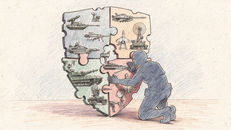
The summit’s procurement push shows Europe trying to cover the holes America may leave.
New multinational fleets of tankers, transport aircraft, maritime surveillance drones and airborne early-warning aircraft are meant to replace or reinforce the enablers Europe has long taken from the US toolbox.
That matters because modern war is not fought by tanks and infantry alone. It needs refuelling, surveillance, command systems, air defence, drones and deep strike.
Europe is finally buying the backbone. The question is whether it can buy it fast enough.
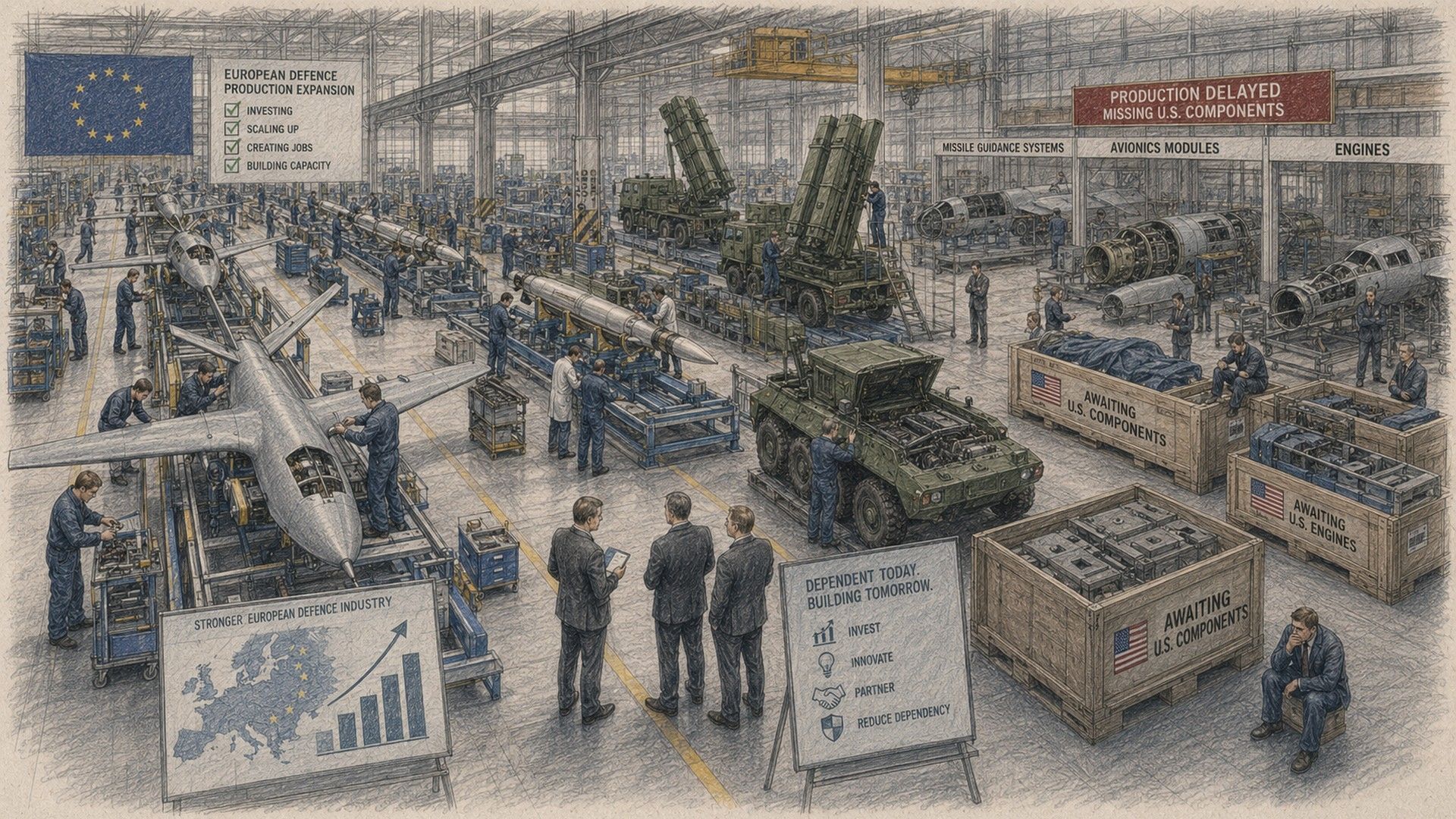
Industry becomes the battlefield
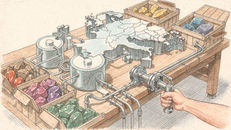
Ankara was not just a summit. It was a defence-industry marketplace.
The plans included NATO Drone Edge, a $40 billion counter-drone push, more trained drone operators, new Patriot missile purchases, European PAC-3 maintenance, ATACMS production in Germany and Barracuda-500 cruise missile assembly in Poland.
This is the new NATO 3.0 logic: deterrence depends on factories, supply chains and finance as much as troop numbers.
But it also exposes the weakness. Europe still needs US technology, US missiles and US industrial partners to close critical gaps.
Ukraine gets promises – and a warning
The summit was good news for Kyiv on paper.
Europe secured military assistance funding for 2026–2027 and lifted annual support from €40 billion to €70 billion, helped by an EU loan to Ukraine.
But the PURL mechanism tells a harsher story. It is vital for buying US weapons for Ukraine, including air-defence interceptors and HIMARS missiles. Yet pledges are still lagging far behind the 2026 target.
Europe wants to be Ukraine’s main backer. It must now prove it can fund that role without heroic last-minute scrambling.
The eastern flank moves first
The north-eastern flank remains the sharp edge of the alliance.
Command changes for Estonia, Latvia, Lithuania and northern Poland, Canada’s new role in Multinational Division North, stronger Baltic air defence arrangements and an extension of NATO’s fuel pipeline system all point in one direction.
The countries nearest Russia are no longer waiting for theory. They are building the practical machinery of defence.
This is where European leadership will be judged first.
Where this leaves Europe: The handover has begun, and excuses are shrinking.
OSW’s message is stark. The Ankara summit showed a Europe trying to look ready for a more European-led NATO, while still leaning on American weapons, technology and political tolerance.
The alliance has not broken. But the old bargain has changed.
Europe got through Ankara by offering Trump money, contracts and mobilisation. Next time, it may have to offer something harder: actual military independence in the field.