World Center for Strategic Studies
From closed analysis to public debate
- MONTH
- YEAR

Europe’s Engine Trouble: France and Germany Still Cannot Deliver
Ifri’s briefing warns that the Franco-German reset is already running into hard limits.
The arrival of Friedrich Merz in Berlin and the Toulon ministerial council were meant to revive Europe’s core political machine.
But the promise has only partly turned into action.
Since early 2026, Paris and Berlin have been hit by short-term crises and deeper disagreements over priorities, methods and strategic culture.
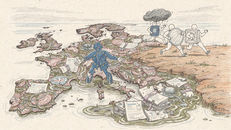
For Europe, the danger is obvious: sovereignty cannot be built if its two biggest drivers keep stalling.
The reset stalls
The Franco-German relationship was supposed to move from tension to delivery.
Instead, Ifri describes a partnership that has improved in tone but still lacks enough operational force. The rituals are back. The meetings continue. The declarations sound familiar.
But Europe does not need another ceremony. It needs decisions, timelines and mechanisms that force follow-through.
Paris and Berlin still pull apart
The problem is not one bad meeting or one awkward dispute.
France and Germany often start from different instincts. Paris thinks in terms of strategic autonomy, state direction and military power. Berlin is more cautious, more procedural and often more attached to fiscal restraint, coalition management and transatlantic reassurance.
Those differences can be managed. But pretending they do not exist only delays the argument – and makes Europe weaker when the next crisis arrives.
Defence cannot wait
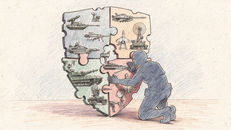
Ifri puts defence at the heart of European sovereignty, and that is where the pressure is harshest.
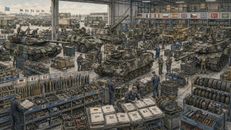
Russia’s war, US unpredictability and the demand for higher European responsibility have made Franco-German hesitation more costly. Europe needs capabilities, procurement, industrial scale and a clearer defence agenda.
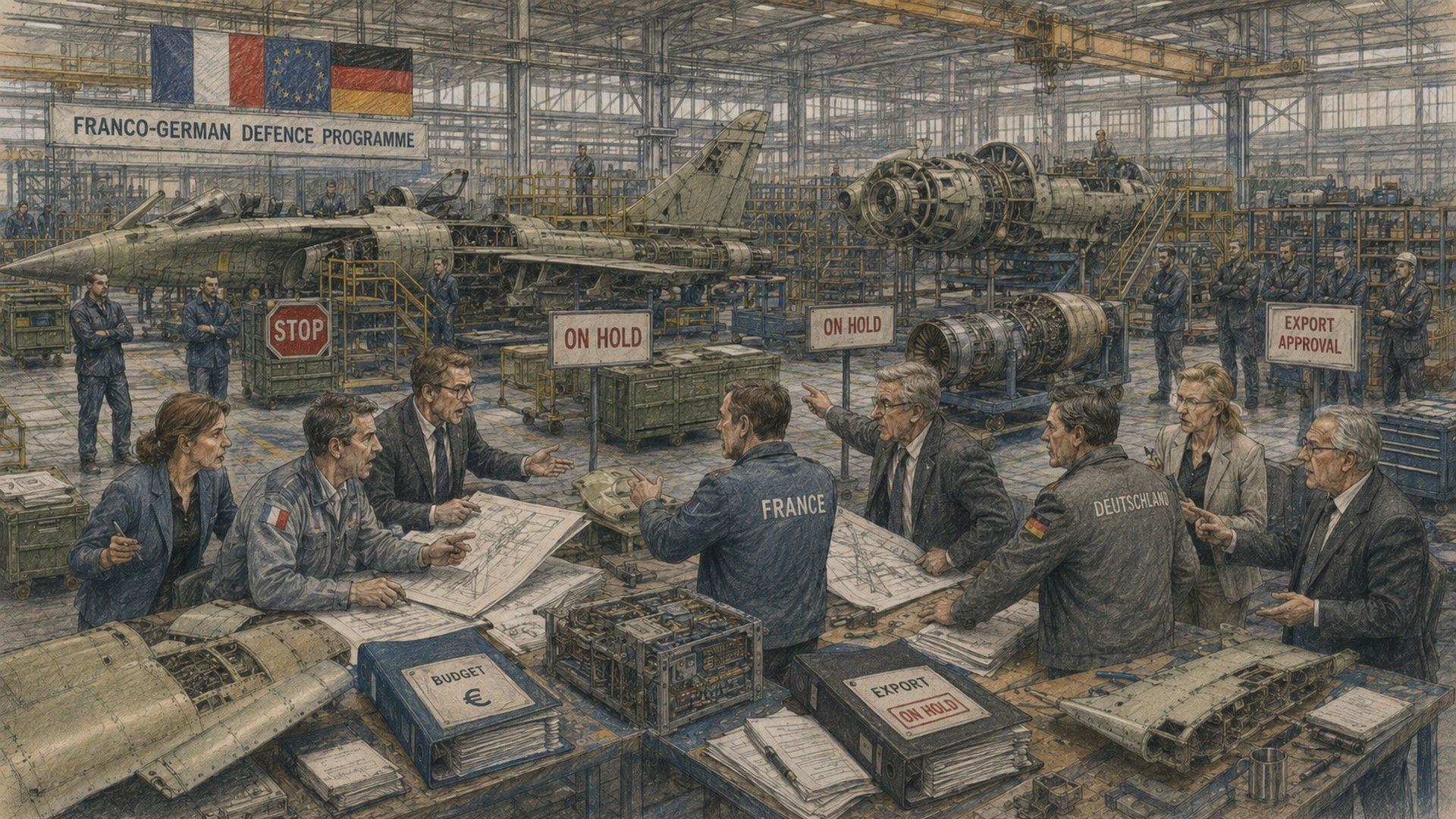
But Franco-German defence cooperation keeps colliding with old problems: leadership, workshare, export rules, funding and strategic mistrust. Europe cannot afford flagship projects that turn into diplomatic stress tests.
Digital power is another fault line
The briefing also points to digital sovereignty as a priority.
That matters because Europe’s dependence is no longer only about tanks, gas or supply chains. It is also about cloud systems, data, artificial intelligence, platforms, semiconductors and the rules that shape them.
France and Germany can either build a practical digital agenda together or watch Europe remain squeezed between American tech giants and Chinese industrial scale. The room for slow thinking is shrinking.
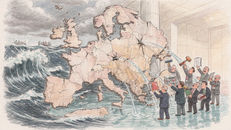
Enlargement raises the bill
Ifri’s assessment links the Franco-German tandem to EU reform and enlargement.
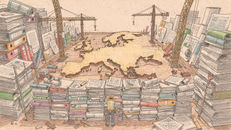
That is where the politics get even harder. Bringing in new members, especially in a more dangerous geopolitical environment, demands institutional reform, financial choices and a clearer division of power inside the EU.
France and Germany both say Europe must adapt. But adaptation costs money, influence and national comfort. Without a serious Franco-German bargain, enlargement risks becoming another noble promise trapped in EU machinery.
Process is not leadership
The briefing’s practical demand is simple: the Franco-German Council of Ministers must stop being a ritual and become a steering tool.
That means fewer priorities, clearer governance, measurable targets and monitoring that exposes failure rather than hides it. Paris and Berlin need to choose the files that matter most and force decisions through.
Europe’s problem is not a shortage of communiqués. It is a shortage of execution.
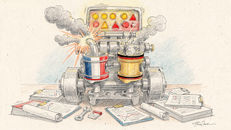
The verdict: Europe’s engine is misfiring under pressure.
Ifri’s warning is sober but sharp. France and Germany remain indispensable to European sovereignty, but indispensability is not the same as effectiveness.
The partnership can still drive Europe forward, especially on defence, digital power, enlargement and institutional reform. But only if it stops treating disagreement as something to postpone.
Europe does not need a symbolic couple. It needs a working engine.