World Center for Strategic Studies
From closed analysis to public debate
- MONTH
- YEAR

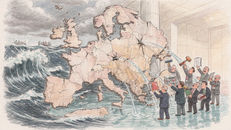
Europe’s China Trap: Fight Now, or Lose More Later
IPQ’s commentary gives Brussels a bleak choice on China.
Europe wants to de-risk, fix trade imbalances and avoid a trade war all at once.
That comfort zone is collapsing.
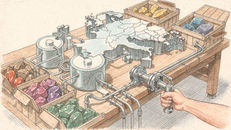
Beijing is not waiting politely while the EU maps supply chains, checks exposure and looks for alternative suppliers.
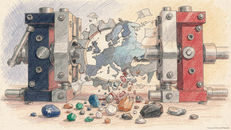
The warning is sharp: China is now trying to block Europe’s escape routes before Europe has built the strength to use them.
Europe wants time it may not have
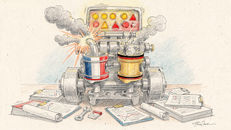
The EU has two goals that sound compatible but pull in different directions.
De-risking means reducing dangerous dependence on China in areas such as critical minerals, chemicals, active pharmaceutical ingredients, batteries and clean technology. Rebalancing means confronting Chinese subsidies, overcapacity and dumping.
Both matter. But they do not work on the same clock. De-risking takes years. Rebalancing can trigger retaliation now.
Brussels must decide what the fight is for
The commentary’s central point is blunt: Europe cannot launch economic measures against China without knowing the desired outcome.
If the aim is de-risking, barriers should buy breathing space for supply-chain mapping, alternative suppliers and domestic capacity. If the aim is rebalancing, success is measured by fairer trade flows, better market access and less distortion.
Confusing the two is dangerous. Europe could provoke Beijing, absorb the pain and still fail to become more resilient.
Beijing is locking the exits
China’s new countermeasures make Europe’s position worse.
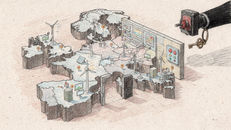
Recent State Council decrees put supply chains into the national security box and push back against foreign sanctions and export controls. That means routine de-risking steps can become legally risky inside China.
Mapping supply chains can be treated as hostile investigation. Complying with EU or US rules can trigger liability. Moving production can be framed as a threat to Chinese security.
That is not just retaliation. It is exit control.
A tough new tool may still miss the target
The EU is considering a stronger trade instrument, something closer to the US Section 301 model.
On paper, it could let Brussels target systemic distortions in sectors such as chemicals, machinery, semiconductors, batteries and clean technology without proving injury case by case.
That looks muscular. But the commentary warns it may be built for rebalancing, not de-risking. Tariffs can punish overcapacity. They do not automatically help companies map suppliers, shift production or survive Chinese legal pressure.
Washington makes Europe lonelier
The United States no longer looks fully committed to a joint rebalancing agenda against China.
That makes Europe’s task harder. Collective action is weaker just as Beijing becomes more willing to use market access, regulation and legal pressure as weapons.
Europe may have to act with partners where possible and alone where necessary. But delay disguised as unity would be the worst option.
China is not Europe’s only excuse
The article is careful not to turn China into the scapegoat for every European weakness.
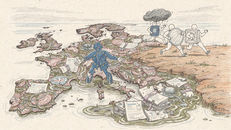
Europe’s competitiveness problem is also home-made. Innovation exists, but scale is missing. The single market still does not give European companies enough room to grow into global giants.
Even a better China policy will not fix Europe’s internal failures. De-risking cannot replace integration. Rebalancing cannot replace scale.
The ugly reality: China is closing Europe’s room for manoeuvre.
IPQ’s message is unforgiving. Europe cannot keep postponing hard choices while Beijing makes de-risking harder, costlier and more dangerous.
The EU needs resilience first, but it may not have the luxury of waiting for perfect resilience before acting.
China will not passively accept Europe’s escape plan. If Brussels keeps hesitating, the exits may be locked before Europe reaches them.