World Center for Strategic Studies
From closed analysis to public debate

- MONTH
- YEAR

Europe’s American Shield Problem: Trump Bluffs, Europe Hides
War on the Rocks delivers a ruthless twist on the usual NATO panic.
The problem, it argues, is not that Trump is truly abandoning Europe.
It is that he threatens withdrawal, extracts spending pledges and arms purchases, then leaves the basic US security guarantee in place.
For Europe, that is a dangerous comfort blanket.
It lets leaders promise rearmament while still depending on Washington to do the hard parts of defense.
Trump talks withdrawal – then bargains
The commentary says Trump’s Europe policy is often misunderstood as isolationism.
It is not clean retrenchment. It is a shakedown model: threaten troop cuts, punish disloyal allies, demand higher spending and US weapons purchases, then preserve enough American presence to claim victory.
That may look tough. But the paper calls it strategically weak. It keeps America entangled and keeps Europe dependent.
Europe buys time again
European leaders have learned how to survive this game.
They offer big NATO pledges, promise higher defense spending and buy American kit. In return, they try to keep US forces in Europe and wait out Trump in the hope that the old transatlantic habit returns.
That is the ugly bargain. Europe talks about responsibility while quietly clinging to the American backstop.
The spending targets may be theatre
The piece is scathing about NATO’s new numbers.
Spending 3.5 percent of GDP on defense and another 1.5 percent on defense-related infrastructure sounds dramatic. But pledges are not capabilities.
Governments can delay, fudge, reclassify infrastructure and split money into small national programs that do little to create a serious European fighting force. Even when budgets rise, fragmentation can swallow the gain.
Russia is not the excuse
The commentary’s most provocative argument is that Washington should not stay in Europe because of inflated fears about Russia.
Russia has been bloodied in Ukraine, burned through equipment and exposed deep military weaknesses. The authors argue that Moscow is unlikely to risk direct war with NATO, especially under the shadow of nuclear escalation.
They do not deny danger. They deny that Europe needs more than 80,000 US troops to handle it.
Europe’s weakness is real
The paper does not pretend Europe is ready.
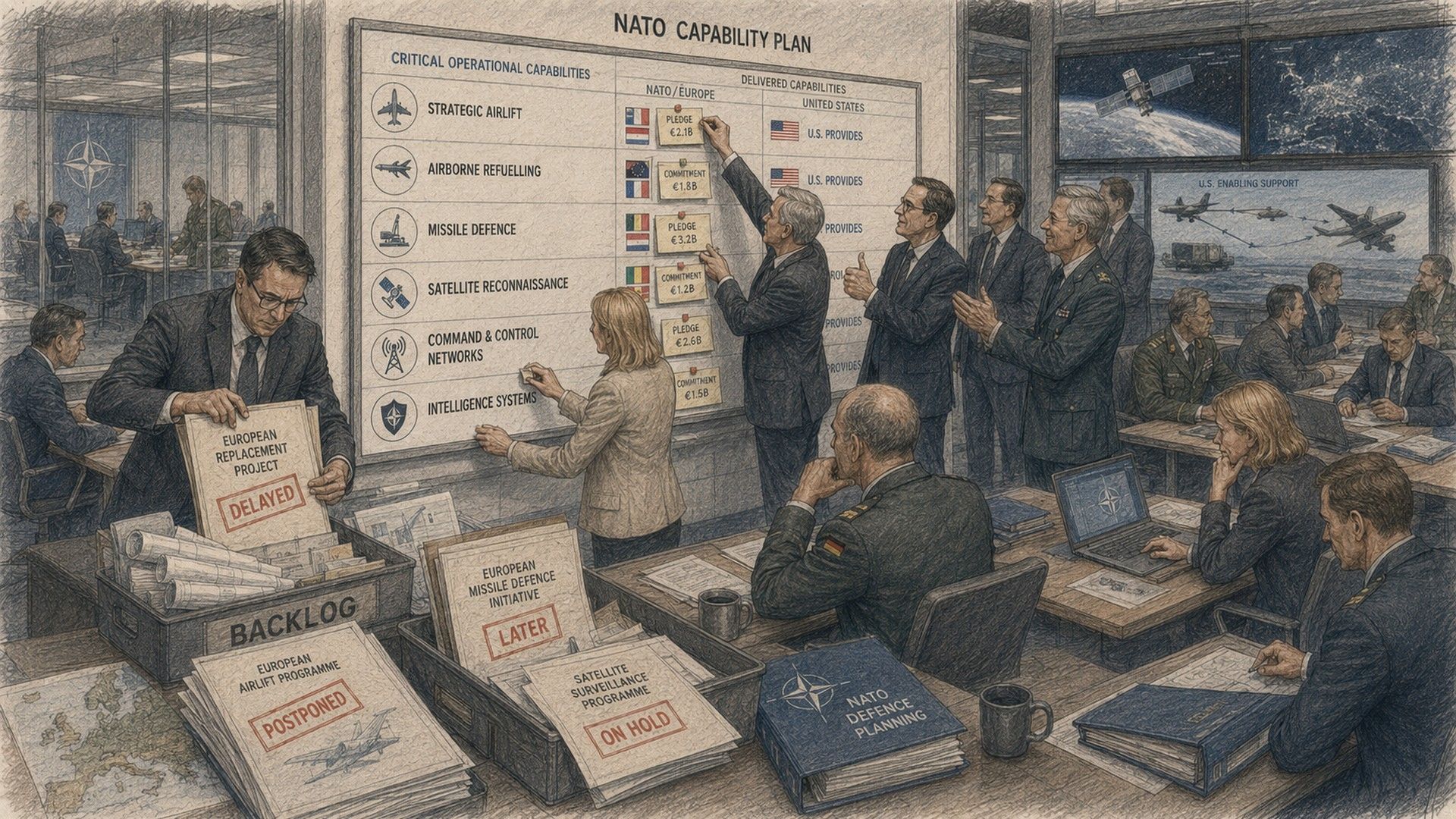
European forces still rely on US airlift, aerial refueling, command and control, missile defense, space-based intelligence, surveillance and reconnaissance. These are the hidden muscles that make armies move and fight.
But the argument is brutal: Europe will never seriously replace those enablers while America keeps providing them.
Pull the plug – slowly
The proposed answer is not another angry Trump threat.
It is a planned, polite and irreversible US drawdown. Combat forces would go first. Fighter squadrons, destroyers in Spain, B-61 nuclear bombs and major enablers would be removed in phases through the early 2030s. Access bases and naval footholds would be left until later.
The goal is to end the illusion. Europe would finally have to decide whether it really fears Russia enough to build the power it claims to need.
The hard lesson: Europe rearms only when abandonment feels real.
War on the Rocks turns the NATO debate on its head. Trump’s threats are noisy, but they may still leave the worst system intact: America pays, Europe promises, and dependency survives.
For Europe, the comfort is also the trap. As long as Washington keeps holding the shield, European leaders can keep postponing the political pain of true defense autonomy.
The shakedown may be ugly. The dependency is worse.