
World Center for Strategic Studies
From closed analysis to public debate
POPULAR
- MONTH
- YEAR

Europe’s migration predicament from the outside looks messy: the EU’s credibility is at stake
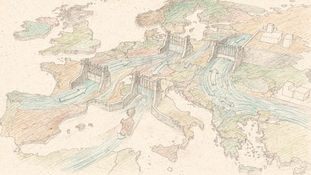
This Institut Montaigne commentary takes an outsider’s lens to how the EU handles migration – and the picture is not flattering. Rather than projecting an image of coordinated humanitarian leadership, Europe often appears reactive, fragmented and internally conflicted. The piece suggests that from abroad, Brussels looks indecisive: legal pathways are limited, border policies seem contradictory, and political divisions undermine coherence. For the EU’s global standing and internal stability, that lack of clarity and control is a growing problem.
Europe’s green transition could be hijacked: China is tightening its grip on clean tech
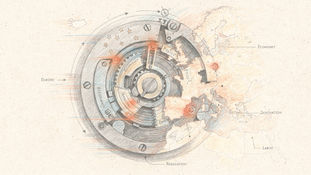
This Institut Montaigne analysis warns that Europe’s clean-tech ambitions rest on a fragile foundation. While the EU pushes ahead with decarbonisation, much of the technology powering the green transition remains dominated by Chinese firms and value chains. Batteries, solar panels and other core components are still produced at scale in China, while European companies face barriers abroad. The risk is stark: Europe may end up financing a green transition it does not control.
Paris becomes a political battlefield: Europe’s centre is under pressure from new transatlantic forces
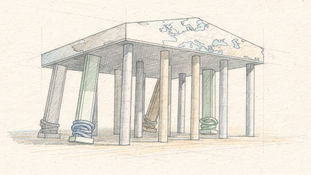
This Internationale Politik commentary warns that French politics is entering a dangerous new phase with consequences far beyond Paris. Meetings between American conservative networks and French right-wing actors are not symbolic gestures – they signal a deeper transatlantic alignment aimed at reshaping Europe’s political balance. As France moves toward the 2027 presidential election, these links threaten to weaken centrist power, sharpen internal EU divisions, and inject US-style culture-war politics into the heart of Europe.
Resource Gap: How the US and China Carve Central Asia Up
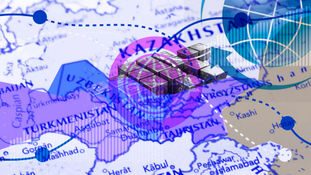
Central Asia suffers from the lack of water and deglaciation but at the same time it is sitting on the largest reserves of rare earth metals, a vital resource for the “green transition” and the defence industry of the West. Andrew D’Anieri from Atlantic Council suggests mining critical minerals and spending the profit on modernizing irrigation and the precipitation enhancement technology.
AI and Democracy: Carnegie Endowment Paving the Way to Big Tech

In January 2026, the Carnegie Endowment published a report entitled Artificial Intelligence and Democracy: Mapping the Intersections. Amid the fall of global democracy indices, Rachel George and Ian Klaus strive to demonstrate how AI threatens Western democracies but opens up new opportunities for them.
Trump’s “Donroe Doctrine” puts Europe in a tight bind: three dilemmas no one here wants to face
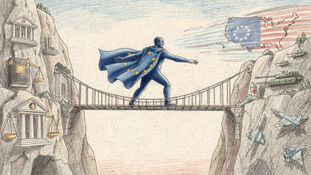
This ECFR commentary argues that the dramatic US military capture of Venezuela’s president under a revived Monroe-style foreign policy forces Europe into a set of hard political dilemmas. Washington’s intervention isn’t only about Latin America – it signals a shift toward a more interventionist and unpredictable US posture that leaves European capitals scrambling for answers.
Europe’s energy battle with Russia is ugly, confusing – and Brussels is losing influence
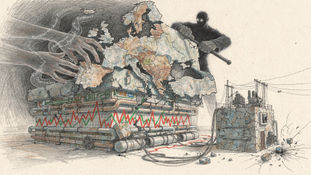
This EUISS commentary exposes a tangled frontline where Russia’s hybrid energy tactics are still inflicting damage on Europe and Ukraine. Moscow has weaponised misinformation, market manipulation and geopolitical pressure to undermine European unity, hit public confidence and delay hard decisions on energy security.
Europe’s defence problem won’t go away: the EU still can’t build real military power
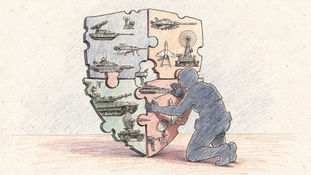
This CIDOB publication looks at the future of EU defence and its armed forces – and the picture is not comforting. Europe talks about “strategic autonomy” and a stronger military role, but its real capabilities remain limited and fragmented. Member states still treat defence as national territory, budgets are uneven, and Europe’s armed forces are not built for rapid, large-scale action. The message is clear: Europe wants to look like a security power, but it is still struggling to act like one.
Europe’s migration storm isn’t easing: 2025 will keep the EU under pressure
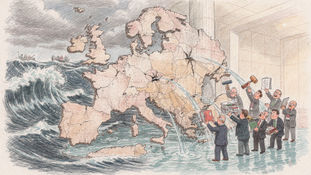
This ICMPD Migration Outlook 2025 reads like a warning list for European leaders. Global displacement is rising fast, conflicts are multiplying, and more countries are turning harsh and restrictive on migration. Europe may see some route shifts and short-term drops in irregular arrivals, but the report makes clear there is no real “turning point”.
Europe is losing control of migration: the top issues show the system is still broken

This Migration Policy Institute overview lays out the biggest migration issues shaping 2024 – and it reads like a warning list for Europe. From irregular arrivals and asylum backlogs to labour shortages, border pressure, and political backlash, migration is still one of the most destabilising forces in European politics. The systems are overloaded, public trust is collapsing, and governments are stuck between economic need and voter anger.