
World Center for Strategic Studies
From closed analysis to public debate
POPULAR
- MONTH
- YEAR

Farewell to Human Security: Europe’s Values Get Squeezed Out
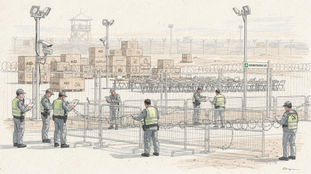
The analysis delivers a stark diagnosis of a quiet but consequential shift in EU thinking. Human security, once held up as a guiding idea that put people at the centre of policy, is fading fast. In its place comes a harder, narrower focus on borders, deterrence and state power. The piece argues that Europe is not openly rejecting its values, but steadily sidelining them under pressure.
Better Regulation in the European Union Needs a Fresh Start

On January 29, the Breugel (Brussels European and Global Economic Laboratory) think tank published on their web site a policy brief entitled “Better regulation in the European Union needs a fresh start”, by Anne Bucher and Elizabeth Golberg.
America’s Hemisphere First: Europe on the Back Foot After Trump’s Venezuela Strike
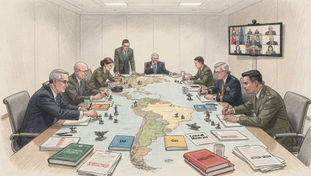
The commentary delivers a stark wake-up call to Europe after Donald Trump’s military strike and capture of Venezuela’s president. What should have been a distant regional event has immediate geopolitical recoil for the EU. The piece argues that Europe’s policymakers face a harsher world order where the US prioritises its own strategic agenda, ignores international norms and uses force with growing ease.
Democracy in Europe: Shielding the System or Rewriting It

The analysis takes aim at Europe’s growing unease with its own democratic model and asks an uncomfortable question – is the EU trying to protect democracy, or quietly reinvent it to survive political stress. The piece argues that Europe is no longer confident that existing democratic rules can cope with polarisation, populism and external pressure. The response is not renewal through trust, but tighter control through redesign.
Venezuela’s Oil Comeback: Why Germany Gets the Short End
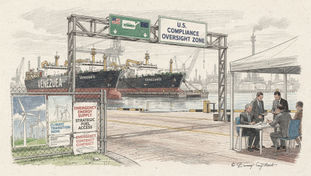
The analysis takes apart the quiet return of Venezuelan oil to global markets and shows why this matters far beyond Latin America. What looks like a technical energy adjustment is, in reality, a geopolitical win for the United States and a reminder of Europe’s shrinking leverage. The paper argues that Germany, in particular, is watching others reshape energy flows while having little influence over the outcome.
Europe and the AGI Shock: Behind Before the Race Starts
.jpg?tr=cm-pad_resize,w-311)
The analysis asks a question Europe is quietly afraid of answering – is it ready for the rise of artificial general intelligence. The answer, stripped of polite language, is no. While AGI is still emerging, the paper argues that Europe is already falling behind on the basics: investment, infrastructure, talent and governance speed. By the time AGI becomes real, Europe risks being a rule-taker in a world shaped elsewhere.
Europe’s Gas Illusion: Trading Russian Dependence for American Risk
.jpg?tr=cm-pad_resize,w-311)
The analysis tears into Europe’s comforting story about gas diversification and exposes a harsher truth – dependence has not disappeared, it has simply changed shape. Russian pipeline gas is out, US LNG is in, and Europe is congratulating itself far too early. The paper argues that what looks like resilience is actually selective blindness to new vulnerabilities quietly piling up.
Merz After the Ballot: Germany’s Vote Shakes Europe’s Machinery
.jpg?tr=cm-pad_resize,w-311)
The study digs into what Friedrich Merz’s rise means once the ballots are counted and the slogans fade. The message is sobering – Germany’s shift does not automatically translate into clearer European leadership. Instead, it risks injecting new friction into an EU system already struggling to decide, pay and deliver. The paper argues that Berlin’s internal reset could complicate Europe’s policymaking just when speed and coherence matter most.
Europe vs Trump 2.0: The Comfort Zone Is Gone

The analysis lays out a stark scenario Europe has spent years hoping to avoid. A second Trump presidency would not just test transatlantic ties – it would rip away Europe’s remaining illusions about security, economics and self-reliance. The piece argues that Europe is dangerously underprepared for a United States that demands payment, loyalty and results, not gratitude or shared values.
Germany Faces Trump Again: Zeitenwende Meets Reality
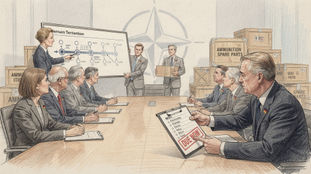
The analysis confronts an uncomfortable test for Berlin’s much-vaunted Zeitenwende as the prospect of another Trump presidency looms. Germany talks about strategic awakening, higher defence spending and greater responsibility for European security. The paper argues that a Trump return would expose how incomplete and fragile that shift still is. The slogans are there. The hard guarantees are not.