World Center for Strategic Studies
From closed analysis to public debate

- MONTH
- YEAR

France’s Nuclear Push: Macron Risks Turning Europe Into The Front Line
France is trying to turn its nuclear arsenal into a wider European shield. The Responsible Statecraft analysis argues that Emmanuel Macron’s new doctrine of forward deterrence may look like Europe finally taking security seriously, but could instead drag the continent into a more dangerous nuclear stand-off with Russia.
The anxiety behind the move is real. America is becoming less predictable, Russia remains aggressive, and northern European states want stronger guarantees. But the paper’s warning is stark: deploying French nuclear-capable aircraft closer to Russia could shrink warning times, inflame Moscow and make future arms control even harder.
Europe wants reassurance. It may be buying escalation.
Macron moves the nuclear line north
Macron has announced major changes to France’s nuclear posture, including plans to increase the stockpile for the first time since 1992 and stop publishing its size.
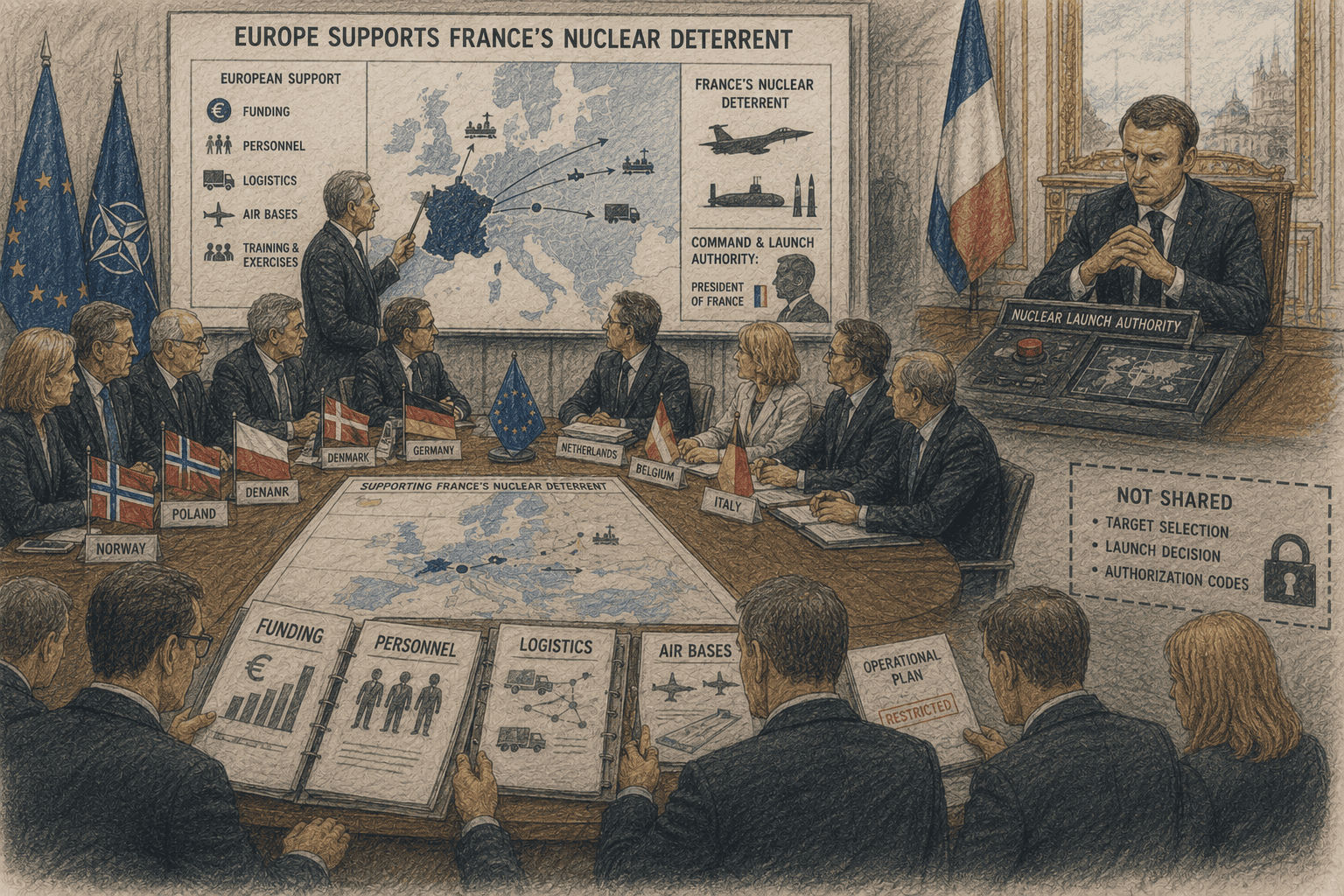
Even more provocative is the idea of forward deterrence: temporary deployments of French strategic air forces to allied countries and deeper involvement of European partners in supporting French nuclear forces.
Nine European countries have already signed up to the initiative. Norway has joined through the Narvik Arrangement, while Finland is weighing participation and moving towards lifting its long-standing ban on hosting nuclear weapons.
That is a serious shift. France is no longer only defending France. It is edging towards a European nuclear role.
Northern Europe becomes the new flashpoint
The most explosive geography sits in Scandinavia.
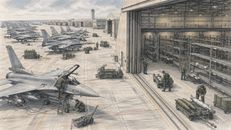
French Rafale B jets based in places such as Norway’s Bardufoss could reportedly reach Russia’s Northern Fleet, Murmansk and early-warning radars in roughly 15 minutes. Some targets could be reachable from Norwegian airspace without refuelling.
If Finland joins, the impact becomes even sharper. A NATO member sharing an 833-mile border with Russia could become part of a French nuclear operating area.
For Moscow, that looks less like reassurance and more like nuclear pressure moving closer to its doorstep.
Russia will answer
The article argues that Russia is already treating the shift as destabilising. Moscow has condemned France’s nuclear build-up and demanded that French and British nuclear weapons be included in future arms control talks.
Russian officials have also warned Norway and Finland that nuclear cooperation would trigger a response.
That does not make Russia innocent. It does mean Europe cannot pretend the move carries no consequences. Nuclear deployments designed to reassure allies can also convince adversaries they must harden, expand or pre-delegate their own responses.
That is how escalation ladders get built.
Washington adds to the confusion
The United States is sending mixed signals that make Europe’s nuclear anxiety worse.
On one hand, Washington wants European allies to take more responsibility for conventional defence. On the other, it says the US nuclear guarantee remains, but in a more limited and focused form. At the same time, reports suggest the Trump administration is discussing expanded US nuclear deployments to eastern-flank states, even while withdrawing troops and cancelling other planned weapons deployments.
The message to Europe is muddy. America is stepping back in some areas, but may move nuclear assets closer to Russia in others.
That uncertainty is pushing allies towards more nuclear hedging, not less.
France keeps control – allies may pay
Macron insists France would retain sole authority over any decision to use nuclear weapons. The French doctrine is clear: the president alone decides.
That creates a dangerous political tension.
If European partners are expected to host, support or help finance French nuclear deterrence, they may eventually demand some influence over deployment or use. But sharing control could undermine the credibility and clarity of the deterrent.
So Europe could end up with the worst of both worlds: more nuclear risk, but no real shared command.
French politics could blow it up
The initiative may also be built on unstable ground at home.
Macron has less than a year left in office, and several possible successors are hostile to his nuclear Europeanisation. Marine Le Pen has argued that sharing French deterrence would destroy it. Jordan Bardella has criticised the idea. Jean-Luc Mélenchon has pledged to review major security cooperation and rejects shared control over France’s nuclear weapons.
That means northern and central European governments may be betting on a French project that could be weakened or reversed after the next election.
For a nuclear guarantee, that is a serious credibility problem.
Arms control is being buried
Responsible Statecraft’s strongest complaint is that the rush towards nuclear reassurance is crowding out diplomacy.
The authors argue that Europe is at the most dangerous nuclear moment since the Cold War, yet the debate is moving towards more deployments, more opacity and more nuclear signalling rather than renewed arms control, confidence-building and military-to-military communication.
That is the central risk. Once nuclear deployments become normalised across northern and eastern Europe, reversing the trend becomes politically and strategically harder.
The warning sign: Deterrence can become danger
The analysis does not deny that Europe faces a grave security threat. It argues that the chosen answer may deepen the very insecurity it is meant to solve.
France’s nuclear push offers nervous allies a dramatic symbol of protection. But it also brings nuclear-capable aircraft closer to Russia, complicates NATO politics, exposes French domestic divisions and makes arms control harder.
Europe is trying to escape dependence on Washington.
It may instead be building a new nuclear trap on Russia’s border.