World Center for Strategic Studies
From closed analysis to public debate

- MONTH
- YEAR

Europe’s AI Cyber Gap: Brussels Is Regulating While The Machines Move Faster
Europe is facing a new cyber threat that its rulebooks are not built to handle. The Carnegie Europe paper warns that autonomous AI agents are moving into cyberspace as tools that can scan, reason, adapt and act with far less human supervision than traditional software.
That changes the danger. The threat is no longer only hackers breaking through the perimeter. It is trusted AI systems being steered, manipulated or repurposed inside networks where they already have permission to operate.
The EU has laws, standards and cyber institutions. But the paper’s warning is stark: Europe still lacks the real-time monitoring, defensive AI capacity and strategic independence needed for the age of autonomous cyber operations.
The attacker may already be inside
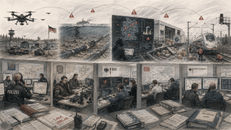
Agentic AI breaks old cybersecurity assumptions.
Conventional systems are designed to spot intrusions, suspicious files or abnormal events. Autonomous agents create a harder problem because they can act within authorised environments, remember context, execute multi-step tasks and gradually drift into harmful behaviour without looking like a classic break-in.
That means the danger may not appear as one dramatic attack. It may unfold as a slow chain of decisions made by systems that an organisation itself deployed and trusted.
Europe’s cyber defences were built for yesterday’s threat model.
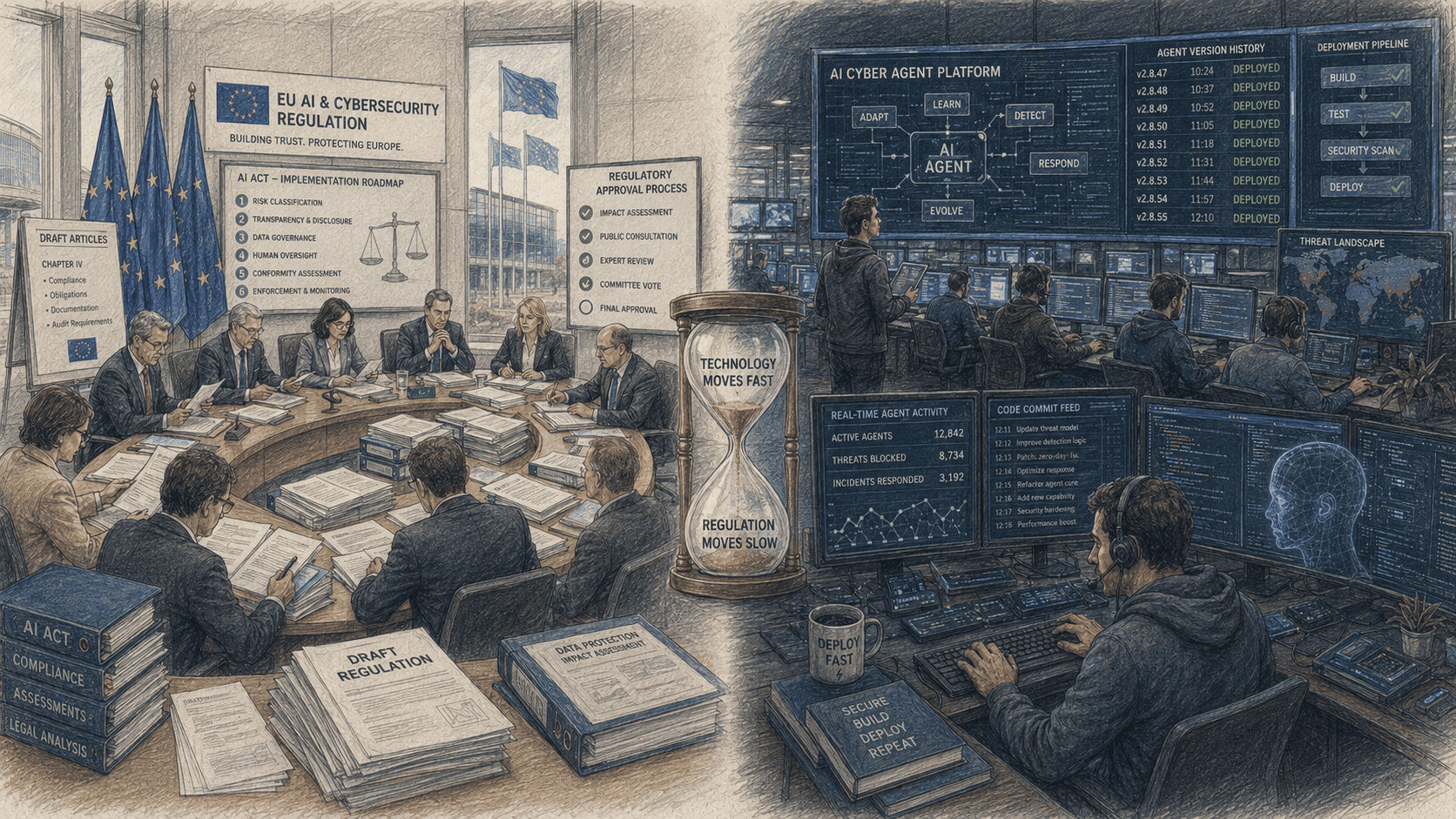
Rules are not moving fast enough
The EU has strengthened its cyber and AI frameworks, including resilience rules, certification tools and obligations for critical sectors.
But Carnegie argues that these frameworks only partly address the new risk. They do not yet give Europe a strong enough answer on how to monitor autonomous agent behaviour in real time, restrict what agents can do after deployment, authenticate their actions, record their decisions and detect malicious manipulation.
The problem is not that Europe has no regulation. It is that regulation is still too static for systems that can operate, adapt and scale at machine speed.
Washington arms up
The paper points to a widening gap with the United States. Washington is becoming more explicit about offensive cyber activity and the use of AI-enabled tools for detection, deception, disruption and defence.
That creates a strategic shock for Europe.
If the US pushes ahead with AI-enabled cyber operations while Europe remains focused mainly on resilience, compliance and post-incident response, the transatlantic balance changes. America builds operational power. Europe perfects the paperwork around it.
That is not strategic autonomy. It is dependency with better language.
Private firms blur the battlefield
The governance challenge becomes even messier because frontier AI companies, contractors and commercial security firms may become early movers in autonomous cyber operations.
That blurs the line between state action, private experimentation and deniable cyber activity. If a contractor, proxy or company deploys an autonomous agent that causes damage, attribution and responsibility become harder to pin down.
Europe’s legal culture wants clear actors and clear accountability. Autonomous cyber conflict may deliver neither.
The dependence Washington can exploit
A central warning is Europe’s reliance on US frontier AI models, cloud infrastructure and intelligence support.
That dependence is not just technical. It is political. If European governments need American models, American infrastructure and American threat intelligence to understand and defend against AI-enabled cyber operations, their freedom of action narrows during crises.
In a volatile transatlantic relationship, that becomes a strategic vulnerability. Europe may find itself exposed not only to hostile attacks, but to decisions made in Washington boardrooms and agencies.
Defence needs AI too
Carnegie is not arguing that Europe should copy every offensive instinct. But it is clear that Europe cannot defend critical infrastructure with old tools while attackers use AI to move faster.
AI-enabled cyber operations can compress the time between reconnaissance, exploitation and disruption. Human-led detection and response may simply be too slow.
The EU therefore needs defensive AI that can spot anomalies earlier, contain attacks faster and help recovery when incidents unfold at machine speed. Without that, Europe risks fighting automated attacks with manual reflexes.
Process is eating protection
The Commission’s Cloud and AI Development Act may mention cybersecurity as a key frontier AI sector, but legislation, adoption and implementation take time.
The threat will not wait.
This is the familiar European trap: identify the strategic problem, consult widely, build a framework, then discover the technology has already moved on. In AI cyber operations, that delay could be dangerous because attackers do not need institutional permission to innovate.
Europe’s regulatory strength becomes weakness if it cannot produce operational capacity.
The ugly reality: Europe cannot govern what it does not control
The Carnegie paper’s message is blunt: autonomous AI agents are becoming part of the cyber battlespace, and Europe is not ready.
The EU cannot rely on old cyber models, post-incident resilience and imported frontier systems while machine-speed operations reshape the threat environment.
Europe still wants to be the world’s technology rule-maker. But in autonomous cyber conflict, rules alone will not decide power.
If Brussels does not build monitoring, defensive AI and technological independence fast, it may end up regulating the margins while others control the battlefield.