World Center for Strategic Studies
From closed analysis to public debate

- MONTH
- YEAR

Europe’s Ukraine Wake-Up Call: Four Years, Ten Painful Lessons
Four years into Russia’s war against Ukraine, Europe still looks like a slow learner.
This RUSI commentary distils ten hard lessons from the conflict – and most of them point to European weakness, delay and dangerous self-deception.
The war has exposed how unprepared Europe was for high-intensity conflict and how dependent it remains on others to sustain one.
Adaptation has happened, but late, unevenly and often under pressure from events rather than strategy.
What emerges is a picture of a continent reacting to war, not mastering it.
Deterrence failed before the first shot
The paper makes clear that Western deterrence collapsed long before 2022. Mixed signals, half-measures and fear of escalation convinced Moscow that the costs would be manageable. Europe’s preference for ambiguity over resolve helped set the stage.

Industrial weakness turns lethal
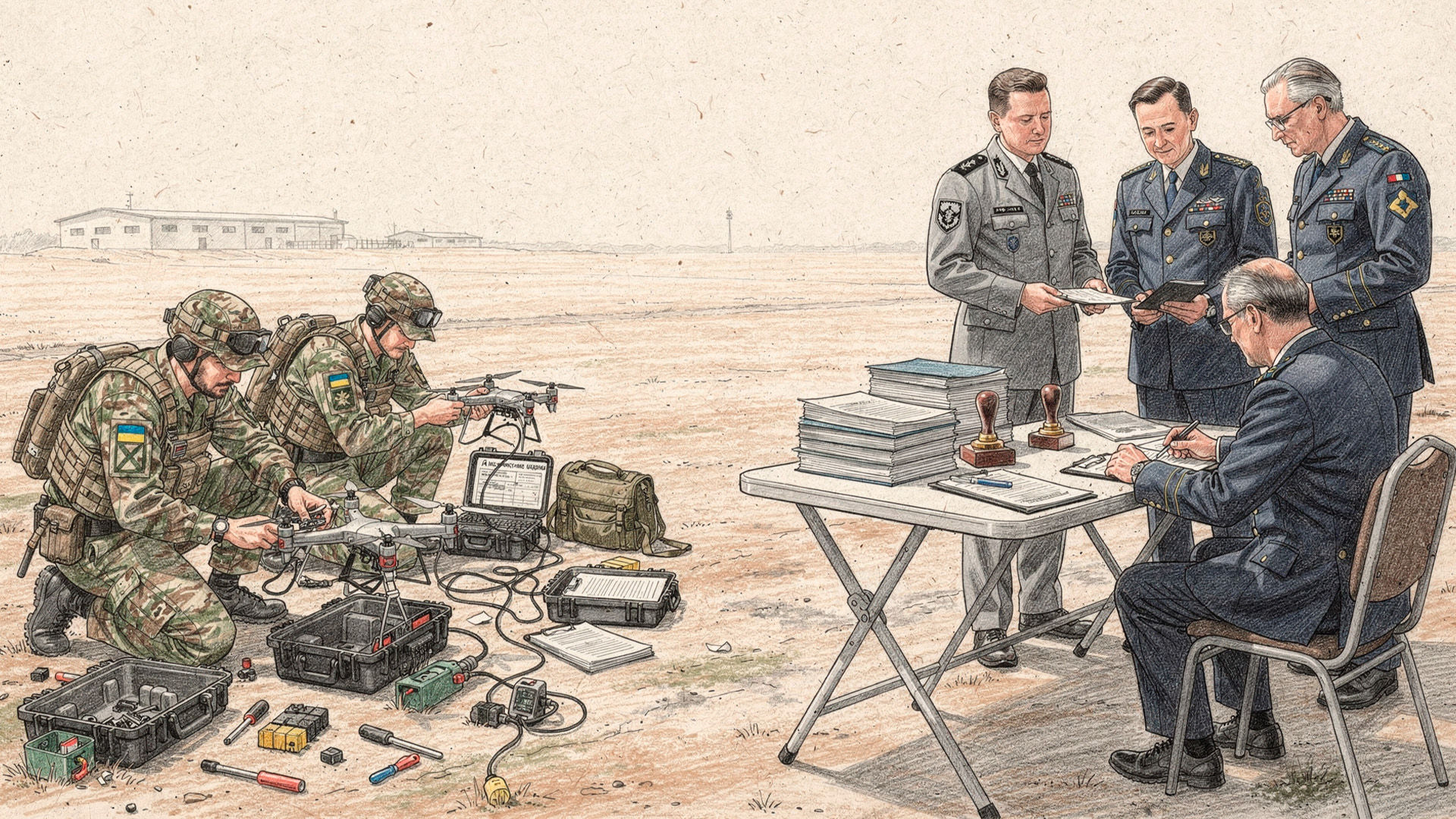
Modern war burns through ammunition, equipment and money at brutal speed. Europe entered the conflict with hollowed-out defence industries and minimal stockpiles. Ramping up production has been slow, fragmented and politically painful – with lives paid as the price of delay.
Ukraine adapts faster than its backers
One of the stark lessons is that Ukraine often learned and innovated quicker than its supporters. Battlefield adaptation, drone use and tactical flexibility outpaced Western procurement cycles and decision-making. Europe funded the war, but Ukraine learned how to fight it.
Escalation fears shape policy
European governments repeatedly allowed fear of escalation to dictate support levels. The result was incrementalism – weapons delivered late, in limited numbers, and often after the battlefield moment had passed. Caution became a constraint on effectiveness.
The battlefield moves faster than politics
War evolves in weeks, sometimes days. European political systems move in months. The analysis underlines a growing mismatch between the speed of combat and the tempo of democratic decision-making, leaving strategy permanently behind events.
Russia absorbs punishment better than expected
Sanctions and losses hurt Moscow, but did not break its war effort. Russia adapted economically and militarily, drawing on resilience, coercion and external support. European assumptions about rapid collapse proved optimistic.
NATO matters more than ever
Despite talk of autonomy, the war reaffirmed the centrality of NATO and US leadership. Intelligence, logistics and deterrence still lean heavily on Washington. Europe’s security rhetoric looks thin without American muscle behind it.
Learning is uneven across Europe
Some states adapted quickly, others dragged their feet. The lack of a shared learning curve left Europe with patchy readiness and uneven commitments, undermining collective credibility.
Long wars favour preparation, not promises
The commentary stresses that wars of attrition reward depth – industrial, financial and political. Europe entered the conflict with slogans and discovered too late that stamina matters more.
Future wars will be no kinder
The lessons from Ukraine are not unique. High-intensity conflict is back, and it will test Europe again – possibly sooner than expected.
The hard lesson: Europe was not ready for reality.
And it still isn’t fully there.
Ukraine forced Europe to confront war as it is, not as it wished it to be. If these lessons fade once the fighting slows, the next shock will come with even higher costs – and even fewer excuses.