
World Center for Strategic Studies
From closed analysis to public debate
- MONTH
- YEAR

About Us
Contemporary international politics is shaped by accelerating change, growing uncertainty and increasingly complex interactions between states, markets and societies. Understanding these dynamics requires sustained analytical work, conducted across national boundaries and informed by a wide range of perspectives. This work is undertaken by a dense ecosystem of research and policy institutions commonly referred to as "think tanks".
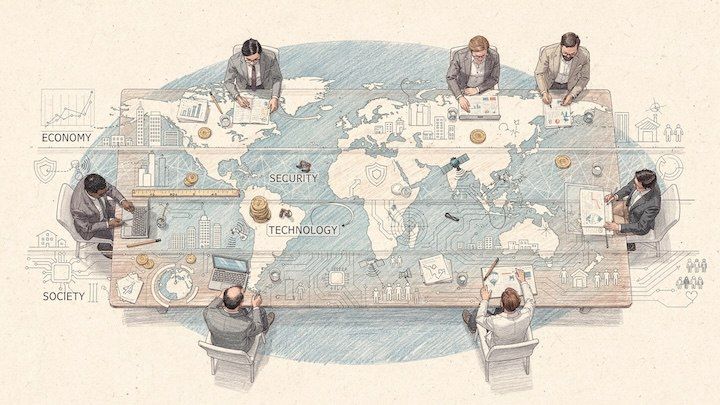
Think tanks play a central role in modern governance. Beyond academic inquiry, they contribute to policy formation, strategic planning and long-term scenario development. Their work often informs governments, international organisations, economic actors and political coalitions, shaping how risks are assessed and how future choices are framed.
Yet the analytical output of these institutions is vast, fragmented and unevenly reflected in public debate. Systematically tracking, comparing and interpreting the published work of hundreds of think tanks is demanding, but essential. Without such an effort, it is difficult to identify underlying strategic assumptions, detect emerging consensus or disagreement, or understand how key actors conceptualise the evolving global order.
Public discussion frequently lags behind expert analysis. Many of the questions debated within policy circles only reach broader audiences once they have already translated into political decisions, institutional shifts or crises. Bridging this gap between analytical debate and public understanding is therefore increasingly important.
WCSS – the World Center for Strategic Studies – was established by a group of political and economic analysts and scholars with experience in both research and applied policy environments. The centre focuses on the systematic examination of analytical debates taking place within leading think tanks, with particular attention to issues that receive limited or selective coverage in mainstream media.
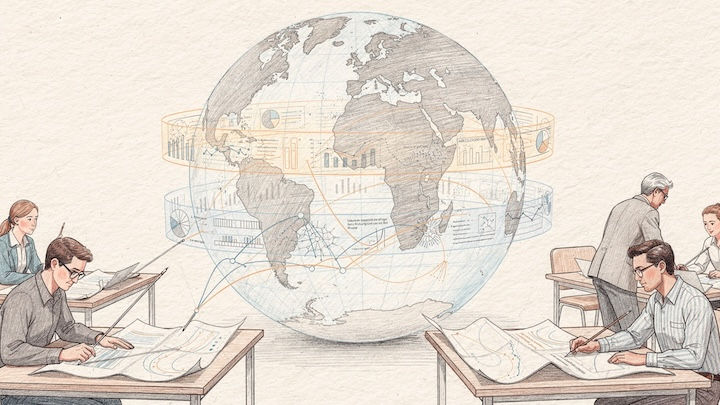
WCSS aims to make these debates more visible and accessible, without reducing their complexity. By contextualising expert analysis and placing it within a broader strategic framework, the project seeks to support more informed discussion of long-term trends affecting states, societies and international relations.
The mission of WCSS is not to advocate specific policies, but to contribute to clarity. By distinguishing structural challenges from short-term political narratives, and by highlighting emerging risks and strategic inflection points, the centre seeks to support more deliberate, forward-looking debate on how future crises may be anticipated, managed or mitigated.
E-mail: info@wcss.world