World Center for Strategic Studies
From closed analysis to public debate
- MONTH
- YEAR

Europe’s Mining Dilemma: Dig For Independence, Risk A Backlash
Europe wants to break its dangerous dependence on China for the raw materials behind batteries, wind turbines, chips and weapons. The EUISS brief argues that enlargement partners – especially Ukraine and the Western Balkans – could help by supplying critical minerals that Europe badly needs for the green transition, digital industry and rearmament.
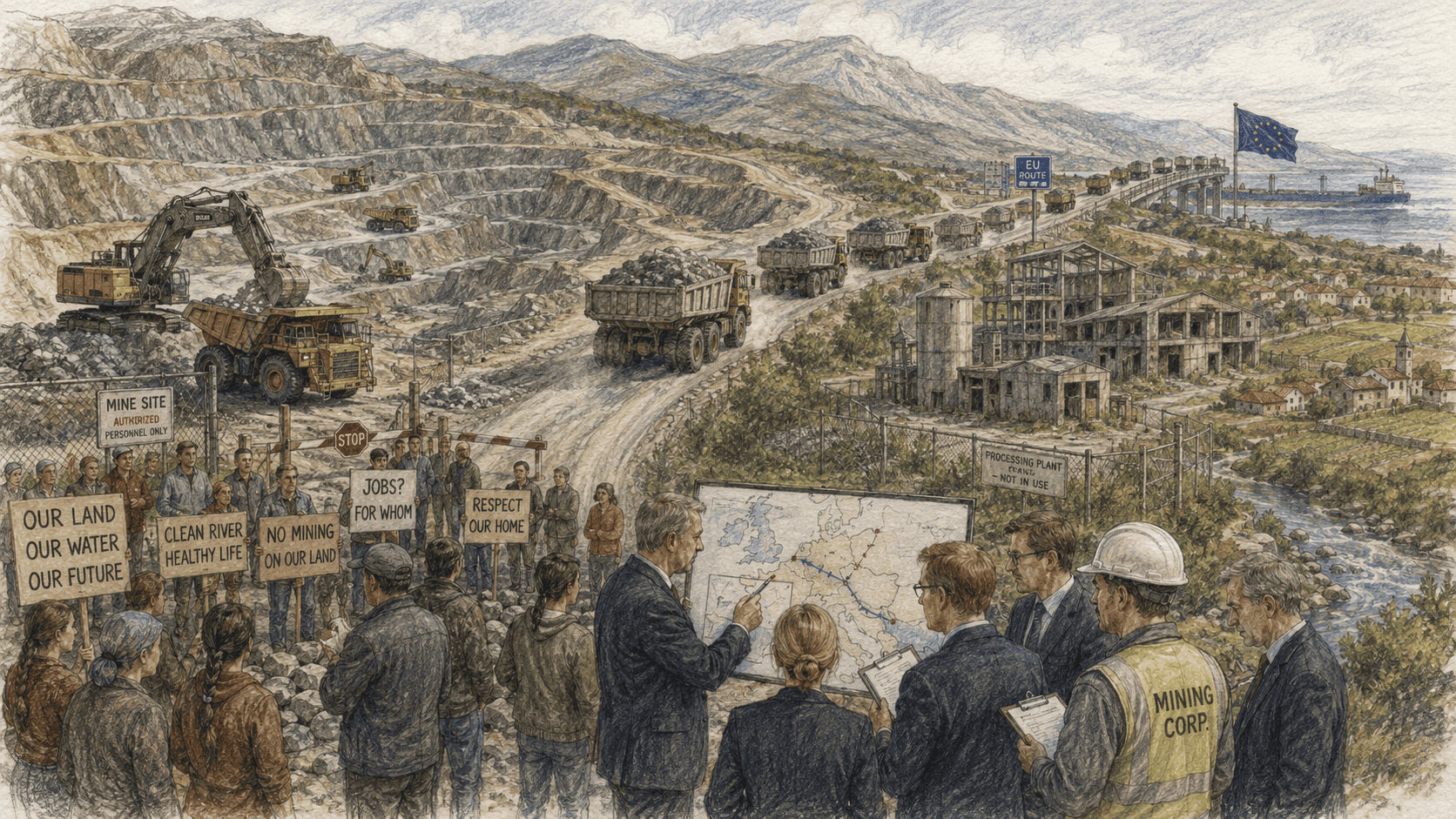
But the warning is sharp. Mining alone will not save Europe. If Brussels treats candidate countries as raw-material warehouses, it risks fuelling anti-EU anger, environmental revolt and accusations of neo-colonial extraction.
Europe needs the minerals. But it also needs local trust – and right now that trust looks fragile.
China owns the choke points
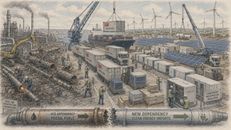
Europe’s vulnerability is brutal. Around 98 percent of the EU’s borates supply comes from Türkiye, while China refines more than 90 percent of the rare earth elements used in permanent magnets worldwide.
That gives outside powers leverage over Europe’s clean-tech, digital and defence future. The EU can pass strategies, launch acts and talk about autonomy, but if the raw materials and processing chains sit elsewhere, its freedom of action remains limited.
The dependency is not theoretical. It is built into the supply chain.
Ukraine and the Balkans matter
The brief shows why enlargement has become an economic-security issue. Ukraine holds major deposits of graphite, titanium and manganese, along with lithium, cobalt, nickel, magnesium and rare earths. The Western Balkans also matter, with Serbia, Bosnia and Herzegovina, North Macedonia and Albania holding copper, borates, bauxite, cobalt, nickel, antimony and other resources.
That makes candidate countries strategically valuable for the EU’s future industrial base.
But the minerals are not a quick fix. Some deposits are under Russian occupation, others lack full geological data, and new mines take years – often well over a decade – to become operational.
The extraction trap is real
EUISS warns that Brussels must avoid looking like it only wants to dig up resources and move the value west.
That would be strategically stupid. Candidate countries want industrial development, jobs, processing capacity and a bigger share of the value chain – not just pits in the ground and promises from Brussels.
If the EU pushes extraction without refining, manufacturing and recycling in partner countries, it will confirm the worst local suspicions: Europe wants the minerals, not the people.
Serbia shows the danger
The Jadar lithium-boron project is the clearest warning sign. It could produce around 58,000 tonnes of battery-grade lithium carbonate a year and become one of Europe’s biggest lithium projects.
But public opposition in Serbia has grown sharply. Surveys from 2024 to 2025 showed a majority against lithium mining, rising to more than 60 percent. People fear damage to water, farmland and biodiversity, but also distrust political elites, foreign investors and opaque decision-making.
The result is humiliating for Europe’s supply-chain ambitions: a strategic project stuck because local consent is missing.
The Balkans are pushing back
The resistance is not only Serbian. In Bosnia and Herzegovina, local authorities, residents and environmental groups have opposed lithium surveys and challenged concessions linked to chromium, lithium, nickel, cobalt and other minerals.
That should terrify Brussels more than any hostile speech from Beijing.
Europe can design all the raw-material partnerships it wants. If local communities see mining as dirty, imposed and politically corrupt, projects will stall before they deliver strategic value.
Washington adds pressure
Ukraine brings another complication. The Trump administration has pushed hard for preferential access to Ukraine’s critical minerals, and Kyiv has responded by granting US companies favourable development and offtake rights.
That risks turning Ukraine’s reconstruction into a raw-material contest between allies.
If the EU lowers its standards to compete with Washington or China, it will lose the one advantage it claims to have: rules, safeguards and credibility.
Process must beat panic
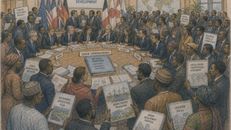
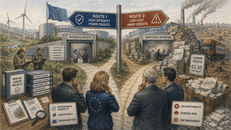
EUISS argues that the EU should invest in strategic raw-material projects, but anchor them in rule of law, governance reform and strong environmental, social and governance standards.
That may slow projects down. But cutting corners would be worse.
Weak standards would not make Europe more competitive against China or America. They would simply destroy local trust, damage the enlargement process and turn European strategic autonomy into another unpopular extraction scheme.
The big warning: Minerals are not enough
The brief’s message is clear: Europe cannot mine its way out of dependency with slogans and shortcuts.
Critical raw materials in Ukraine and the Western Balkans can strengthen EU security, but only as part of wider value chains that include processing, advanced manufacturing and recycling. Candidate countries must gain development, not just disruption.
Europe wants autonomy from China. It wants green industry. It wants rearmament. It wants enlargement to work.
But if Brussels grabs for minerals without earning trust, it may dig up something far more dangerous than lithium – a political backlash against Europe itself.