World Center for Strategic Studies
From closed analysis to public debate

- MONTH
- YEAR

France’s Cocaine Crisis: The Mafia Smells State Weakness
InfoSecurity24’s report turns France’s cocaine boom into a grim warning on internal security.
A drug once linked to elites and nightclubs has gone mass-market, reaching workers, farmers, the poor and people crushed by stress, long hours and social decline.
French authorities estimate around 1.5 million people now use cocaine – almost twice as many as only a few years ago.
The market is worth up to €7 billion a year, and organised crime is cashing in faster than the state can contain it.
For France, this is no longer a drug problem on the margins. It is a public-order crisis.
Cocaine leaves the VIP room
The most striking shift is social.
Cocaine is no longer presented as a luxury habit for the wealthy. It has spread across classes, jobs and neighbourhoods, increasingly used not just for pleasure but to endure exhaustion, pressure and hopelessness.
That matters because demand is now broader, steadier and harder to police. A drug consumed by a narrow elite is one problem. A drug embedded in daily social stress is another.
Marseille becomes the warning
The report puts Marseille at the centre of the crisis.
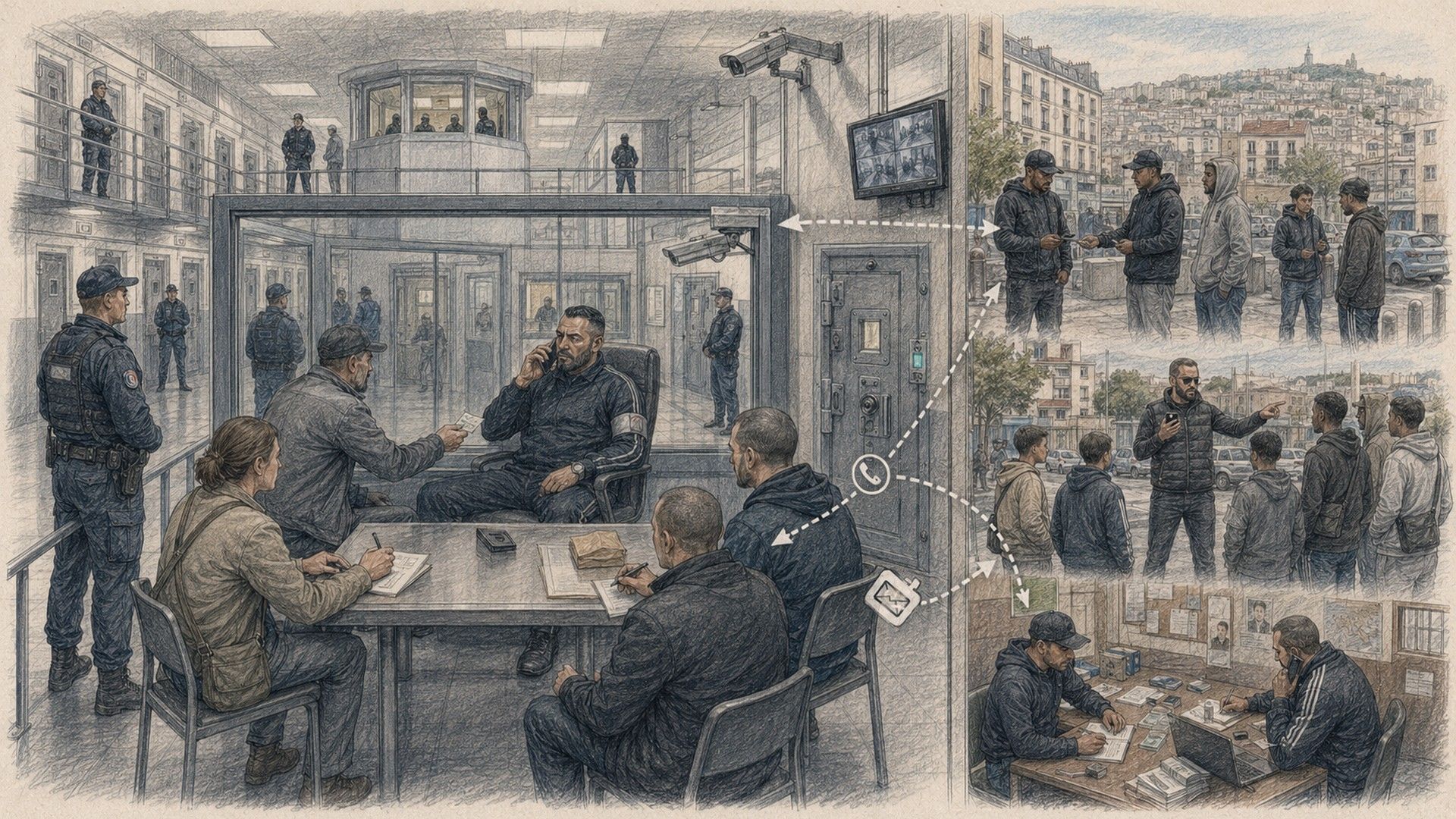
Drug dealing in the city’s northern districts runs almost around the clock. Young lookouts stand at estate entrances to warn dealers when police or outsiders appear. Officers admit they do not enter some areas alone. Doctors and technical workers often refuse to go into the most dangerous districts without escort.
That is the ugly symbol: parts of the city are being managed by criminal rules.
Delivery turns crime into a service
The trafficking model has modernised.
Traditional street dealing still exists, but cocaine is now also sold through phone and online orders, with home delivery operating like a courier service.
This is where policing gets harder. Dealers no longer need to rely only on fixed selling points. They can move faster, reach more customers and hide behind the habits of the ordinary digital economy.
Global cartels found Europe
France’s crisis is tied to a bigger market shift.
Record cocaine production in South America and a saturated US market, partly distorted by fentanyl, have pushed cartels towards Europe. France’s coastline, ports and domestic demand make it both a transit hub and a major consumer market.
Europe is not just receiving spillover. It has become the target.
Young people see mafia money
The criminal economy is pulling in teenagers from poor estates.
A single drug-selling point can generate more than €100,000 a month. Young lookouts can earn around €100 a day, with the most loyal and violent able to rise quickly through gang structures.
For many, those sums are far beyond anything available through legal work. That is how organised crime becomes not just a threat, but a career ladder.
Prisons do not stop the bosses
The report’s most alarming detail is the control exercised from behind bars.
French services estimate that up to 80 percent of murder orders are issued from prison by jailed mafia bosses who continue to direct their networks despite incarceration.
That shatters the idea that arrest alone solves the problem. If prison becomes a command post, the state is not cutting off the network. It is merely relocating the leadership.
The health crisis hits the streets
The problem is no longer confined to peripheral estates.
In central Marseille, cocaine addiction is increasingly visible among homeless people. Aid groups estimate that more than 2,000 people in the city centre live on the streets and are addicted to drugs. Authorities are spending more on clearing used syringes from public spaces.
Experts argue that enforcement alone will fail without addiction treatment, poverty support and supervised consumption facilities. But in France, those measures remain politically explosive.
The ugly reality: The mafia is exploiting France’s cracks.
InfoSecurity24’s report shows a country facing a double failure: rising demand from a society under strain and criminal supply chains rich enough to challenge local order.
Police crackdowns may disrupt dealers, but they will not defeat a market powered by poverty, stress, global cartels and prison-run gang leadership.
France wanted to treat cocaine as a criminal problem. It is now a test of whether the state still controls the streets.