
World Center for Strategic Studies
From closed analysis to public debate

- MONTH
- YEAR

Spain’s Welfare Trap: The Far Right Turns Poverty Into Belonging
Spain has imported one of the far right’s most dangerous ideas into actual law. The CIDOB opinion warns that “national priority” – the old Marine Le Pen formula of giving social benefits first to those deemed to belong – is no longer just a campaign slogan. It has entered legislation in the Valencian Community through the PP–Vox regional budget deal.
The move is being sold as protection for locals. CIDOB’s warning is harsher: it may hurt the very people it claims to defend, while shifting welfare away from need and towards identity.
This is not only a Spanish problem. It is a European warning about what happens when welfare states stop asking who needs help and start asking who counts as “ours”.
The far right gets its test case
Vox has pushed the idea of national priority for years, in line with the wider European far right.
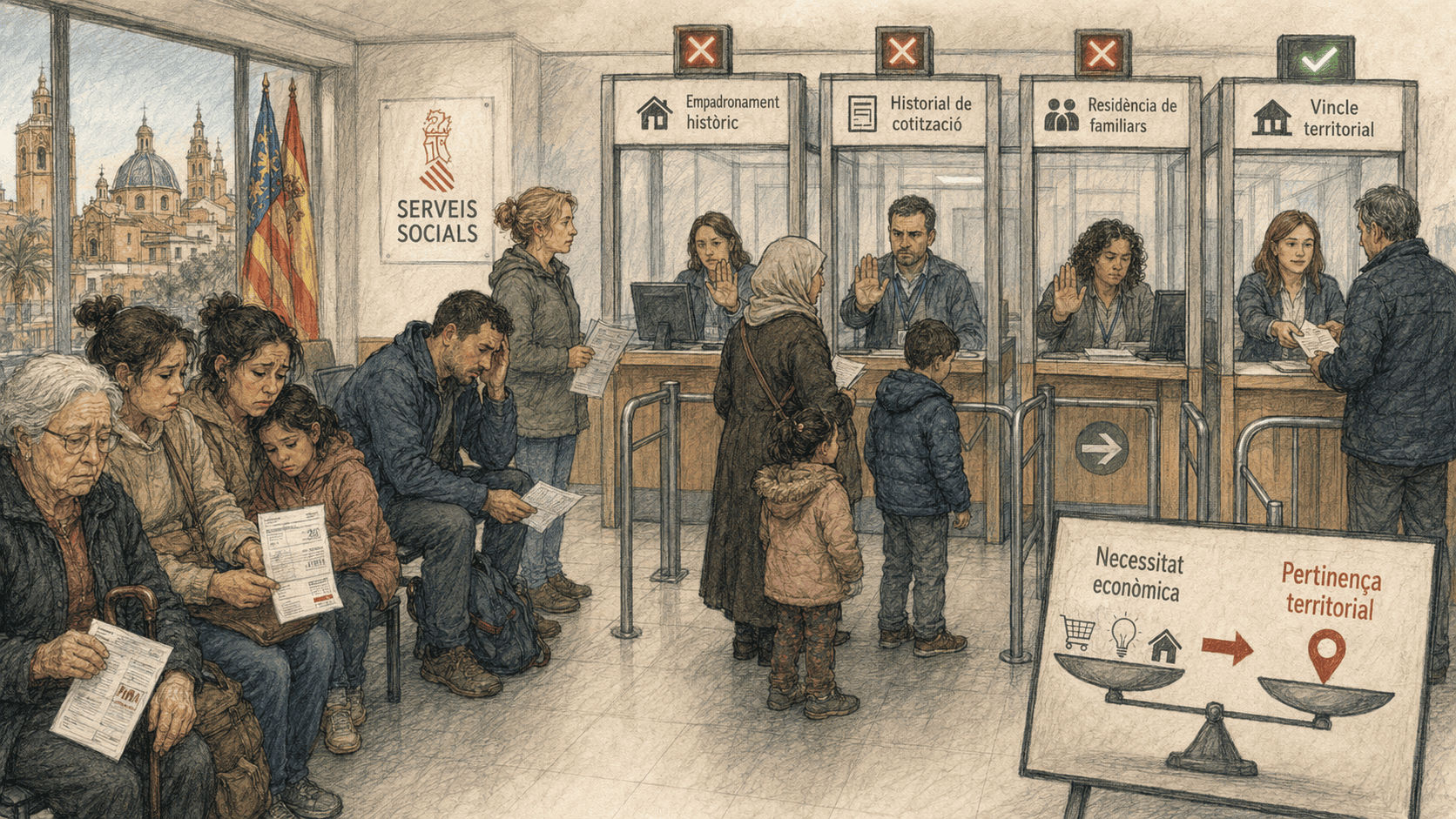
The Valencian case gives that idea a concrete legal shape. Instead of openly discriminating by nationality – which Spanish immigration law blocks in access to social services and benefits – the measure uses territorial roots: long registration in the region, work contribution history and residence of close family members.
That makes the policy look administrative. CIDOB says the logic is political.
It turns belonging into a gatekeeper for social protection.
The promise sounds simple
The appeal is obvious. In a housing crisis, cost-of-living squeeze and welfare shortage, voters are told that benefits should go first to those who have deeper local roots.
That is powerful politics because it offers a culprit and a queue. It suggests scarcity can be fixed by narrowing the circle of those entitled to help.
But this is where the policy starts to crack. Poverty, precarious work, housing pressure and family vulnerability are material problems. Belonging does not solve them.
The wrong people may be punished
CIDOB points to an embarrassing contradiction: the measure could hit Spanish citizens too.
Highly mobile military personnel have warned they may struggle to meet strict local-root requirements. People from other Spanish regions who live and work in Valencia could also fall short if their registration history or family residence does not fit the rule.
So a measure sold as defending insiders can suddenly turn insiders into outsiders.
That is the danger of building welfare policy around identity. The border keeps moving.
Europe’s social model is under attack
The deeper problem is not technical. It is philosophical and democratic.
Europe’s welfare state is built on a basic redistributive idea: support should go to those who need it most. It may be imperfect, underfunded and politically contested, but its logic is material need, not ethnic, national or territorial belonging.
National priority changes the question.
Instead of “who is vulnerable?”, the state asks “who belongs enough?”. That is a major shift. It turns welfare from a tool of solidarity into a sorting machine.
The EU problem is real
CIDOB argues that Valencia’s law is also a European issue because it could affect EU citizens living, working and paying taxes in the region.
If access to public aid is conditioned by restrictive ideas of local roots, the EU principle of equal treatment starts to weaken in practice. European citizenship loses part of its integrative force if mobile citizens can contribute economically but still find themselves pushed back in welfare access.
That cuts into one of the EU’s core promises: movement without second-class status.
The Le Pen logic spreads
The most disturbing part is the political contagion.
What was once associated mainly with the French far right is now appearing through regional government in Spain, backed by a mainstream conservative party governing with Vox. That shows how far the language of priority, belonging and exclusion has moved into ordinary policymaking.
The far right does not need to win national power everywhere at once.
It can change the rules through coalition deals, budgets and regional laws.
Process is hiding ideology
The policy’s legal design matters because it disguises a hard ideological shift as a neutral administrative filter.
Long residence, contribution history and local family ties may sound reasonable individually. But when used to ration welfare in place of socioeconomic vulnerability, they move the state away from redistribution and towards segmentation.
That is the trick. The policy does not need to say “foreigners last” to create a hierarchy of deservingness.
The verdict: Welfare becomes weaker when identity takes over
CIDOB’s warning is that national priority is bad policy and a European problem. It answers poverty with belonging, housing scarcity with exclusion, and social vulnerability with a test of roots.
That may win applause in a campaign. But as public policy, it risks making welfare less fair, less effective and more divisive.
Europe’s welfare states are already under pressure from ageing, housing costs, weak growth and migration politics.
If governments respond by shrinking the circle of protection, they will not fix inequality.
They will simply turn social policy into another battlefield over who deserves to belong.