World Center for Strategic Studies
From closed analysis to public debate

- MONTH
- YEAR

Latvia’s New Coalition: A Crisis Cabinet With Four Months To Prove Itself
Latvia has a new government, but nobody should mistake it for a clean reset. The KAS country report shows a country forced into a hurried political handover after drone incidents, a defence ministry row and the collapse of Evika Siliņa’s cabinet.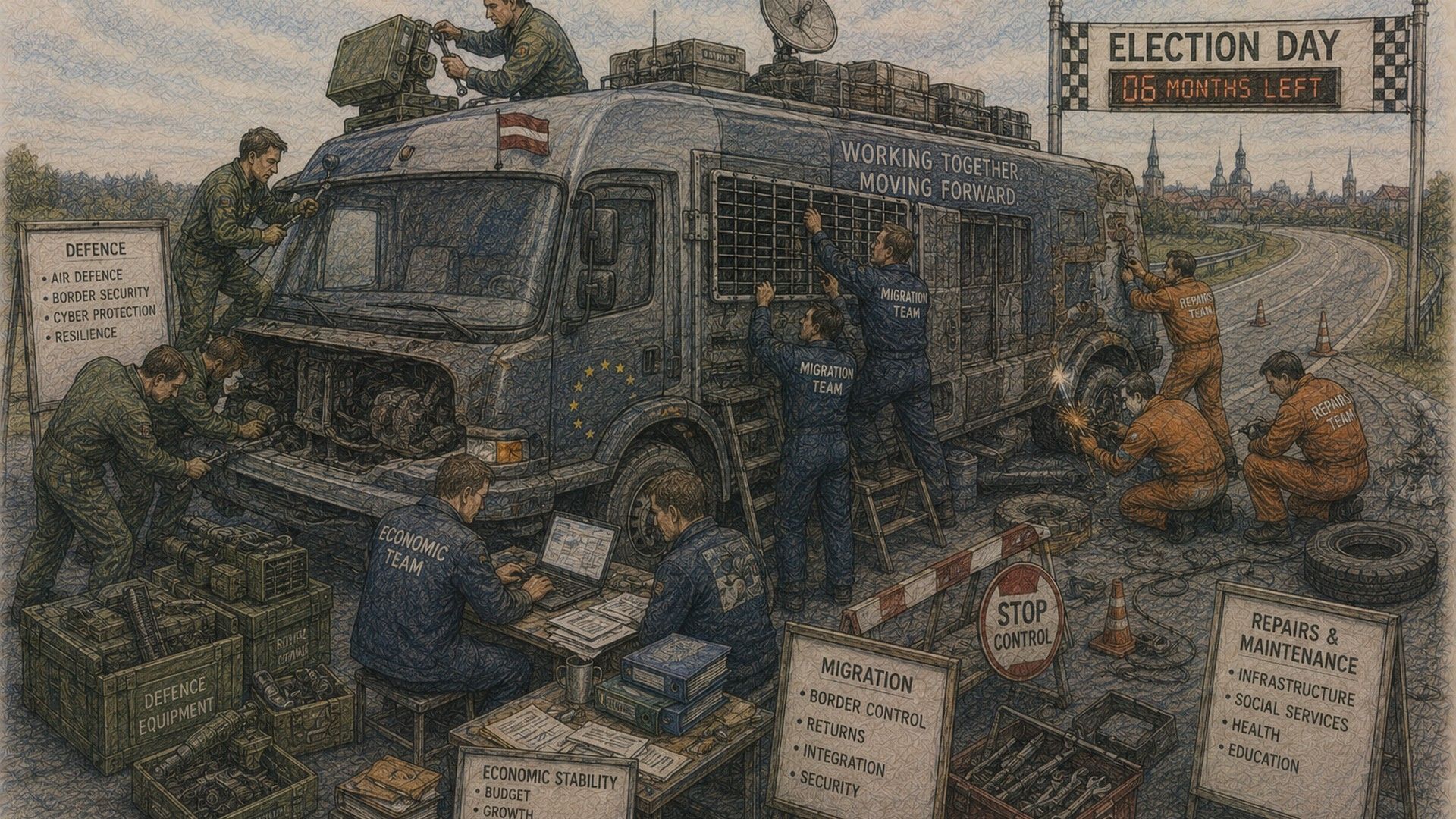
Andris Kulbergs now leads a four-party coalition with a comfortable majority on paper – but only around four months before the October 2026 parliamentary election. That makes this government both strong and fragile: strong enough to pass decisions, too temporary to reshape Latvia properly.
The real story is not just a new prime minister. It is a frontline EU and NATO state trying to hold its politics together while Russian pressure, security fears and campaign warfare close in.
A government born from a security scare
The previous cabinet fell after a dispute over the defence ministry following several drone incidents, including a strike on an oil storage facility in mid-May.
That matters because Latvia is not managing politics in normal conditions. It sits on a 280-kilometre border with Russia and faces a security environment where drone defence, infrastructure protection and border readiness are not abstract policy debates.
Kulbergs arrives promising a professional and accountable government. The harder question is whether a short-lived coalition can restore confidence fast enough.
A majority that may not mean stability
The new coalition brings together the United List, New Unity, the Union of Greens and Farmers and the National Alliance. Together they control 66 of 100 seats – a solid majority.
But the KAS assessment makes clear that the alliance has serious fault lines. The parties broadly agree on NATO, Ukraine and democratic defence, yet differ sharply on markets, EU integration, regional interests, populist instincts, identity politics and relations with Brussels.
The coalition has numbers. It does not automatically have cohesion.
New Unity loses the top job – but keeps the levers
New Unity has suffered a blow by losing the premiership. Yet it remains the security-policy anchor of the new government.
It keeps the foreign ministry and health ministry, gains influence over defence through the appointment of non-party Colonel Raivis Melnis on its proposal, and also takes the transport portfolio. That gives New Unity heavy control over the key Riga–Brussels–Berlin–Washington axis.
The party has lost the front seat, but not the steering wheel.
Defence is now the main test
The report points to three debates that will shape the next months, and defence readiness is the most urgent.
Drone defence, reserves, the Zemessardze volunteer force and faster NATO enhanced Forward Presence build-up are all moving up the agenda. The recent incidents have shaken trust in air defence, creating both a political risk and an opportunity for New Unity to prove it can handle the state’s hardest security file.
For Latvia, failure here would be costly. This is not symbolic politics. It is national survival management.
Migration could split friends
The second pressure point is migration and EU asylum policy. Foreign Minister Baiba Braže’s stance on a Latvian opt-out from the EU Migration Pact plays well domestically, but risks tougher scrutiny in Berlin and Brussels.
That exposes a classic frontline-state dilemma. Latvia wants solidarity from Europe on security and Russia. At the same time, it wants room to act nationally on migration and border protection.
The result is a tension between EU discipline and border reality – exactly the kind of issue that can poison coalition politics during an election campaign.
The deeper crisis is demographic
Beyond the immediate drama sits Latvia’s structural problem: population decline and ageing.
KAS is blunt that the transition cabinet is unlikely to solve this. But the issue will loom over the election because it affects everything else – economic competitiveness, labour supply, public finances and the country’s ability to sustain its security ambitions over time.
Latvia can promise stronger defence. The harder problem is whether it has the demographic and economic base to carry it.
Campaign season will make everything uglier
The coalition’s short lifespan is both weakness and protection. Four months is too little time for major reform fights, but long enough for parties to start positioning against each other before the election.
Populist challengers such as Latvia First and Alternative for Latvia will try to exploit any sign that New Unity is still ruling without really winning. The danger for JV is clear: it could carry responsibility for crisis government without enjoying the full political reward of leadership.
That is a nasty bargain.
The verdict: Latvia has stability – but not comfort
KAS sees the new arrangement as workable if New Unity sharpens its foreign and security profile and avoids being dragged down by Green-Farmer populism or National Alliance identity fights.
But the next few months will be unforgiving. Latvia needs a calm government, stronger defence credibility and a convincing election strategy at the same time.
Kulbergs may have a majority. What he does not have is time.
And in Latvia’s security climate, time is the one thing politics cannot waste.