World Center for Strategic Studies
From closed analysis to public debate
- MONTH
- YEAR

Germany’s Political Breakdown Could Drag Europe Down
Germany’s old image as Europe’s stable, wealthy anchor is cracking fast. Friedrich Merz is struggling with dire approval ratings, infighting inside his CDU and an economy that has barely grown for six years. Meanwhile, the AfD is closing in on real political power as mainstream parties fail to offer voters a convincing route out.
The danger for Europe is simple: if Germany becomes politically paralysed and economically weaker, the EU loses one of the few countries powerful enough to drive major decisions.

The centre is losing its grip
Three eastern state elections could turn Germany’s political crisis into something much harder to contain. In Saxony-Anhalt, the AfD could achieve a historic breakthrough, potentially even reaching an absolute majority.
The CDU insists its firewall against cooperation with the AfD will remain. But that position is becoming increasingly painful as traditional coalition options disappear. With the liberal Free Democrats struggling, conservatives are being pushed towards awkward centre-left alliances that frustrate parts of their own camp.
Berlin promised reform – but delivered hesitation
The deeper problem is not simply the AfD. Its rise exposes the failure of Germany’s political establishment to convince voters that it can fix the country.
Governments have repeatedly announced reforms without delivering enough of them. The previous coalition tried to manage Germany’s historic security and economic shift without asking voters to accept serious sacrifices. Merz now appears equally short of the political strength needed for major change.
Instead of confronting the future, parts of the government are reaching backwards – towards combustion engines, looser labour rules and traditional social policies.
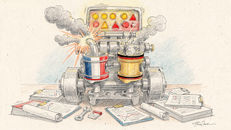
Germany’s economic machine is sputtering
Years of weak growth have left Germany’s industrial model under severe pressure. Manufacturers face Chinese competition, US tariffs, high energy costs and the consequences of Germany’s own earlier choices.
The country’s dependence on China has become a vulnerability rather than an obvious advantage. Industrial jobs are disappearing while dependence on imported technology is growing.
External shocks make matters worse. Ukraine, uncertainty in America, Middle Eastern instability and severe drought are squeezing both political attention and Germany’s room to spend.
The AfD is exploiting the vacuum
The far right is benefiting from frustration rather than creating the underlying crisis. Its programme offers a radical break – sharply lower immigration and asylum, reversals in climate policy, challenges to European integration and a more nationalist foreign policy.
That message is gaining strength precisely because mainstream politicians appear unable to provide a convincing alternative.
Europe cannot shrug this off
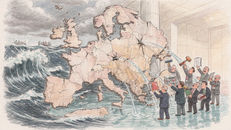
Germany is not just another EU member stumbling through political turmoil. Its economic weight, population and central role in European decision-making mean prolonged German weakness would spread across the continent.
A paralysed Berlin could obstruct negotiations over the EU budget, industrial policy, defence spending, technological sovereignty and European economic resilience. Support for Ukraine could also suffer.
Europe needs German power – Berlin looks afraid to use it
Germany remains an enormous economy with major companies, a huge defence budget and a central position inside the EU single market. Yet its political class increasingly appears unable to translate those assets into decisive leadership.
That creates an ugly mismatch: Europe needs Germany to exercise more power just as Germany is becoming less confident about exercising it.
The warning sign: German paralysis will not stay German
The coming elections may offer Berlin one of its last chances to regain political momentum. If they instead deepen fragmentation and weaken Merz further, Europe will inherit the consequences.
A weaker Germany does not merely mean a weaker Berlin. It risks leaving the entire EU poorer, more divided and easier for outside powers to exploit.