
World Center for Strategic Studies
From closed analysis to public debate

- MONTH
- YEAR

Germany’s Intelligence Crisis: A Spy Scandal Threatens Berlin’s Security Overhaul
Germany is trying to rebuild its intelligence capabilities just as a scandal involving a former spy chief threatens to derail the effort. The arrest of August Hanning, former president of the Federal Intelligence Service (BND), has exposed serious questions about the protection of classified information and the agency's internal safeguards. German Marshall Fund analyst J.C. Lintzenich warns that the political backlash could weaken reforms designed to confront Russian espionage, sabotage and growing security threats. Berlin faces a dangerous dilemma – it must investigate potential failures inside its intelligence establishment without stripping its agencies of the powers needed to protect the country.
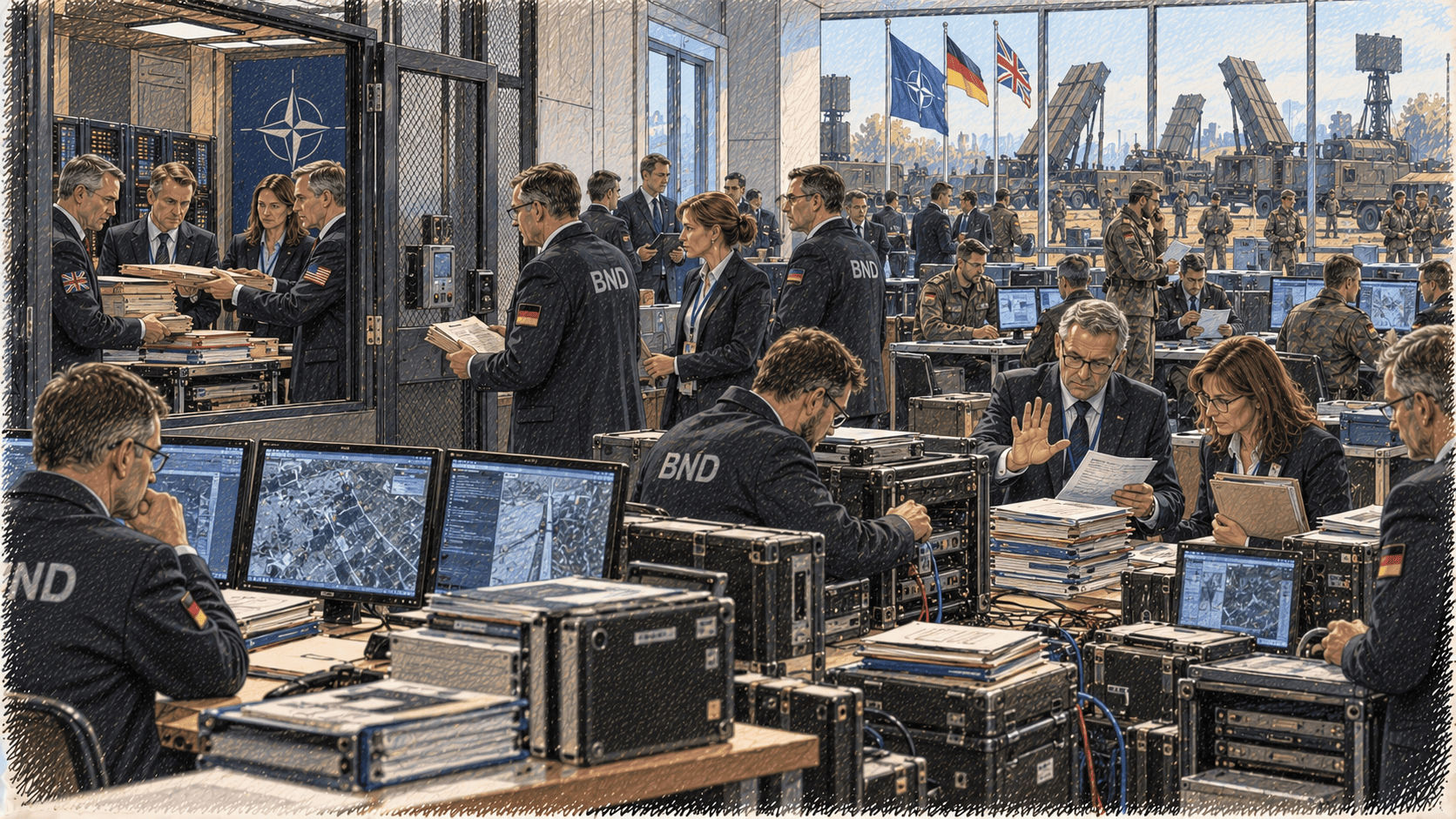
A former intelligence chief under investigation
Federal prosecutors allege that Hanning obtained classified documents from a former BND colleague and used the information in his private consulting activities.
Hanning denies wrongdoing, and the investigation remains ongoing. Authorities have not publicly identified any foreign intelligence service potentially involved.
GMF stresses that no disclosed evidence directly connects the case to Russia.
Nevertheless, the allegations raise troubling questions about how a former senior official could allegedly obtain sensitive information through contacts inside the agency.
Germany ignored earlier warnings
The Bundestag's Parliamentary Oversight Panel recommended stronger transparency requirements and restrictions on former intelligence officials in 2023.
Those recommendations were never implemented.
The Hanning case has now prompted an exceptional parliamentary investigation, including powers to inspect BND files, examine facilities and question personnel.
For Lintzenich, the priority is establishing what information may have been compromised, who obtained it and whether it reached foreign intelligence services.
The scandal threatens necessary reforms
Germany is preparing one of the most significant overhauls of its intelligence legislation in decades.
The proposals would expand the BND's technical capabilities, clarify its authority to use artificial intelligence, extend certain data-retention periods and improve intelligence sharing with the Bundeswehr and foreign partners.
In limited circumstances, the agency could also take action against foreign threats rather than merely report them.
But the Hanning allegations have strengthened opposition to granting intelligence services additional powers.
GMF warns that Berlin could respond to an internal-security failure by restricting the very capabilities needed to identify external threats.
Decades of restraint created dangerous weaknesses
Germany's intelligence problems did not begin with the latest scandal.
Following the Cold War, Berlin limited its military and intelligence capabilities while relying heavily on American and British partners.
Historical concerns about state surveillance encouraged restrictive legal frameworks, but these constraints also limited the BND's operational flexibility.
According to the analysis, Germany developed an intelligence culture more comfortable avoiding institutional risks than confronting increasingly aggressive adversaries.
The consequences became particularly serious as Russia intensified its intelligence activities across Europe.
Allies never fully trusted Berlin
Germany's intelligence dependence was compounded by doubts among its closest partners.
Former British intelligence officials have acknowledged limiting the sharing of sensitive information with the BND because of concerns about possible Russian penetration.
Although Berlin cooperated closely with the CIA, MI6 and other Western services, it remained outside the most trusted intelligence-sharing arrangements.
This left Germany in an uncomfortable position – dependent on foreign reporting while unable to access some of its allies' most sensitive intelligence.
GMF argues that this arrangement is increasingly unsustainable.
Russia's shadow war raises the stakes
The BND's current president, Martin Jäger, has identified Russia as Germany's most dangerous opponent and warned of a continuing shadow war.
Espionage, recruitment of insiders, infrastructure sabotage and covert interference demand capabilities that cannot be built overnight.
The United States is also shifting more attention and resources away from Europe, increasing pressure on Germany to collect and analyse intelligence independently.
Without stronger intelligence services, Berlin risks struggling to protect critical infrastructure, support Ukraine and fulfil its expanding responsibilities within NATO.
Germany needs spies it can trust
The reform challenge extends beyond legislation and technology.
The BND needs more capable analysts, technical specialists, intelligence officers and leaders prepared to operate in difficult environments.
Recruitment is particularly important because intelligence capabilities depend on experienced personnel and trusted human networks developed over many years.
GMF argues that Germany must combine stronger operational powers with rigorous internal security and democratic oversight.
A modern intelligence agency must be effective against hostile services without abandoning the constitutional principles it exists to defend.
The big warning: Germany cannot afford another intelligence retreat
Lintzenich argues that the Hanning investigation should lead to stronger counterintelligence safeguards, tighter controls on former officials and greater accountability.
But allowing the scandal to undermine the broader intelligence overhaul would leave Germany vulnerable at precisely the moment it is assuming greater responsibility for European security.
Berlin's military Zeitenwende cannot succeed without an intelligence transformation. More weapons and defence spending will mean less if Germany remains dependent on allies for information about the threats it faces.