World Center for Strategic Studies
From closed analysis to public debate

- MONTH
- YEAR

Germany and America Are Losing Touch with Reality – And Europe Could Pay the Price
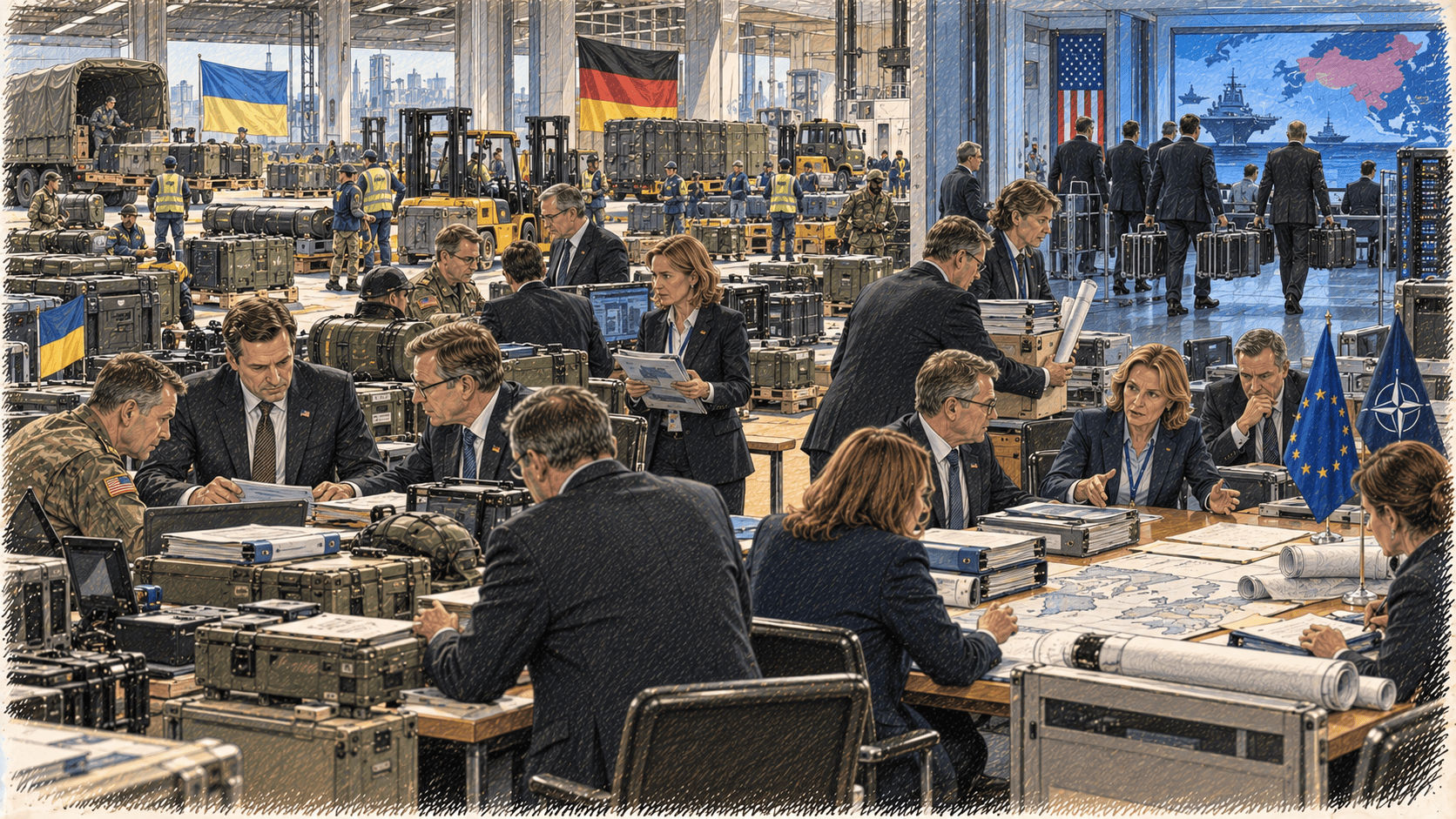
Germany’s political establishment is losing voters while Washington risks misreading the war in Ukraine. Holger Friedrich, writing in The National Interest, argues that both crises spring from the same dangerous failure – political elites increasingly trust their own assumptions rather than confront evidence that contradicts them. In eastern Germany, that disconnect is destroying support for established parties. In the United States, Friedrich believes it is distorting assessments of Russia, Ukraine and Europe's security future. His warning is that Western institutions have become trapped in self-reinforcing debates while Moscow and Beijing pursue clearer strategic objectives. The consequences could reach far beyond elections – threatening Europe's economic strength, political stability and prospects for peace.
Germany's political establishment has stopped listening
Thirty-six years after reunification, tensions between eastern and western Germany remain unresolved.
Friedrich argues that major newspapers and political institutions increasingly treat eastern German dissent as a problem to contain rather than a signal requiring serious examination.
Instead of engaging directly with dissatisfied voters, established institutions promote familiar perspectives and dismiss challenges to their assumptions.
The author sees this as a closed political system that protects its existing worldview even as electoral results expose its weaknesses.
Eastern Germany is paying the price
The consequences are visible in the collapse of support for traditional parties.
Friedrich highlights the CDU's unprecedented exclusion from the state parliament of Mecklenburg-Western Pomerania as evidence that established political loyalties can no longer be taken for granted.
He identifies several neglected grievances: young people leaving eastern regions, struggling businesses, growing welfare costs and repeated failures to deliver promised reforms.
The result, in his interpretation, is not simply growing radicalism but a breakdown in the relationship between voters and institutions that claim to represent them.
Washington has its own echo chamber
Friedrich argues that a similar problem affects American foreign-policy thinking.
Drawing on meetings in Washington, he describes influential circles that reject assessments of Russia and Ukraine when they conflict with established Western positions.
He distinguishes between analysts whose views are shaped by personal experiences, institutional networks and limited access to contemporary Russia, and more pragmatic strategists who recognise contradictions in prevailing assumptions.
These categories reflect the author's interpretation of his conversations rather than a systematic survey of American policymakers.
Russia policy is trapped in old assumptions
The commentary questions whether Western governments have accurately assessed Russia's resilience and the prospects for defeating it militarily.
Friedrich argues that sanctions, military pressure and expectations of Russian weakness have not produced the outcomes some Western strategists anticipated.
He also criticises the reluctance to revisit decisions made after the Cold War, including NATO enlargement and missed opportunities for a different European security arrangement.
The author explicitly acknowledges Russia's responsibility for invading Ukraine but maintains that recognising Russian aggression should not prevent scrutiny of Western strategic choices.
Europe's resources are being stretched
Friedrich connects these foreign-policy disagreements to Europe's deteriorating economic position.
Germany faces mounting fiscal pressures, unfinished welfare reforms and disappointing productivity improvements, while major economies increasingly redirect their attention away from Europe.
He argues that Western strategies towards Ukraine often underestimate these domestic constraints.
In his view, Germany's political establishment is misreading social conditions at home while participating in an international strategy whose long-term costs it has not adequately confronted.
Washington is already looking towards China
The article presents a particularly unsettling interpretation of American strategic priorities.
According to Friedrich's account, some pragmatic policymakers regard Ukraine as one conflict within a broader competition for global power.
From this perspective, continued fighting can provide military and technological lessons relevant to future confrontation with China, particularly if European governments bear much of the financial burden.
Friedrich portrays this as a cold strategic calculation that leaves Europe's own long-term security interests insufficiently addressed.
These claims rest on his reported conversations, not an established consensus within the US administration.
Moscow and Beijing appear more certain
The author contrasts Western uncertainty with what he describes as clearer strategic objectives in Russia and China.
Moscow, according to his account, signals determination to continue the war while expressing interest in a future European security architecture.
Beijing prioritises trade, economic development and technological strength while preserving military options.
Friedrich argues that neither Washington nor Berlin has presented a convincing vision for Europe's security after the war.
That absence may be more consequential than disagreements over immediate military tactics.
The stark truth: Western power cannot survive strategic self-deception
Friedrich's central argument is that Germany and the United States are making parallel errors: their institutions interpret events through assumptions that increasingly fail to match political and geopolitical developments.
In Germany, the consequences are electoral fragmentation and declining institutional trust. In American foreign policy, he fears that mistaken assessments could prolong conflict and leave Europe without a workable security settlement.
The article offers a strongly critical interpretation rather than a comprehensive assessment of Western policy. Its challenge to European leaders is nevertheless clear – political authority and strategic influence become harder to sustain when governments cannot recognise where their assumptions have failed.