World Center for Strategic Studies
From closed analysis to public debate
- MONTH
- YEAR

Europe Is Trapped Between America and China – But Brussels Is Fighting the Wrong Dependencies
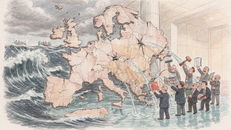
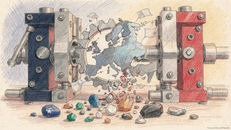
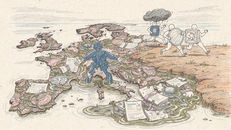
Europe depends on two global powers it increasingly struggles to trust, but the threats they pose are fundamentally different. An ISDP policy brief by Niklas Swanström warns that Brussels risks wasting resources by treating economic dependence on the United States and China as the same problem. America dominates Europe's financial system, digital technologies and defence arrangements, while China controls critical materials and industrial inputs that European manufacturers cannot quickly replace. Washington's leverage is broad and deeply embedded; Beijing's is narrower but can disrupt production within days. The danger is that Europe pursues vague strategic autonomy while leaving its most immediately exploitable weaknesses untouched.
America controls the system Europe relies on
Europe's dependence on the United States is rooted in the structure of the global economy.
American capital markets, dollar-denominated earnings, consumer demand and investment relationships connect European prosperity to US financial conditions.
These ties are extensive but largely reciprocal. European and American investors have powerful reasons to preserve stability, making financial interdependence different from dependence on a supplier that can abruptly halt essential deliveries.
Nevertheless, Washington's central position gives it considerable influence over European economic decisions.
China can disrupt Europe's factories much faster
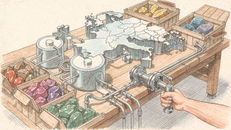
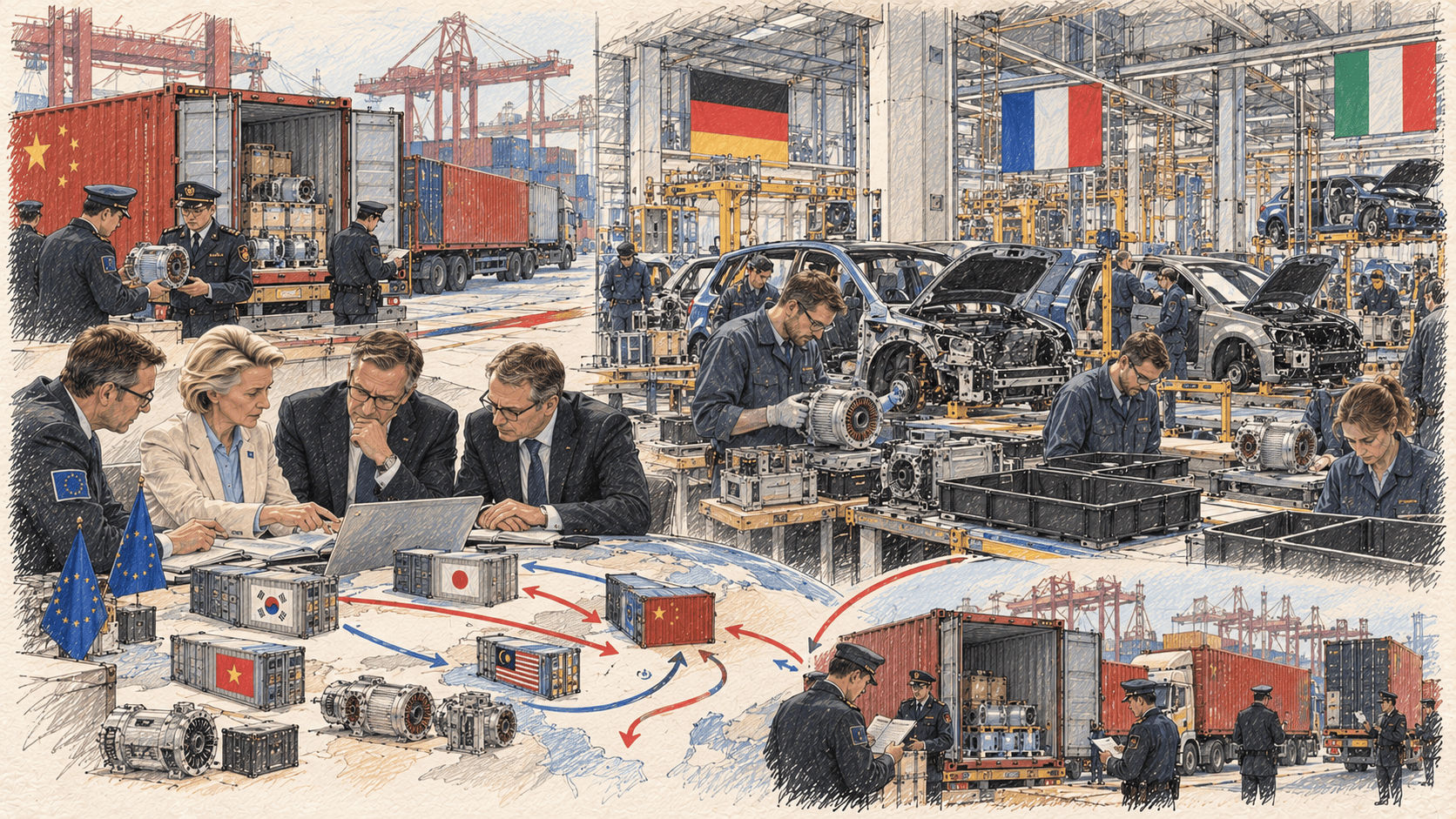
Beijing's leverage operates through physical supply chains rather than financial integration.
European manufacturers depend on Chinese rare earths, permanent magnets, pharmaceutical inputs, solar technologies and other critical products.
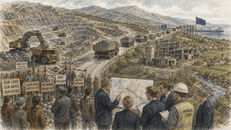
Many of these materials are difficult to replace quickly because China dominates essential processing and manufacturing stages.
ISDP warns that export restrictions or licensing requirements can turn this dependence into immediate industrial disruption.
Europe may diversify its trading partners on paper while remaining dependent on Chinese-controlled production bottlenecks.
Brussels has talked about de-risking without delivering it
The EU has spent years promising to reduce dangerous economic dependencies.
But Swanström argues that Europe's exposure to critical Chinese inputs remains largely intact.
Diversifying final-product imports does little if alternative suppliers still rely on Chinese processing, components or raw materials.
The problem is therefore deeper than bilateral trade statistics suggest.
Effective de-risking requires identifying the stages of production where a single foreign government can interrupt European industry.
America's financial power carries a hidden threat
The United States possesses a form of leverage China cannot easily match.
The dollar's central role in international payments and financial markets gives American sanctions extensive global reach.
European companies can face serious consequences when Washington restricts transactions, even when their activities occur outside US territory.
This creates a tension in Europe's relationship with its principal ally: financial integration delivers major economic benefits but also exposes European firms to decisions made in Washington.
The risk becomes more significant as American foreign policy grows less predictable.
Europe's defence dependence is different again
Military security is the clearest exception to the generally stabilising character of transatlantic interdependence.
European armed forces continue relying on American weapons, technologies and security guarantees.
Unlike ordinary investment relationships, defence dependence can become coercive when access to essential equipment, maintenance, components or support is politically constrained.
ISDP argues that this vulnerability deserves particular attention because it affects Europe's ability to act independently during security crises.
Buying more weapons will not automatically solve the problem if critical capabilities remain under foreign control.
Technology leaves Europe exposed on both sides
Europe's technological dependence is divided between two competitors.
The United States dominates much of the digital economy, including important platforms and advanced technological capabilities.
China holds major advantages in clean technologies and their manufacturing supply chains.
Europe trails both at the technological frontier.
This creates a difficult strategic choice. Reducing dependence on one power can increase exposure to the other, particularly when industrial and digital technologies become more closely connected.
Brussels needs to distinguish genuine security vulnerabilities from ordinary commercial relationships.
Not every dependency is equally dangerous
Swanström challenges the assumption that trade volume provides a reliable measure of economic exposure.
A large and mutually beneficial investment relationship may be less dangerous than dependence on a relatively small quantity of irreplaceable industrial components.
The crucial question is whether another country can deliberately exploit a dependency, how quickly it can do so and how costly replacement would be.
That requires a more selective approach than simply reducing trade with major powers.
Europe must prioritise vulnerabilities that can be weaponised quickly while managing slower-moving structural dependencies over time.
National solutions will not be enough
The brief also warns against fragmented European responses.
Individual governments may pursue separate industrial strategies, procurement arrangements or supply-chain partnerships, but their economies remain deeply interconnected.
A disruption affecting one country's critical suppliers can spread through manufacturing networks across the EU.
Swanström therefore calls for collective European action and coordinated management of American and Chinese dependencies rather than competing national efforts.
The key point: Europe's dependencies require different solutions, not slogans.
ISDP's central warning is that Europe cannot achieve economic security by treating Washington and Beijing as interchangeable threats.
American influence is embedded in finance, investment, technology and defence. Chinese leverage is concentrated in physical supply chains and strategically important industrial inputs.
Both create vulnerabilities, but their mechanisms, timescales and potential consequences differ
Europe's challenge is to identify which dependencies can be exploited most rapidly, coordinate its response and invest in alternatives without unnecessarily damaging beneficial economic relationships. Rebalancing these exposures will take years, potentially decades – and poorly targeted policies could leave Europe even more dependent than before.