
World Center for Strategic Studies
From closed analysis to public debate
POPULAR
- MONTH
- YEAR

On Hungary’s Economic and Social Stability Ahead of the Coming Elections
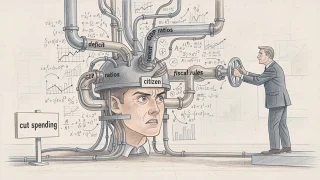
Hungary enters the spring of 2026 in a state of mounting socio-economic uncertainty as parliamentary elections loom on 12 April. For the first time in sixteen years, Viktor Orbán and his Fidesz government face a serious political challenge from the Tisza party led by Péter Magyar.
An Energy Price Shock: What an Efficient Energy Transition Should Achieve
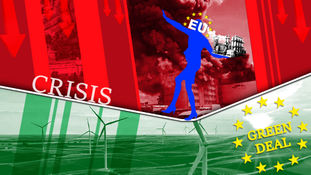
An article entitled Energiepreis-Schock: Was eine resiliente Energiewende leisten muss, dealing with the challenges of the energy transition amid soaring energy prices, was posted on the Konrad Adenauer Foundation’s website on 13 March.
Europe’s Door to Chinese Tech Investment Is Still Ajar
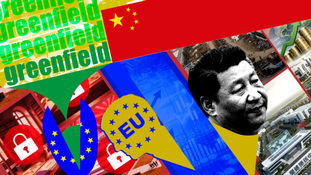
An article by James Green and Sander Tordoir from the Centre for European Reform analyzes the current EU policy in respect of Chinese foreign direct investment (FDI) in high technology sectors. The main issue as noted by the authors is that Europe, while having learned to efficiently block direct acquisitions of strategic assets by Chinese companies, cannot yet fully neutralize new risks posed by greenfield investments – with manufacturing facilities built from scratch in EU territory. That threatens the whole Union’s economic security, technological independence and competitiveness.
Reweaving Silk Roads: The Middle Corridor’s Role in EU Economic Security

On 5 March 2026, The Hague Centre for Strategic Studies posted on its website a report entitled Reweaving Silk Roads: The Middle Corridor’s Role in EU Economic Security, dealing with the use and development of transit routes through Central Asia and South Caucasus.
The ECB's bid to strengthen the euro's global role
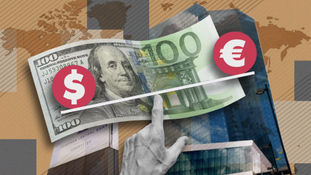
A report entitled The ECB’s bid to strengthen the euro’s global role by Spyros Andreopoulos and Sander Tordoir, former European Central Bank employees, was published on the website of the Centre for European Reform on 20 February 2026.
Merz’s First 100 Days: Big Promises, Hard Reality Sets In
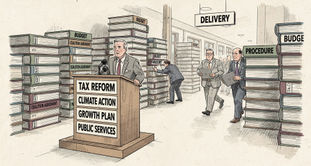
The analysis takes stock of Chancellor Friedrich Merz’s first hundred days and finds a government eager to signal strength but constrained by the same limits that trapped its predecessors. Rhetoric has sharpened, priorities look clearer, and ambition is back in Berlin. The problem is delivery. The piece argues that Merz’s opening phase exposes how hard it is to turn tougher language into real power when money, coalitions and Europe’s machinery push back.
Europe in the Age of Geoeconomics

The website of the Konrad Adenauer Foundation (Germany) has posted an article Europe in the Age of Geoeconomics by Tim Peter.
The article is a critique of the Buy European program designed to protect the European market amid global trade wars.
The Mercosur deal tests Europe’s geoeconomic ambition

On 19 February 2026, a report entitled The Mercosur deal tests Europe’s geoeconomic ambition by Anton Spisak, a senior research fellow at the Centre for European Reform, was published on the Centre’s website. The report deals with the issues that arose in the ratification of the free trade agreement with MERCOSUR and highlighted the structural deficiencies in the EU’s trade agreement policy.
Europe is chasing the wrong fix for its growth crisis

On 11 February, an article entitled Europe is chasing the wrong fix for its growth crisis was published on the Politico online newspaper’s website – dedicated to the idea of overcoming the EU’s economic lag by deepening its federalization and building it into the global economy.
Macron’s Defence Pledge: Big Numbers, Old Doubts
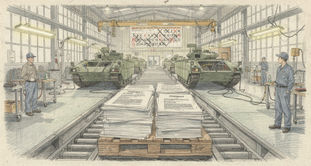
The commentary dissects Emmanuel Macron’s latest defence spending commitments and finds a familiar French pattern – bold announcements masking hard questions left unanswered. Paris talks about resolve, leadership and strategic autonomy. The paper argues that behind the headline figures sit delivery risks, budget trade-offs and capability gaps that money alone will not fix.