World Center for Strategic Studies
From closed analysis to public debate
- MONTH
- YEAR

Europe’s Energy Reality Check: Green Ambition Hits the Wall
Institut Montaigne’s action-note trilogy gives Brussels a blunt warning on energy.
The EU still wants carbon neutrality by 2050, but the path to get there is now full of traps.
Targets for 2030 and 2040 look harder, industry is under pressure, infrastructure is late and energy security has become a weapon again.
The message is not anti-climate. It is harsher than that: Europe may fail its green transition because it designed too much of it around rigid rules, slow permits and political wishful thinking.
Energy is power again
Europe’s energy debate is no longer just about emissions.
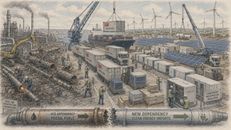
US industrial policy, Chinese clean-tech overcapacity, fragile supply chains, the end of Russian pipeline gas and fresh tensions around hydrocarbon routes have dragged energy back into hard geopolitics.
Cheap, reliable and low-carbon energy is now a condition of industrial survival. If Europe cannot deliver it, reindustrialisation will stay a slogan and factories will look elsewhere.
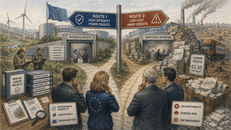
Brussels built a rigid machine
The first warning is about governance.
The current EU framework focuses heavily on renewable-energy targets, while giving too little room to other low-carbon tools such as nuclear power, carbon capture and different national energy mixes.
That creates political friction between member states and makes investment harder. Europe wants one climate destination, but it keeps arguing over the permitted routes. Institut Montaigne says the EU should shift towards carbon-intensity reduction and technological neutrality.
In plain terms: judge the result, not the favourite technology.
Permits are choking the transition
The second problem is speed.
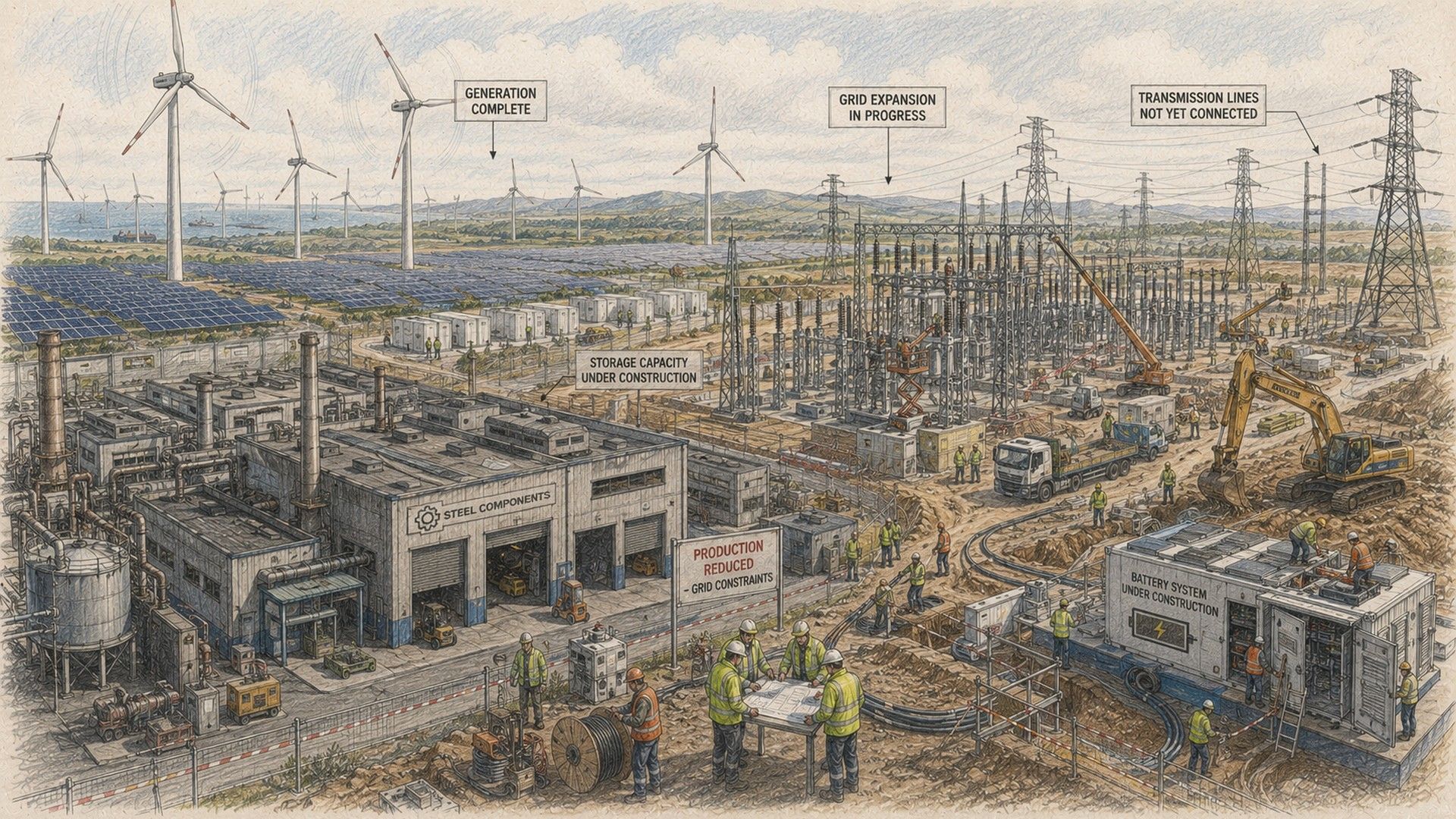
Europe needs a massive build-out of low-carbon generation, grids, storage, interconnectors and new energy infrastructure. Yet national procedures and over-transposition of EU rules can turn projects into administrative marathons.
The report gives the brutal example of offshore wind in France: roughly three years of construction, but more than a decade of prior procedures.
That is how Europe loses. Not because it lacks plans, but because the machinery moves too slowly to build them.
A Security Act for energy
Institut Montaigne proposes a European Energy Security Act to force acceleration.
The idea is to create simpler, harmonised permitting rules, maximum deadlines, recognised low-carbon energy zones and European-level treatment for strategic projects.
This is the Draghi logic applied to energy: cut delay, unlock investment, and stop pretending that 2050 can be reached with 1990s paperwork.
Money is still missing
The infrastructure bill cannot be dumped on consumers and national budgets alone.
The report argues for stronger European financing, especially through the European Investment Bank, and tools to spread costs over time for networks that must be built before demand fully arrives.
That matters because the energy transition is front-loaded. Grids, storage and low-carbon capacity must be financed now, while many benefits arrive later.
If Europe mishandles the cost, it will hit households, industry and political support at once.
The market no longer fits reality
The third note takes aim at the electricity market.
Europe’s old market design was built around marginal pricing, separated networks and liberalised competition. That structure still has strengths, but its parameters are no longer enough for a system dominated by low-carbon assets, volatile renewables and huge investment needs.
Long-term contracts such as CfDs and PPAs must be standardised and made more liquid. Public support cannot keep carrying the full burden forever. Private buyers need clearer tools to finance clean power without pushing all risk back onto the state.
Green labels risk greenwashing
The report is especially sharp on guarantees of origin.
These certificates are meant to trace green electricity, but the current system can detach claims from physical reality. Cheap certificates, cross-border mismatches and loose timing rules risk turning clean-energy claims into accounting tricks.
That is not just a technical flaw. It damages trust and hides the real pressure on the grid.
Europe needs energy labels that reflect physical constraints, not paperwork comfort.
Flexibility becomes survival
A decarbonised system needs consumers, storage and networks to respond to changing production.
That means smarter network tariffs, more useful forward electricity products and capacity mechanisms that reward real availability instead of keeping fossil assets alive through the back door.
The future grid will be less forgiving. If prices, contracts and tariffs do not push flexibility, Europe will pay more for instability.
The hard lesson: Europe needs pragmatism, not green theatre.
Institut Montaigne’s warning is stark but practical. Europe does not need to abandon climate ambition. It needs to stop sabotaging it with rigid targets, slow procedures, weak market signals and underfunded infrastructure.
The EU’s energy transition will be won in permits, grids, contracts, finance and industrial costs – not in speeches about ambition.
Europe can still decarbonise. But only if it starts building like energy security is a matter of power, not paperwork.