World Center for Strategic Studies
From closed analysis to public debate

- MONTH
- YEAR

Dutch Stability Warning: The Calm Score Hides a Split Country
HCSS’s summer monitor gives the Netherlands a narrow pass – and then strips away the comfort.
For the fourth measurement in a row, Dutch citizens rate social stability at 6.1.
That looks steady. It is not reassuring.
Under the flat number, the middle is shrinking, the extremes are growing and the country’s worries are turning inward.
The Netherlands is not in open crisis – but the warning lights are no longer only outside the border.
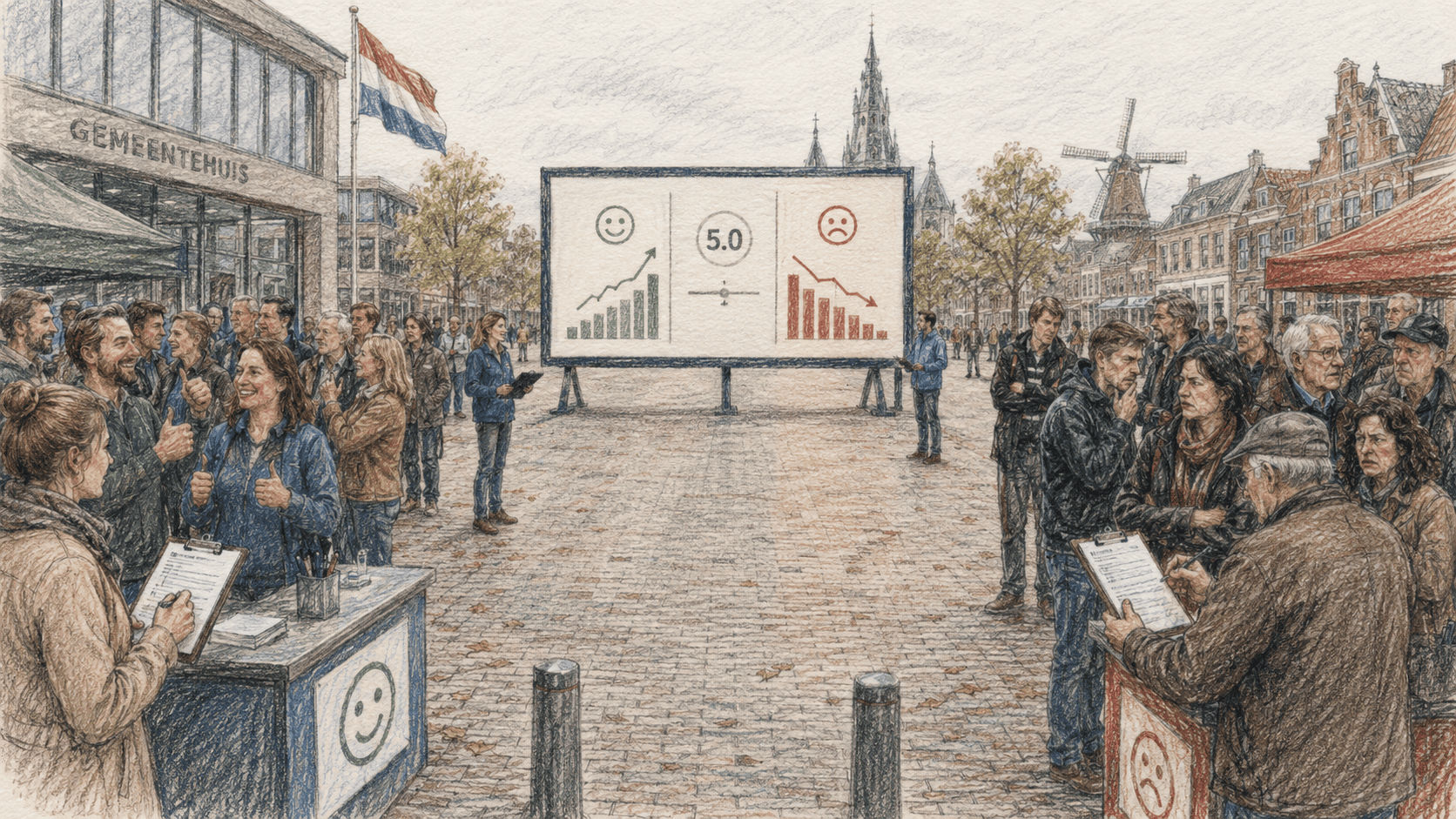
The centre is thinning
The survey’s toughest finding is about polarisation in public mood.
More people now rate Dutch stability very positively, and more rate it very negatively. The safe middle is losing ground.
That matters because a stable average can hide a less stable society. The headline number says continuity. The distribution says drift, separation and a weaker shared picture of what the country is becoming.
The threat moves home
Earlier concern about external pressure has cooled slightly after a spring peak.
The summer monitor shows the centre of gravity shifting towards domestic unease: anger inside society, doubts over public safety, mistrust in institutions and fears about groups that may undermine the legal order.
This is the ugly turn. The Dutch public still sees danger abroad, but the sharper anxiety is now about what is happening inside the country.
Migration dominates everything
Migration remains the biggest concern across both external and internal dimensions, for the fifth measurement in a row.
But HCSS also shows how explosive the issue has become. Concern varies sharply by politics, age, education and geography. Younger people barely place migration at the top and focus more on weak social cohesion. In less densely populated areas, migration is feared more strongly than in the cities where it is more visible.
That is a dangerous gap: the same issue is a top threat to one part of society and barely the main worry to another.
The state looks slow and distant
The public’s judgement on government capacity is grim.
Large majorities think the government delays problems, that rules have become too complex for ordinary people and that police and authorities struggle more to guarantee safety.
That is not a small image problem. It is a legitimacy problem. When people believe the state cannot act, frustration becomes the normal weather.
Climate jumps, Ukraine fades
The outside threat list is also shifting.
After the record-hot June, climate change and climate disasters jumped into the top three external worries. Cyberattacks slipped back, and concern about war in Europe fell further, even as great-power tensions gained ground.
That points to a public threat radar driven by what feels immediate. Heat is felt on the skin. Ukraine is drifting into the background. For Dutch and European security policy, that fading urgency is a risk.
Extremism and crime gain weight
HCSS finds rising concern over subversive forces.
Right-wing extremism has caught up with religious extremism in public concern, while organised crime is increasingly seen as gaining grip on the legal system and society. Worries about foreign regimes are also growing.
Online spaces sit underneath much of this anxiety. More than eight in ten Dutch respondents see them as a breeding ground for hate and violence. The public now links instability not only to ideology, but to the everyday digital ecosystem.
Trust is local, not national
The most sobering part is resilience.
Dutch people still draw confidence from themselves, neighbours and small local networks. Most believe people nearby help each other when needed.
But trust in national crisis readiness is thin. Only a small minority have strong confidence that the Netherlands is ready for sabotage, and few believe the country compares well internationally in crisis preparation.
That is the gap HCSS keeps finding: citizens trust the street more than the system.
The warning sign: The Netherlands looks stable until pressure hits
HCSS is not saying the country is collapsing. Its message is sharper and more useful: Dutch stability is real, but brittle.
The public still sees sources of strength close to home, yet doubts that national institutions can manage the bigger shocks. For policymakers, the task is double: answer the anger that keeps feeding distrust, and invest in the local bonds that still hold society together.
The score is 6.1. The mood underneath is far less comfortable.