World Center for Strategic Studies
From closed analysis to public debate
- MONTH
- YEAR

Europe Can’t Defend Itself Alone: The Price of Fragmentation Is Rising
The analysis cuts through years of polite talk and lands on a hard security verdict – Europe’s defence problem is not awareness or ambition, but fragmentation. Faced with a harsher threat environment, European states still buy separately, plan separately and pay separately. The paper argues that this model no longer works. Without joint financing and joint procurement, Europe’s promises of deterrence ring hollow.
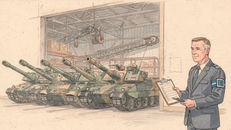
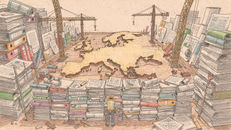
At its core, the brief says Europe is trying to fight modern wars with a 20th-century shopping list. National budgets rise, but capability does not scale. Duplication wastes money, small orders keep prices high, and industry cannot plan or deliver at speed. The result is more spending with too little to show for it.
National buying breaks collective defence
Countries cling to control over procurement, even when it undermines shared security. The analysis shows how dozens of parallel programmes produce incompatible systems, thin stockpiles and slow replenishment.

Money goes up, value doesn’t
Defence budgets are rising across Europe, but efficiency lags. The paper stresses that without pooled demand and shared financing, higher spending buys marginal gains rather than decisive capability.
Industry starved of certainty
Europe’s defence industry needs scale and long-term contracts to invest and expand. Fragmented orders deliver neither. The analysis warns that this keeps production slow and leaves Europe dependent on external suppliers in crises.
America fills the gaps
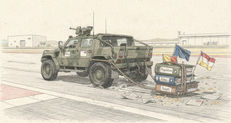
The reliance on US systems grows when Europe cannot deliver its own. The paper frames this as a strategic dependency problem – Europe talks autonomy while reinforcing reliance.
Joint tools already exist – unused
Mechanisms for shared financing and procurement are on the table, but political reluctance blocks them. The analysis highlights fear of loss of sovereignty and budget control as the real obstacles, not feasibility.
Time works against Europe
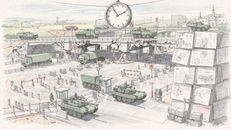
Threats evolve faster than procurement reform. The paper underlines that delay locks in weakness, as adversaries adapt and test Europe’s limits.
The big warning: Fragmentation is a security risk
Europe’s defence problem is structural, not temporary. Acting alone has become the most expensive option.
Unless Europe pools money and orders at scale, it will keep paying more for less protection. Joint defence is no longer an idealistic project – it is the minimum price of staying credible in a dangerous world.