World Center for Strategic Studies
From closed analysis to public debate
- MONTH
- YEAR

Decision Time for Europe: Delay Now, Decline Later
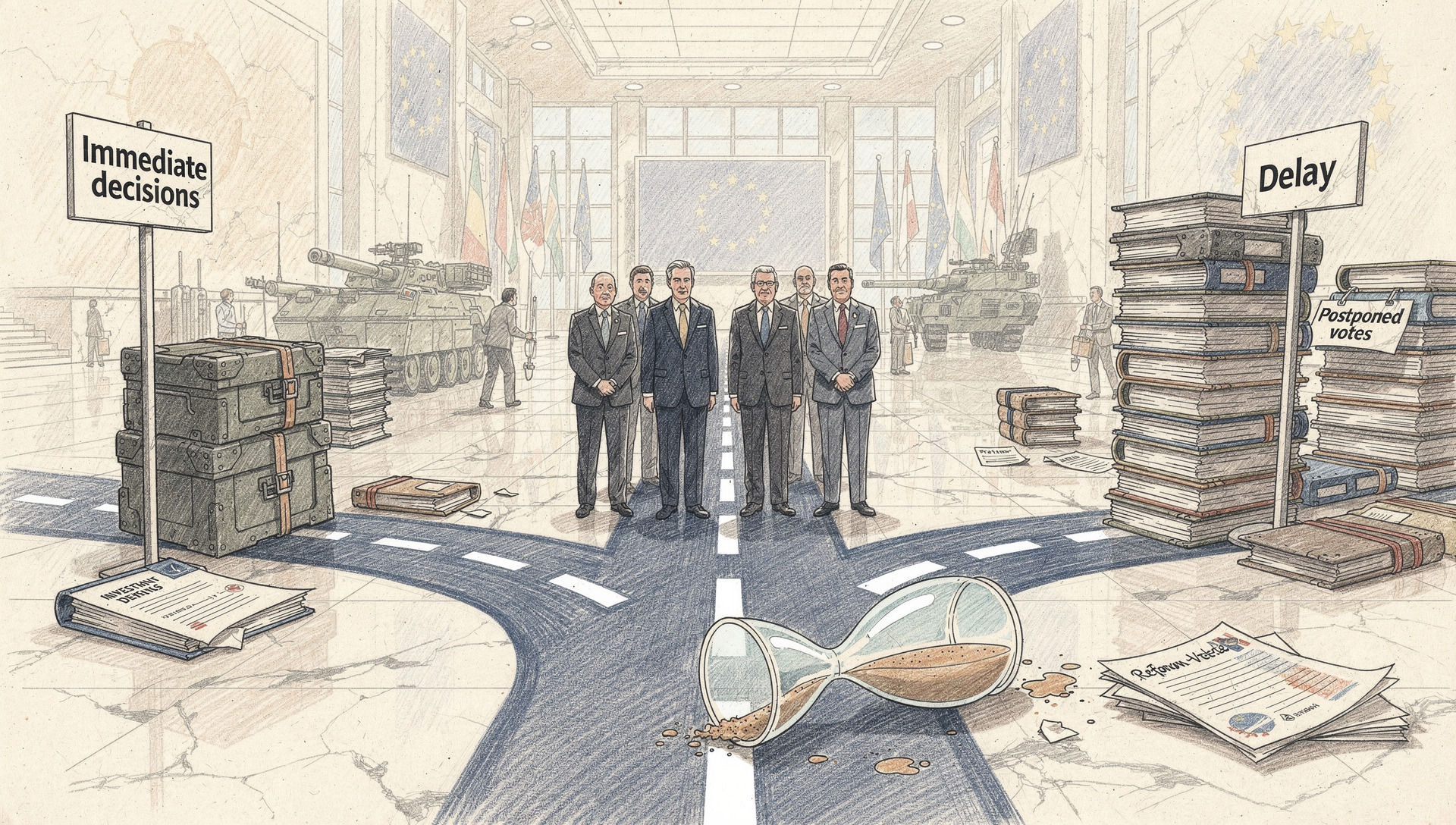
The analysis delivers a blunt ultimatum to Europe – the period of comfortable drift is over. The EU is facing overlapping pressures on security, the economy and global influence, and the option of muddling through is disappearing fast. The piece argues that Europe is not short of strategies or warnings. What it lacks is the willingness to choose, pay and act before events force its hand.
At its core, the article says Europe has reached a moment where hesitation itself has become a decision. External shocks have piled up, from war on the continent to hardening US expectations and rising global competition. Yet Europe’s instinct remains delay, compromise and deferral. That approach once bought time. Now it is burning it.
The window is closing
The analysis stresses timing above all. Europe still has resources, market power and institutional depth. But each year of half-measures narrows options and raises costs, making future adjustment more painful and less democratic.
Security reality bites
War and deterrence are no longer abstract. The paper shows how Europe’s defence gaps, industrial weakness and reliance on allies are colliding with a harsher threat environment. Talking unity without delivery no longer reassures anyone.
Economic strength under strain
Europe’s growth model is faltering. High costs, low productivity and global subsidy races expose weaknesses the EU has postponed fixing. The analysis warns that economic drift will translate directly into political and strategic weakness.
America sets harder terms
US patience with European underperformance is thinning. The article frames this as a power shift – Washington is prepared to move on priorities that suit it, leaving Europe to adapt after the fact rather than shape outcomes.
Internal divisions resurface
Big choices sharpen old splits between member states. The analysis highlights how fiscal debates, defence spending and industrial policy reopen fault lines that consensus politics struggles to manage.
Leadership test looms
Europe’s institutions can coordinate, but only if governments allow them to. The paper argues that without political backing, Brussels cannot turn plans into power.
The stark truth: Choosing later is choosing worse
Europe’s biggest risk is not making the wrong choice. It is refusing to make one at all.
Decision time does not guarantee success, but delay guarantees decline. If Europe keeps postponing hard calls, it will soon discover that circumstances have decided for it – with fewer options, less control and far higher costs than acting now would have required.