World Center for Strategic Studies
From closed analysis to public debate
- MONTH
- YEAR

EU - China Relations: Role of the European Commission in Forming Strategic Prospects
Since the 1970s, the European Commission has been striving to strengthen economic ties between the European Union and China. In the beginning, the EU supported the global integration of China, but by the early 2010s it became clear that these hopes did not come true. Instead, China grew to become a Great Power and its protectionism in the economic policy led to a number of structural problems for the EU. Europe encountered obstacles in accessing markets, excessive Chinese production capacity and dumping, as well as intellectual property theft.
In response, the EU began shifting from the idea of cooperation to the strategy of balancing and risk reduction. In 2016, the European Commission introduced anti-dumping measures regarding import of Chinese steel. In 2019, the EU adopted a new strategy where for the first time China was recognized not only as a partner but also as a competitor striving for leadership in technology, as well as a systemic rival promoting alternative governance models.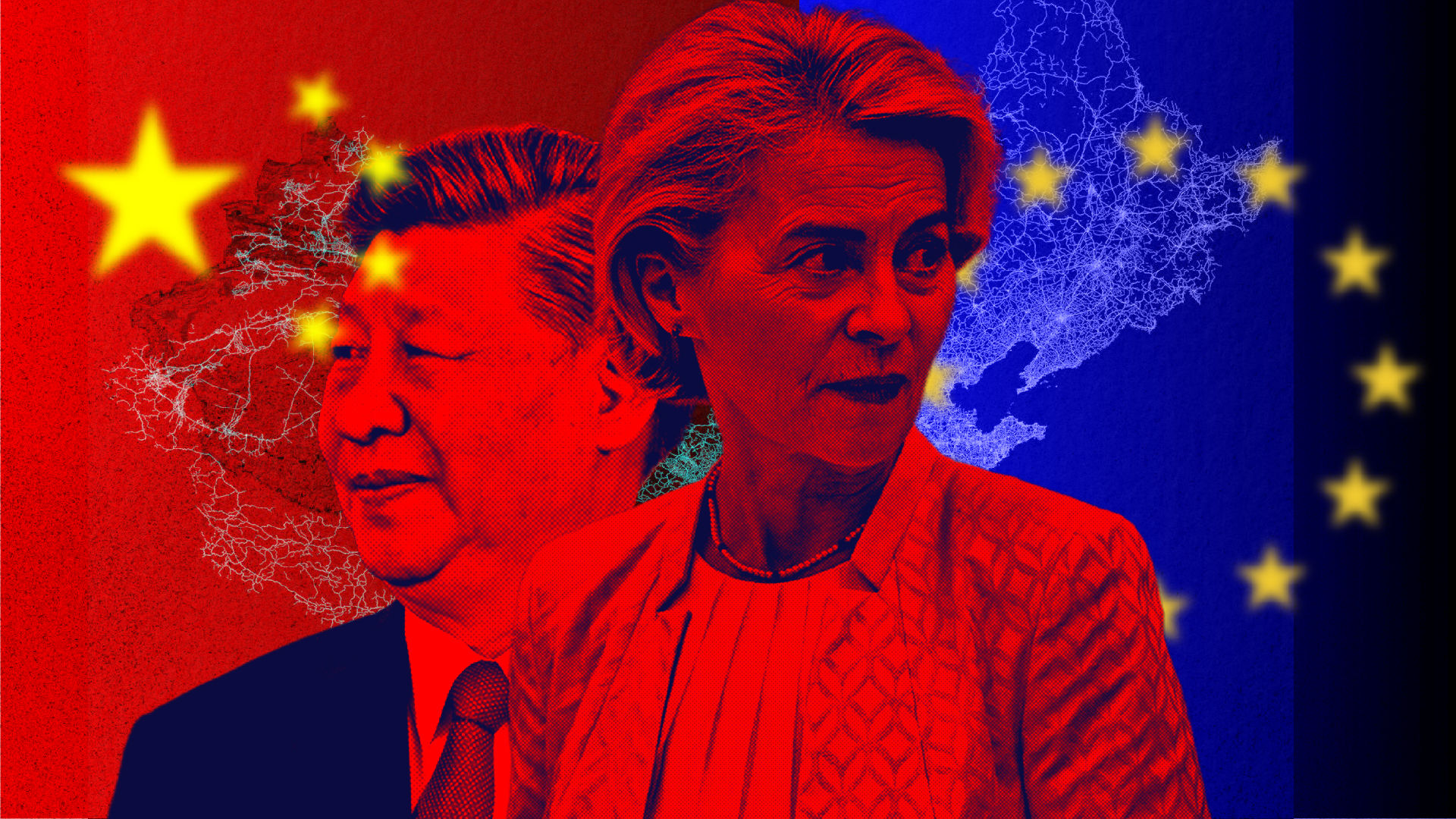
In 2020-2021, the relations between the EU and China were seriously affected by Beijing’s role in the COVID-19 pandemic and repression in Hong Kong and Xinjiang. At the same time, the first Trump administration negotiated the trade agreement giving the US advantages over the EU in the area of trade and investments with China. To equalize the conditions, the European Commission, under the leadership of Ursula von der Leyen, also conducted negotiations on the Comprehensive Agreement on Investment (CAI) with the Chinese government. However, the CAI came under serious pressure from the Biden administration. The European Parliament held off on the ratification of the document, and eventually the EU abandoned the agreement.
In 2025, in the context of its growing tensions in the relations with the US, the European Commission took an open position of rapprochement with China. Still, as the latter made no concessions on key issues (such as dumping, access to markets, support of the RF’s stand in its conflict with Ukraine), the EU came to the conclusion that in the current situation the “big deal” was impossible to make. This position was communicated to the Chinese leadership during the EU - China Summit in Beijing in July 2025.
The area that underwent the biggest change in the last decades was the EU policy towards China in the area of security. The European Commission switched from the plans of “strategic partnership in ensuring security” declared in 2003 to treating the PRC as a systemic rival. When China supported Russia after its invasion of Ukraine, it only strengthened such perception of the PRC by the EU. The European Commission viewed the role of China in Russia - Ukraine conflict as a direct threat to the interests of Europe. In 2024, the 15th package of sanctions by the EU against Russia mentioned Chinese companies and citizens involved in the supply of sensitive components to Russia. Besides, the EU is getting more concerned with China’s intelligence activities, evidence of its involvement in cyber espionage, and Chinese companies’ penetration into critical infrastructure.
Responding to hegemonic ambitions of the PRC regionally, the European Commission revised its approach to security in the Indo-Pacific. “The EU Strategy for Cooperation in the Indo-Pacific” expressed concern over aggressive position of China stating that “the display of force and increasing tensions in regional hotspots such as in the South and East China Sea and in the Taiwan Strait may have a direct impact on European security and prosperity.”
To conclude, at the end of the Cold War period and after it, the European Commission worked to integrate Beijing into the international economy and global world order based on the common rules. However, instead of acting as a responsible stakeholder, China used its partners, broke the rules of the international economic system, and grew stronger to become a global power. The actions of the PRC in the economic sphere pushed the European Commission to a firmer stance closely linked with the balancing efforts of the USA. As it puts together its risk reduction strategy for the EU, the European Commission has to shift its China policy to protecting economic, technological, and security interests.