World Center for Strategic Studies
From closed analysis to public debate

- MONTH
- YEAR

Is Europe Getting Ready to War Using Foreign Made Weapons? What does it mean for the EU countries and their defense industry?
Numbers do not lie. Military spending of the EU member states has been growing for 4 years now. Since 2022, they have spent twice as much on defence as in the previous four years.
This manyfold increase in military spending highlighted a very interesting trend. Clearly, the EU defence industry is lagging behind the growth of funding. There is a significant increase in the number of contracts signed with the suppliers from outside the EU.
The official Brussels welcomes the growing military spending at the same time recognizing a serious dilemma that the EU defence ministries are facing. They do not fully understand whether they need to support local companies, albeit by extending the delivery lead time, or accelerate the purchase of arms and equipment from the suppliers that are located outside of the EU.
So far, it is these very circumstances (limited technological capability and tight deadlines) that force Europe to go hat in hand to other countries of the world.
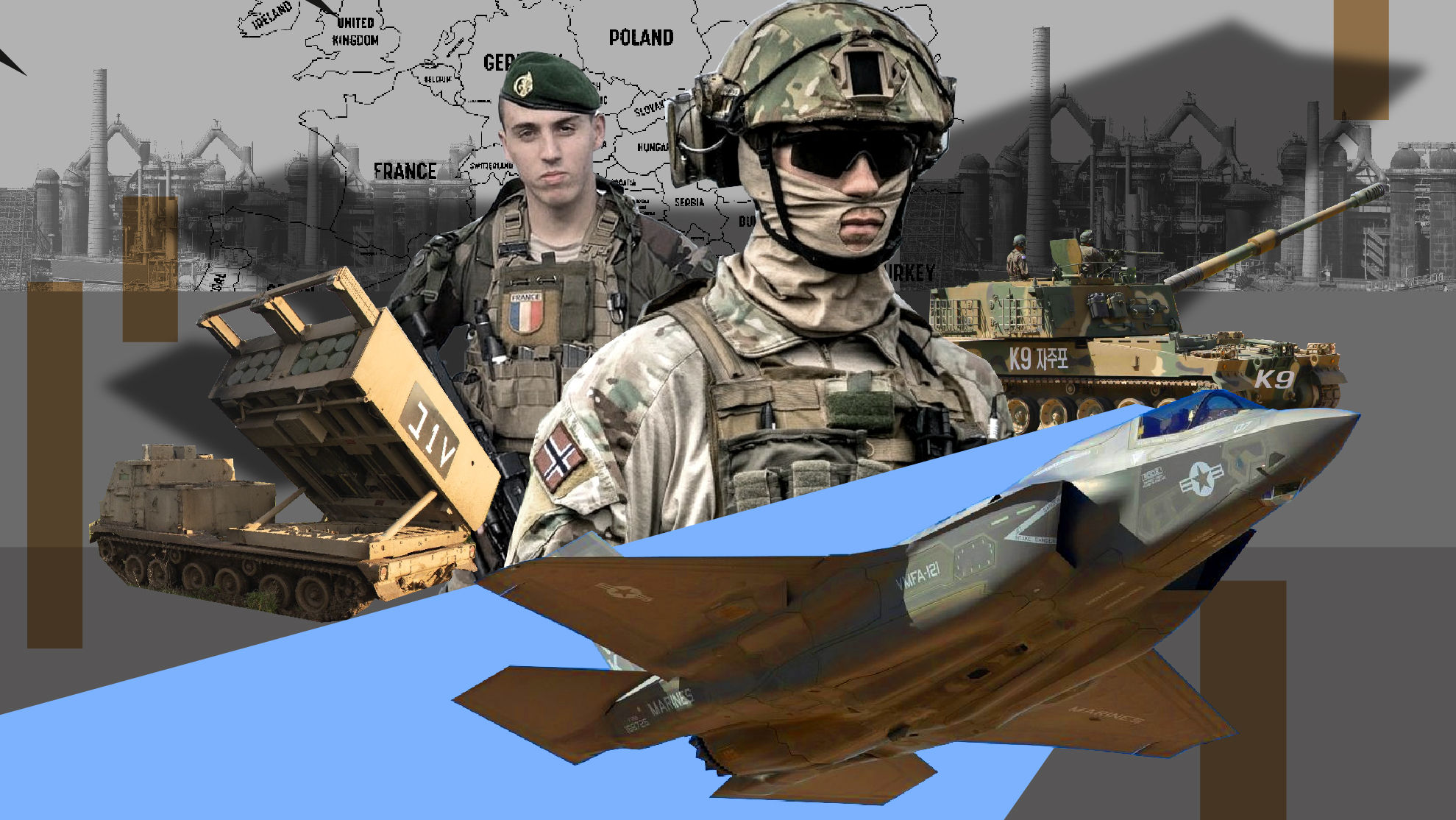
For example, no country in Europe currently makes modern multiple-launch rocket systems (MLRS). It forces the European military to choose between the systems made in Israel, South Korea, and the US. The same is true about conventional artillery.
For instance, Poland signed a number of contracts with the South Korean companies, quoting the delivery speed of the artillery they order as one of the key decision-making factors, together with quality and technology transfer. Similar reasons were behind other sales in the continent and their share will only grow.
The aerospace industry spending trend is another clear evidence of that. In recent years, it grew by 77% from 53 to 94 billion dollars. The Americans take the lion’s share of contracts here. Their advantage is their ability to use scale of production to cut costs. However, the US was never known for its delivery speed - their military export system is straight up slow. Nevertheless, special features and uniqueness of the equipment supplied often force the clients to turn a blind eye to their lack of speed. For example, the F-35 is the only low observable multirole combat aircraft in the market. Incidentally, these fighters account for 14% of the total value of all contracts signed by the EU members from 2022 until the middle of 2025.
All this seems to prove that the invasion of foreign defence companies is becoming a new reality for the European market. Some of these companies already signed ambitious production localization contracts. It can speed up the demise of the EU own defense industry even further. Asian and American corporations are showing even now that they know how to and want to work in the arms market of Europe. When they localise their prodution in Europe, the logistics will be down to zero, and the guests will show the hosts who is the boss.
The continent is entering the new decade armed with foreign made weapons. It is time to learn the technical terminology in Korean and prepare for the funeral service mourning the European defenсe companies that were once considered to be the best in the world.