World Center for Strategic Studies
From closed analysis to public debate

- MONTH
- YEAR

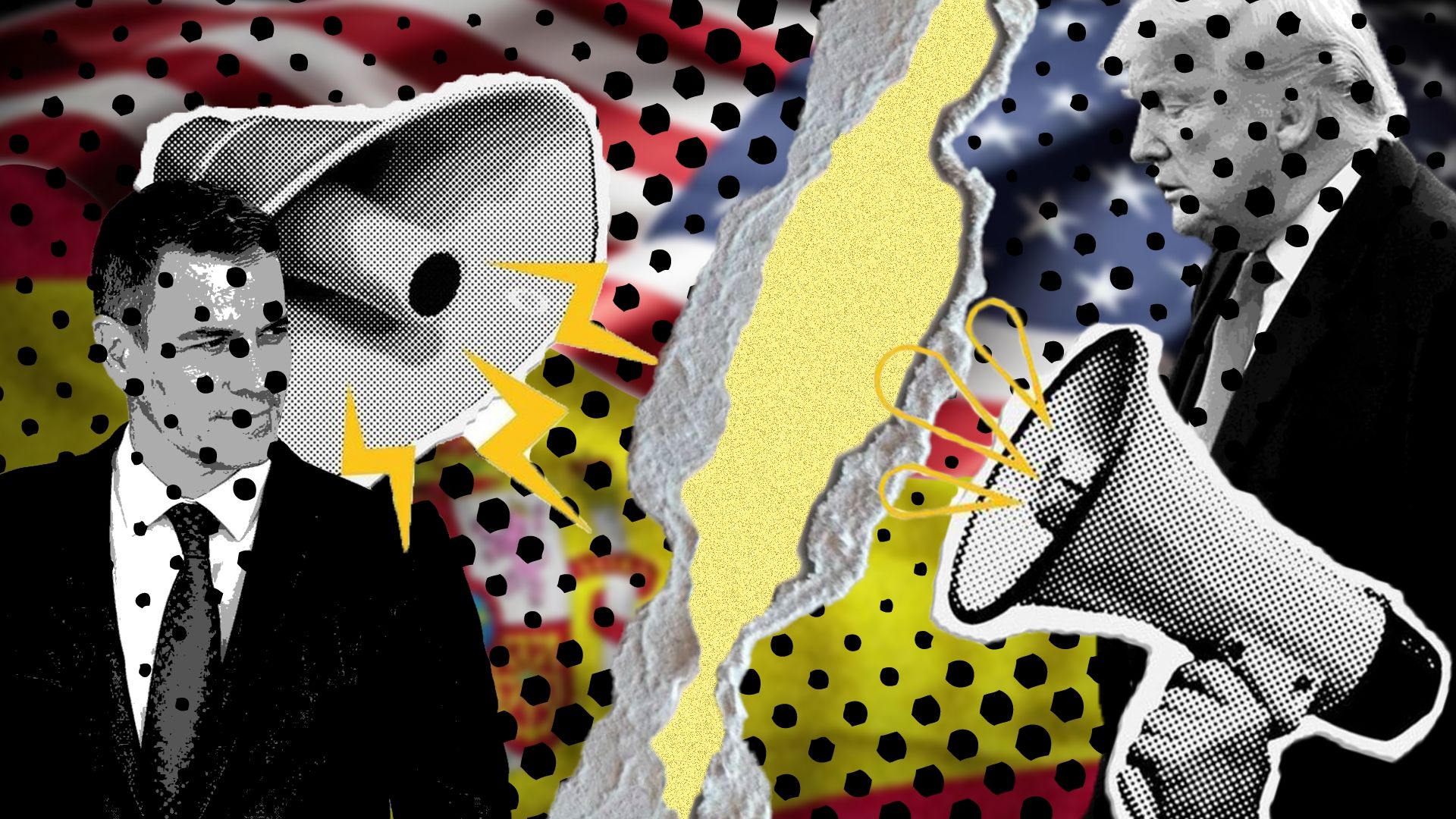
Trump vs Sánchez
Europe should support Spain in its fight against the threats from the US, otherwise it will get worse for all.
Recently, US President Donald Trump announced imposing a trade embargo and sanctions against Spain for refusing the Americans access to Spanish military bases.
Carla Hobbs, head of the Madrid Office of the European Council on Foreign Relations (ECFR), and José Ignacio Torreblanca, ECFR Senior Adviser, believe that European leaders should use this moment to show that they are capable of not submitting to Washington when it is against their interests. They will have to prove that Europe still has its political agency and can defend its opinion.
Spain’s move was a sovereign decision about how its territory is used in a military operation. Spain’s Prime Minister Pedro Sánchez stated that the US operation did not meet the necessary political or legal conditions warning that America’s objectives were uncertain and risked destabilising the already volatile Persian Gulf region.
Trump, not used to hearing “no”, lashed out at Spain with harsh, derogatory rhetoric. He called Spain a “terrible” ally and a country America wants “nothing to do with”. A day later, US Treasury Secretary Scott Bessent turned up the heat of the war of words by adding that Spain had “put American lives at risk”.
In response to a clear and well-calibrated position of the Spanish Prime Minister prioritizing the interests of his country, Trump’s administration threatened to sever all economic ties with the EU and NATO countries.
The ECFR analysts believe that European governments and institutions should respond firmly and collectively.
Some European leaders including France president Emmanuel Macron, European Council president Antonio Costa and European Commission president Ursula von der Leyen have already expressed their support for Spain. But there has not been a joint European statement. It will definitely send Spain a stronger signal of solidarity.
According to the ECFR authors, economic measures are to be the next step. The European Commission should make clear that economic coercion against a member state would trigger the EU’s Anti-Coercion Instrument. The commission has already taken a step in this direction by stating that it stands with Spain and will safeguard EU interests. It will be done through its common trade policy. At the same time the commission urges Washington to respect the existing EU-US trade agreement.
Meanwhile, European governments should not amplify pressure on Spain. Unfortunately, there are examples of such behavior. During a White House meeting with German Chancellor Friedrich Merz on March 3, in which Trump criticised Spain over its NATO contribution, the German leader replied that he was working to persuade Spain to increase defence spending. Such remarks risk reinforcing a position in Washington rather than defending a fellow European government.
Spain has long been among the more outspoken European critics of actions by the Trump administration, and it has the public support for that. As of November 2025, just 10% of Spaniards saw the US as an ally to the EU. And that was before Trump threatened to invade Greenland.
By attacking Iran, together with Israel, the Trump administration has embarked on a war of choice. The motivations and objectives of the attack on Iran remain unclear and ever-changing. Standing up to this war is the only clear option for Europe. Otherwise, it risks getting dragged into a long and deadly conflict in the Middle East with no clear objective and no clear end in sight. The European leader should stand up to American coercion not just for the sake of Spain, but for their own sake too. Otherwise, Trump will smell blood in the water and crush European countries one by one, bending their opinion to his will.