World Center for Strategic Studies
From closed analysis to public debate
- MONTH
- YEAR

France’s Enlargement U-Turn: Paris Still Cannot Sell It At Home
France is finally admitting that EU enlargement is a geopolitical necessity – but the Ifri/IPQ article shows how fragile that shift really is. Paris has moved a long way from its old habit of slowing the process, yet its new support remains cautious, conditional and politically exposed.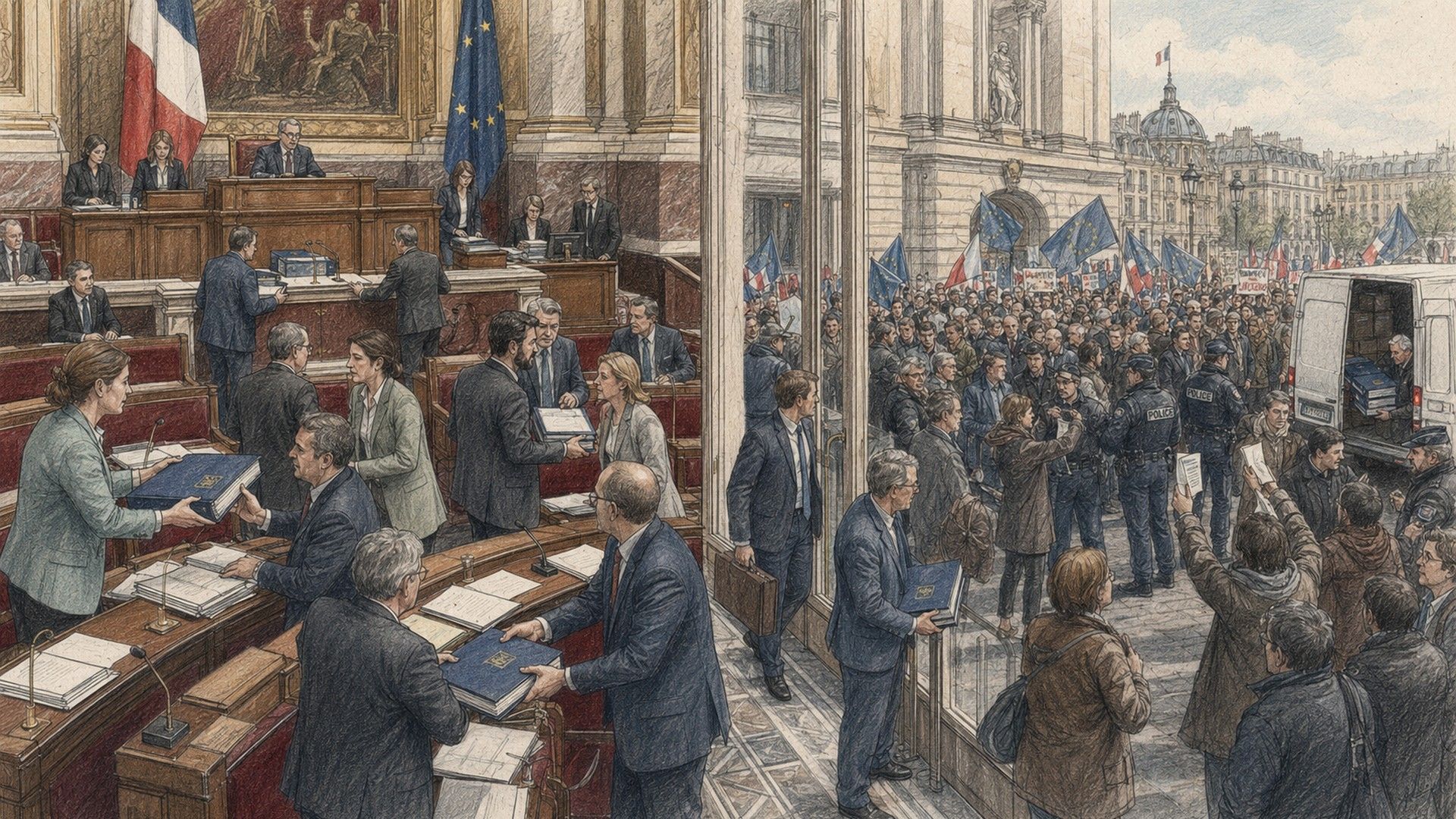
The war in Ukraine, pressure from Germany and renewed focus on the Western Balkans have forced France to stop hiding behind vague formulas. But the hard problem has not disappeared. French society remains deeply sceptical of enlargement, the far right is openly hostile to it, and any future accession treaty could hit a wall in Paris.
France may now talk like enlargement is strategic. It still acts like enlargement is politically dangerous.
Paris changes tone – not fast enough
The article argues that France has undergone a real shift. It no longer treats EU enlargement as a distant administrative file or a favour to candidate countries. The integration of the Western Balkans, Moldova and Ukraine is now framed as part of Europe’s geopolitical survival.
That is a major change from years of hesitation.
But France has not matched the language with bold action. Unlike Germany, which launched the Berlin Process in 2014 and is now pushing faster association for Ukraine, Paris has produced few major political initiatives of its own.
The rhetoric has moved. The machinery has not.
Germany pushes, France hesitates
The latest pressure comes from Berlin. Chancellor Friedrich Merz has proposed giving Ukraine a quick form of associate EU membership, including participation in some European Council meetings without voting rights, a commissioner without portfolio and access to the EU mutual assistance clause.
France did not rush to endorse the idea. Instead, it pointed back to the formal accession process.
That reaction says a lot. Paris accepts the strategic urgency in principle, but still recoils when the question becomes concrete, legal and politically explosive.
The waiting room problem
France’s European Political Community was meant to show that Paris had a wider vision for the continent. For candidate countries, however, it risks looking like an elegant holding pen.
The article notes that many aspirants see such formats as substitutes for real accession rather than bridges towards membership. That matters because trust is already thin.
If candidate states believe France is offering forums instead of membership, Paris will struggle to convince them that its shift is genuine.
The Balkans are not buying every shortcut
At the EU-Western Balkans summit in Montenegro, a Franco-German non-paper called for a more flexible accession process for the Western Balkan states and Moldova. EU leaders backed the idea.
But Montenegro, the most advanced candidate state, politely declined.
That rejection exposes the danger of clever half-measures. Candidate countries want movement towards membership, not new layers of political packaging that may delay the real prize.
France used reform as a shield
For years, Paris argued that enlargement could happen only after the EU reformed itself first. On paper, that was a serious institutional concern. In practice, it also allowed France to avoid taking a clear position.
That ambiguity is becoming harder to maintain.
Montenegro’s progress and Germany’s Ukraine push have forced France into a more explicit debate. The old formula – yes to enlargement, but only after reforms nobody can deliver quickly – no longer works as a hiding place.
The French public is the real veto
The biggest weakness sits at home. Only 43 percent of French people support enlargement, among the lowest levels in the EU. A large majority also say they feel poorly informed about the issue.
That is not a small communications problem. It is a democratic bottleneck.
Any EU accession treaty would require ratification in France, either through parliament with a three-fifths majority or by referendum. In the current political climate, both routes look highly difficult.
The far right smells blood
The National Rally opposes EU enlargement, whether for Ukraine or the Western Balkans. With the party well placed ahead of the 2027 presidential race, the issue could become a major weapon against the centre.
That leaves French leaders trapped. They know enlargement has become strategically necessary, but they fear the domestic backlash that comes with admitting the costs, risks and political implications.
Europe’s geopolitical ambition could therefore be blocked not in Brussels, but in French public opinion.
The hard lesson: Strategy fails when voters reject it
The Ifri/IPQ article shows a France trying to pivot from hesitation to leadership. But the pivot is incomplete.
Paris now understands that enlargement is tied to war, security and Europe’s future order. Yet understanding is not the same as delivery. Without public support, institutional reform and a clearer offer to candidate countries, France’s new position may remain more posture than power.
Europe wants enlargement to be a geopolitical answer.
France still has to convince its own voters that it is not a threat.