World Center for Strategic Studies
From closed analysis to public debate
- MONTH
- YEAR

Europe’s Aid Retreat: Defence Rises, Influence Falls
RUSI’s commentary delivers a sharp security warning for Europe.
Governments are pouring more money into defence, but quietly cutting the slower tools that stop crises before they hit Europe’s doorstep.
Aid, humanitarian support and peacebuilding are being trimmed, merged or redirected into flashier priorities such as infrastructure and migration deals.
The result is not a stronger Europe. It is a continent building harder armour while stripping out the field networks, local leverage and conflict prevention that keep fragile regions from exploding.
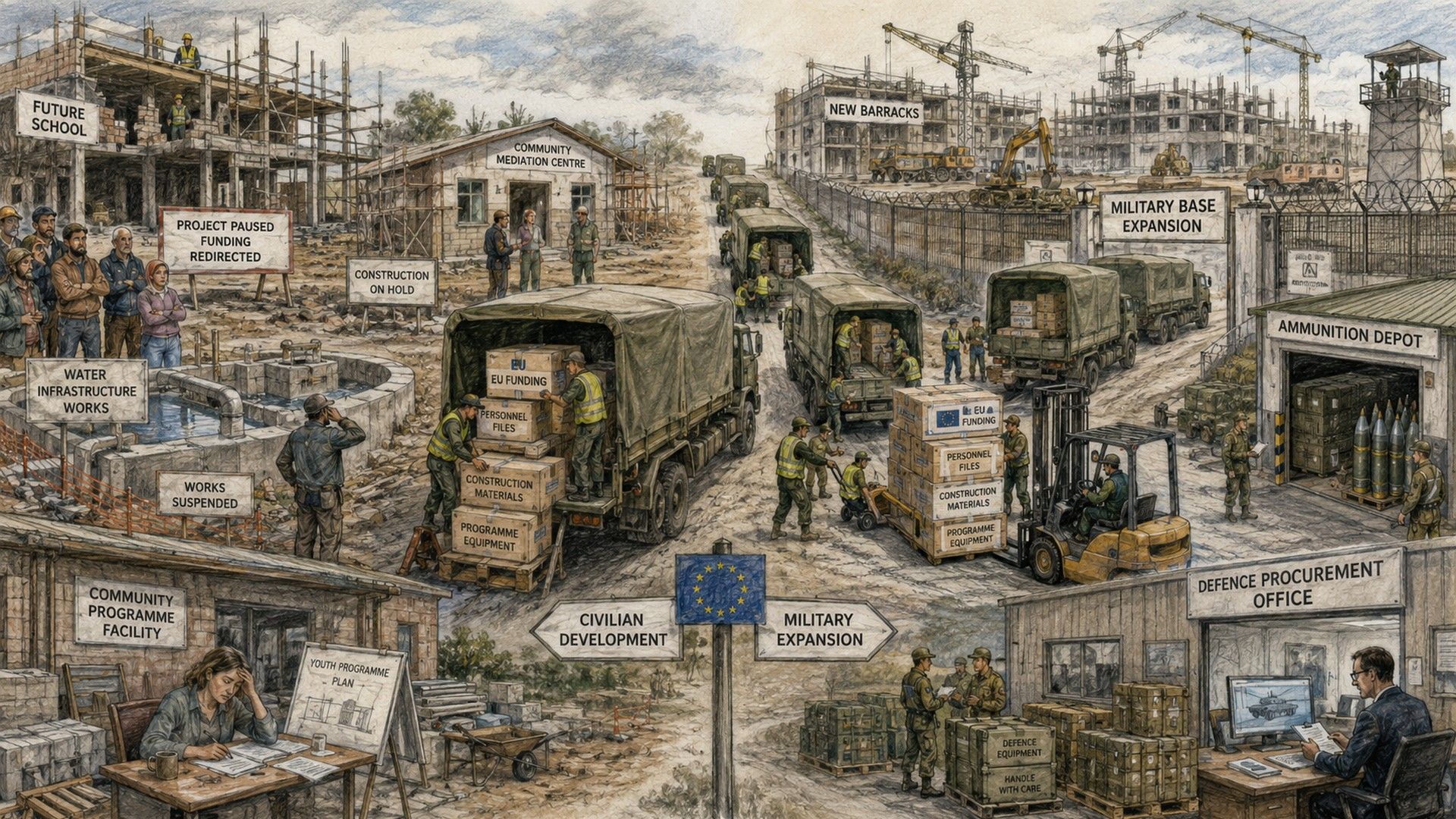
Defence up, aid down
Since Russia’s full-scale invasion of Ukraine, Europe has moved fast to raise defence budgets, launch new security instruments and talk tougher about deterrence.
That part is necessary. RUSI does not argue against stronger defence.
The problem is the trade-off. As military spending rises, development and humanitarian budgets are being cut or repurposed. Europe is not just spending differently. It is rewiring its security posture around reaction instead of prevention.
Prevention gets raided first
The ugly pattern is simple: when budgets tighten, long-term peacebuilding becomes the easy target.
Governance programmes, local mediation, civil society work, basic services and fragile-state support do not produce dramatic headlines. They are slow, messy and hard to defend in domestic politics.
But they are also the tools that stop weak states from collapsing, armed groups from gaining ground and migration routes from becoming permanent crisis corridors.
Europe weakens its own reach
RUSI’s core warning is that development is not charity. It is part of power.
If Europe cuts the programmes that give it local relationships and long-term influence, rivals will fill the space. Russia, Gulf states and other external actors can move in with arms, cash, infrastructure deals and transactional security offers.
That leaves Europe looking tougher in Brussels but weaker on the ground.
The Sahel shows the danger
The central Sahel and the Gulf of Guinea show how quickly the balance can shift.
As European support is reduced or reconfigured, insurgent violence, coup-led regimes and alternative patrons gain room to manoeuvre. Europe then loses more than goodwill. It loses visibility, access and influence in regions tied to migration, maritime routes, energy corridors and jihadist networks.
That is a security failure, not a development footnote.
The Horn is another warning
Sudan and the wider Horn of Africa underline the same problem.
War, displacement and collapsing institutions are already stretching the region. At the same time, Gulf states, Russia and others are expanding influence through financial lifelines, arms and port or corridor deals.
If Europe retreats from governance and conflict prevention there, it risks losing leverage in a corridor central to trade, energy flows and migration pressure.
Migration deals eat the budget
RUSI warns that aid is increasingly being redirected towards politically convenient priorities.
Migration management, large infrastructure schemes and broader external spending envelopes are absorbing money that once supported country-level development and peacebuilding. That may look practical to European governments under pressure from voters.
But it can also hollow out the very systems that reduce instability before people flee, states fracture or armed groups expand.
This is not real hard power
Europe likes to say it is becoming more geopolitical. Bigger defence budgets make that sound convincing.
But hard power is not only tanks, missiles and air defence. It also means the ability to shape fragile environments before they turn into crises. A defence ministry can deter an invasion, but it cannot rebuild a collapsed administration or keep a local partner aligned with Europe.
Europe is strengthening one arm while weakening the other.
The uncomfortable truth: Europe is disarming where it pretends to engage.
RUSI’s warning is stark. Europe needs credible deterrence, but it also needs credible presence in the places where future threats are already forming.
If aid remains the budget line that can always be raided, Europe will keep losing ground in fragile regions while congratulating itself on higher defence spending.
More armour will not save Europe if it abandons the front line before the crisis starts.