World Center for Strategic Studies
From closed analysis to public debate

- MONTH
- YEAR

Eurasia’s Power Grab Hits a Wall – and Europe Is Still Exposed
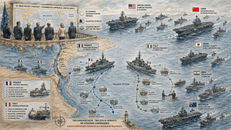
A fresh scramble for influence is under way across Eurasia, but no new superpower bloc is ready to replace the US-led order. China, Russia, India and Turkey all want more room to manoeuvre, yet each is boxed in by rivalries, economic limits and clashing strategic interests. That leaves Europe facing an awkward reality: American dominance may be weakening, but the alternative is not a neat new order. It is a messier continent where several powers compete at once – and where Europeans risk being squeezed if they cannot defend their own interests.

Beijing cannot run the whole show
China is the strongest challenger to US influence across Eurasia, but power does not automatically mean control.
Beijing can build institutions, deepen economic links and use forums such as the Shanghai Cooperation Organization to widen its reach. But it still has to manage suspicious neighbours, competing regional powers and countries that want Chinese investment without accepting Chinese leadership.
Russia wants influence – but lacks freedom
Moscow remains a major military and geopolitical force, yet the war in Ukraine has narrowed its options and increased its dependence on relationships with other non-Western powers.
Russia can disrupt the existing order and frustrate Western policy, but disruption is not the same as building a replacement system. Its ambitions collide with economic weakness and with the interests of partners that have no desire to become junior players in a Russian-led bloc.
India refuses to pick a camp
India is becoming too important to ignore and too independent to fit neatly into anyone else’s strategy.
New Delhi can cooperate with Washington, deal with Moscow and engage Beijing when useful. That gives India leverage, but it also exposes the weakness of any supposed anti-Western Eurasian coalition. India is not signing up to a Chinese or Russian order – it is pursuing its own.
Turkey plays both sides
Turkey is another increasingly assertive middle power exploiting gaps between larger rivals.
Ankara works inside NATO while expanding its influence across the Black Sea, Caucasus, Middle East and Central Asia. That flexibility gives Turkey room to bargain, but it also makes Eurasia more competitive rather than more unified.
No anti-Western bloc is taking over
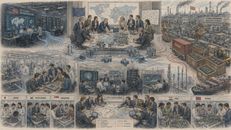
The surge in summits and high-level diplomacy can look like the birth of a new Eurasian order. The deeper picture is far less tidy.
China, Russia, India and Turkey share frustrations with parts of the US-led system, but they do not share enough interests to build a coherent replacement. Their relationships are shaped by competition as much as cooperation.
Europe faces the dangerous middle
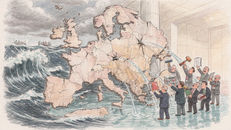
For Europe, that offers little comfort. A fractured Eurasia may prevent any single rival from dominating the continent, but it also means more bargaining, more pressure and fewer predictable rules.
If Washington becomes less willing to police the system while Eurasian powers push harder for regional influence, European governments will face tougher choices over security, energy, trade and strategic alignment.
The hard lesson: Nobody is taking America’s place
The old balance is weakening, but the new one is not being built around a single challenger. Eurasia is becoming more contested, more transactional and more unstable.
For Europe, that means one thing: relying on yesterday’s order while bigger powers rewrite the rules is an increasingly dangerous gamble.