World Center for Strategic Studies
From closed analysis to public debate
- MONTH
- YEAR

Europe’s Security Ambitions Are Outgrowing Its Power – And Brussels Is Struggling to Keep Up
The EU was built to manage markets, not defend a continent. Now Russia’s war against Ukraine, American unpredictability and growing pressure from China are forcing Brussels into security decisions its institutions were never designed to handle. Writing in Internationale Politik Quarterly, Rebecca Christie warns that Europe needs stronger collective defence, shared financing and new international partnerships, but national sovereignty and political divisions keep obstructing progress. Even the EU’s economic foundations are under strain from mounting debt, industrial competition and domestic political pressure. Europe has money, institutions and allies – but turning them into a coherent security strategy remains an unresolved challenge.
Brussels wants unity but cannot command it
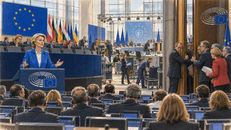
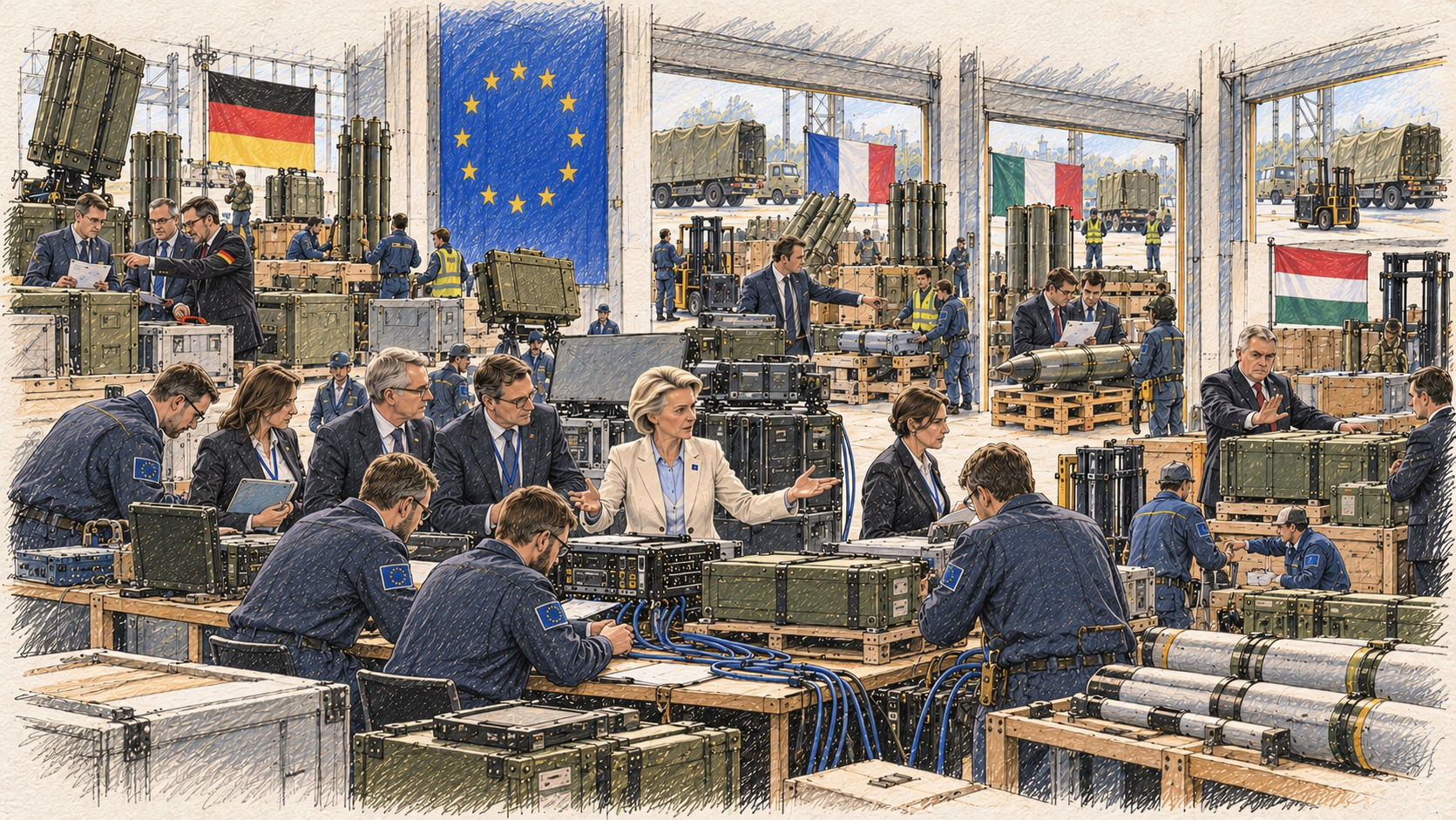
Ursula von der Leyen’s September 2026 State of the Union address exposed the distance between European ambitions and political agreement.
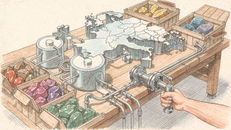
Her proposals included joint defence initiatives, critical raw materials stockpiles, new security arrangements and closer relations with Canada.
But divisions in the European Parliament and among national governments suggest that agreement will be difficult.
Christie argues that the EU’s traditional economic instruments cannot automatically deliver the collective security capabilities Europe increasingly needs.
Ukraine exposes the limits of solidarity
The EU has provided €221 billion in assistance to Ukraine, including €107 billion from its budget, largely financed through common borrowing.
Yet member states are becoming increasingly reluctant to make additional financial commitments as domestic spending pressures mount.
If governments struggle to agree on financial assistance, cooperation on expensive military capabilities such as missile defence and drones presents an even greater challenge.
Europe’s defence ambitions are confronting the political limits of shared spending.
National sovereignty keeps Europe divided
EU treaties leave many defence and security responsibilities under national control.
Member states also belong to different security arrangements. Ireland, Austria and Malta remain outside NATO, while Germany and Ireland have declined to participate in the EU’s SAFE defence loan programme.
Some countries have moved towards closer cooperation since Russia’s invasion, including Finland and Sweden joining NATO and Denmark abandoning its EU defence opt-out.
But Europe still lacks a common understanding of how far security integration should go.
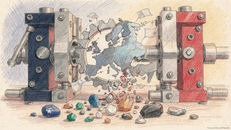
The unanimity trap is becoming harder to manage
Major EU decisions often require agreement among governments with sharply different priorities.
Christie points to the €90 billion Ukraine loan as an example of how Brussels can work around political resistance.
Hungary, Slovakia and the Czech Republic were allowed to avoid fully guaranteeing the loan rather than blocking the entire arrangement.
Such financial exemptions could provide a model for more flexible decision-making, allowing willing governments to cooperate without requiring every member to participate equally.
But exemptions cannot become a substitute for maintaining common institutions.
Europe’s economic defences are weakening
The EU also faces mounting pressure from Chinese industrial competition.
Von der Leyen has warned about a second China shock, but Christie questions whether Europe’s response is sufficiently coordinated.
Rather than developing a stronger common industrial strategy, Brussels increasingly tolerates national subsidies.
That risks reinforcing differences between member states with substantial financial resources and those unable to support their industries on the same scale.
Economic fragmentation could therefore undermine the security integration Europe is trying to achieve.
Canada offers an unexpected opening
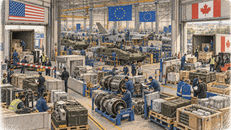
Christie sees considerable potential in von der Leyen’s proposal for a new form of association with Canada.
Although the idea initially surprised European diplomats, Canadian Prime Minister Mark Carney subsequently outlined practical areas for cooperation.
These include participation in Erasmus+, deeper research links through Horizon, expanded digital trade and potential cooperation on critical raw materials.
Canada has already joined the EU’s SAFE defence procurement framework.
The opportunity extends beyond Ottawa: a successful arrangement could create new models for cooperation with Britain and other partners outside the Union.
NATO alone cannot carry the burden
For decades, NATO provided the main framework for European security cooperation.
But uncertainty surrounding the Trump administration has increased the importance of alternative partnerships and European initiatives.
Christie argues that the EU must become more flexible, combining existing institutions with different coalitions for defence planning, procurement, financing and diplomacy.
That requires moving beyond its traditional preference for comprehensive legal agreements and uniform participation.
The hard lesson: Europe needs flexibility to become a security power
Christie’s central argument is that economic integration remains the foundation of the EU, but economic strength alone can no longer guarantee European security.
Brussels must find ways to coordinate defence spending, overcome institutional divisions and build partnerships with countries that share its interests without necessarily joining the Union.
Europe’s problem is not simply a shortage of resources. It is the difficulty of turning national capabilities and competing priorities into collective action before external pressures become harder to manage.