
World Center for Strategic Studies
From closed analysis to public debate
POPULAR
- MONTH
- YEAR

On Hungary’s Economic and Social Stability Ahead of the Coming Elections
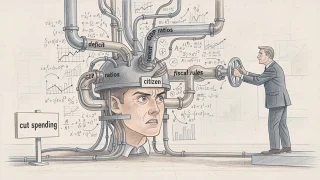
Hungary enters the spring of 2026 in a state of mounting socio-economic uncertainty as parliamentary elections loom on 12 April. For the first time in sixteen years, Viktor Orbán and his Fidesz government face a serious political challenge from the Tisza party led by Péter Magyar.
Germany’s Back Door Problem: Migration Keeps Flowing, Control Lags Behind

Germany thought it had migration under control. This working paper shows otherwise. Flows through the Western Balkans remain a quiet but persistent pressure point, feeding Germany’s asylum system and exposing gaps between policy promises and reality. The system is not collapsing, but it is creaking under strain that politicians prefer not to spotlight.
Labor of Migrant Workers in Agriculture The Cases of Five Entirely Different Countries
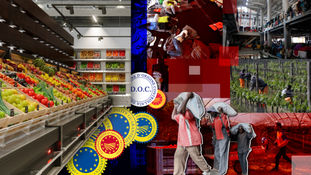
Under a European Union grant, Blanca Garcés, senior research fellow at the Barcelona Center for International Affairs (CIDOB), has prepared an extensive report about the living and working conditions of agricultural migrant workers in four European countries (Italy, Poland, Spain, and the Netherlands) and one African country (Morocco).
Europe Risks Losing the Sahel Unless It Comes to Understand It (As Exemplified by Mali)

Europe risks losing its long-term influence in the Sahel. That will happen if the Old World countries fail to understand the driving forces of rising anticolonialism and to adapt their approaches in Africa to the new realities.
Innovation in Migration Management. The EU searches for a new paradigm. Will it Succeed?

Several months before the milestone Pact on Migration and Asylum enters into force and lays a basis for a large-scale reform of the bloc’s migration policy, the European Commission published another curious document on the topic. This is the first European asylum and migration management strategy It defines the priorities that will guide the agreement's implementation over the next five years.
On Externalization of Asylum, with Responsibility Offloaded to Third Countries
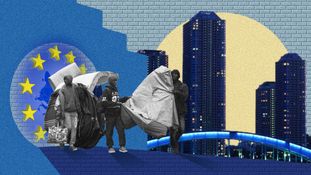
In the run-up to the Dutch general elections in the autumn of 2025, the question of the modernization of migration and asylum policies was raised as a topical issue. Some parties advocated a fundamental reform of the asylum system, whereby parts of the asylum procedure would take place outside the European Union and refugees would only be able to come to Europe through resettlement. What will this lead to? And what are the difficulties of this process?
Europe’s Housing Crunch Gets Greener – and Harder to Fix

Europe’s housing crisis is already squeezing voters. This analysis warns it is about to get more complicated. Any serious solution, it argues, must include decarbonising buildings. That may be climate-sensible, but it risks pushing costs higher in the short term if governments get it wrong. The housing shortage and the green transition are colliding, and Europe is not ready for the impact.
The New Right: Anatomy of a Global Revolution Why the Right Forces are Becoming Increasingly Popular

Mark Leonard, co-founder and director of the European Council on Foreign Relations, has published an article in which he examines the political phenomenon of the ‘new right’. Some believe them to be people nostalgic for the past, but the author concludes it is no longer the case.
Europe’s Ageing Trap: Fewer Workers, Bigger Bills, No Easy Fix

Europe is getting older, poorer in workers and heavier with promises it cannot easily pay. This working paper lays out the cold arithmetic behind ageing populations, migration policy and ballooning pension costs. The tone is technical, but the message is grim: demographic decline is already dragging on growth, and policy choices so far barely scratch the surface.
Values Under Pressure: Europe’s Rules Look Weak When Tested

Europe likes to preach values. This report shows how hard it is to enforce them. When member states push back on democracy, rule of law and fundamental rights, the EU’s response is slow, legalistic and often ineffective. The problem is not lack of principles, but lack of power to defend them.