
World Center for Strategic Studies
From closed analysis to public debate
POPULAR
- MONTH
- YEAR

A Timeserving RUSI Alarm
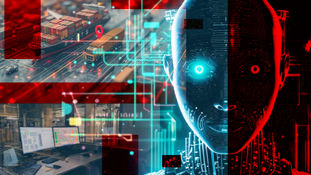
A report of the Royal United Services Institute (RUSI), entitled How AI is Quietly Becoming a Supply Chain Problem and prepared by Dr. Melina Beykou, is an update on the security issues arising from the use of artificial intelligence. As AI gets embedded in critical national infrastructure, the supply chains remain exposed. The author refers to the incident with npm packages compromised by Shai-Hulud malware and argues that the existing security arrangements are insufficient. Special emphasis is made on the fact that AI systems already extend into defense and critical infrastructure, but the customers cannot see what is ‘under the bonnet’ (datasets, model weights, and update services). The author concludes that strict public control is needed at all levels, from microchip purchases to audits of public repositories.
Europe’s Power Patchwork: Electricity Security Still a National Free-for-All
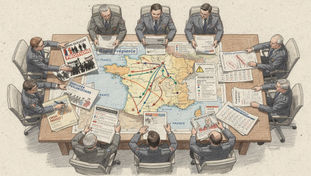
Europe says it wants a reliable, integrated power market. This policy brief shows how far reality lags behind the promise. Capacity mechanisms meant to keep the lights on are multiplying across member states, poorly aligned and barely coordinated. The result is higher costs, distorted markets and growing risk just as electricity demand and system stress rise.
AI’s Impact on Military Intelligence and Decision-Making The Simulacrum of Normative Power
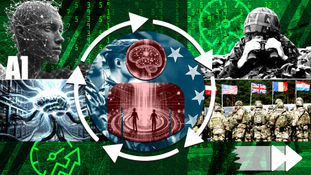
A report by Sofia Romansky, a strategic analyst at The Hague Centre for Strategic Studies (HCSS), assesses the influence of AI on the military domain. According to the author, the acceleration provided by AI will be a crucial decision-making advantage for commanders in the battlefield. The author examines the accompanying challenges posed by the technology: moral disengagement, automation bias, and the need for international regulation. In the last-mentioned field, the author pins special hopes on Europe as the ‘normative leader’. However, this ethical rhetoric hides a far more disturbing reality for the Europeans in which all such prospects break against the EU’s technological and political dependence that the author glosses over.
Police.AI – New Tech Tools for UK Law Enforcement

In a RUSI report, experts Elijah Glantz and Dr. Pia Hüsch analyze the establishment of the UK National Centre for Artificial Intelligence in Policing (Police.AI). The authors discuss the technological risks: outdated databases, incompatible systems, and past projects’ failures. Yet the key threats stay beyond the discussion.
Europe vs China: Tough Talk, Soft Follow-Through
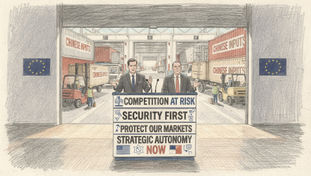
Europe says it is getting serious about China. This report suggests otherwise. Across trade, technology and security, the EU is still caught between recognition and reluctance. The risks are clearer than ever, but action remains cautious, uneven and heavily constrained by dependence and division.
Germany Wakes Up Late on China: From Profits to Pressure
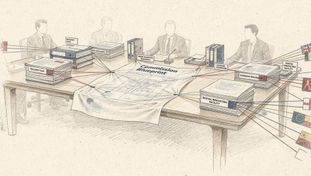
Germany’s China policy has flipped from cosy commerce to uneasy competition, and this report explains why the old model finally broke. Berlin spent years selling the idea of win-win trade while piling up dependency and risk. Now reality has intruded. China is no longer just a market. It is a strategic challenger, and Germany is scrambling to adjust without wrecking its own economy.
Europe’s Wind Weakness: China Moves In, Denmark Feels the Chill
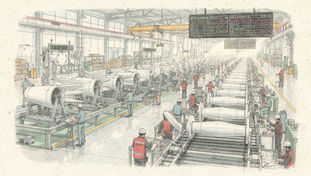
Europe’s green pride is under pressure, and this analysis shows why. China is closing the gap in wind power fast, undercutting prices, scaling production and eyeing global markets Europe once dominated. Denmark and its neighbours built the industry. Now they risk losing control of it.
EU Stable at Home, Shaken Abroad: Calm Inside, Pressure Everywhere Else
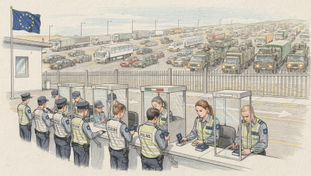
The analysis delivers a cautious but telling verdict on the European Union’s current state. Internally, the bloc has steadied itself after years of crisis politics. Institutions function, compromises hold, and collapse is off the table. Externally, however, the picture is far harsher. Europe faces mounting pressure from rivals, partners and a changing global order it struggles to shape. Stability inside has not translated into strength outside.
Europe and China: Caught Between Dependence and Denial

The analysis delivers a blunt assessment of Europe’s China policy and finds a continent stuck in the middle with shrinking room to manoeuvre. Brussels talks about de-risking, resilience and strategic realism. In practice, Europe remains deeply entangled with China economically while lacking the power or unity to shape the relationship on its own terms. The paper argues that Europe is trying to manage a rivalry it did not choose, with tools that are not strong enough.
Europe and the AGI Shock: Behind Before the Race Starts
.jpg?tr=cm-pad_resize,w-311)
The analysis asks a question Europe is quietly afraid of answering – is it ready for the rise of artificial general intelligence. The answer, stripped of polite language, is no. While AGI is still emerging, the paper argues that Europe is already falling behind on the basics: investment, infrastructure, talent and governance speed. By the time AGI becomes real, Europe risks being a rule-taker in a world shaped elsewhere.