World Center for Strategic Studies
From closed analysis to public debate

- MONTH
- YEAR

Germany’s Migration Trap: It Needs Workers But Scares Them Away
Europe is tightening migration policy just as its ageing economies need migrants more than ever. The Internationale Politik essay argues that the continent has trapped itself in a dangerous contradiction: it wants control at the border, but it also needs people to fill labour shortages, support growth and keep welfare systems alive.
Germany is the clearest warning sign. It talks about skilled migration, but too often sends the world a different message – bureaucracy, suspicion, weak welcome and a political climate shaped by restriction. The result is grim: the country that needs foreign talent is becoming unattractive to the very people it wants.
The core argument is blunt. Migration is not only a crisis to be managed. Done properly, it pays.
Europe chose fear over calculation
The essay attacks the constant escalation of migration politics. Even though irregular arrivals fell by 35 percent in 2025 compared with the previous year, Brussels and major EU states are still pushing tougher measures.
Return hubs, faster deportations and tighter controls dominate the debate. The aim is political credibility: governments want to show voters they are in charge before the next crisis or election campaign detonates the issue again.
But that creates a damaging image. Europe looks less like a continent managing migration intelligently and more like one trying to frighten people away.
Germany needs migrants – badly
The economic case is hard to dodge. Ageing societies cannot sustain prosperity if their labour forces shrink and key sectors cannot find workers.
Germany’s problem is not just too much migration, as the political debate often suggests. It is badly managed migration, weak integration and a state that fails to turn newcomers into long-term contributors quickly enough.
The essay’s sharper point is that a country living beyond its means should fear demographic decline more than controlled immigration.
The welcome mat is missing
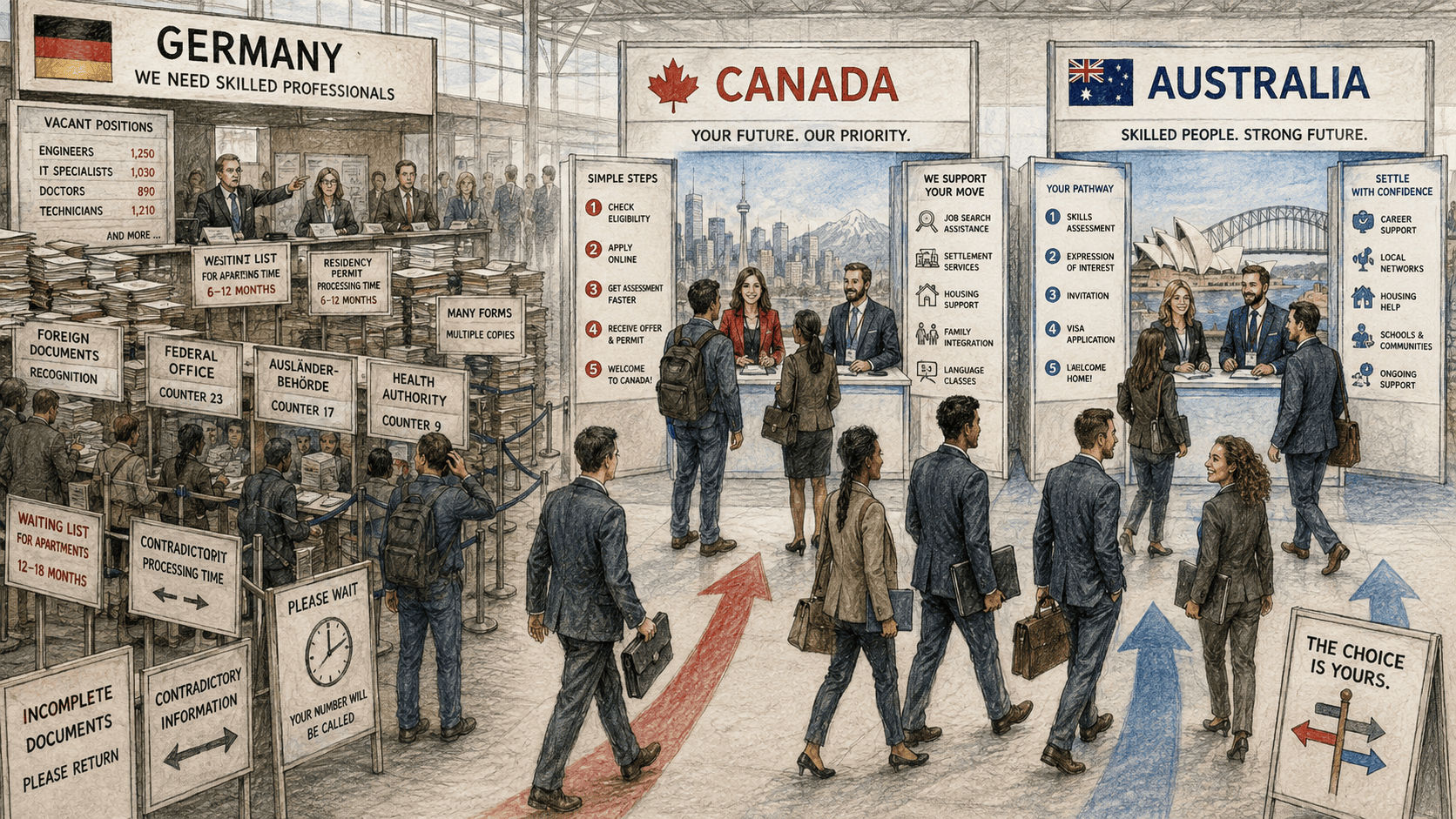
Germany’s reputation among skilled migrants is in serious trouble. An InterNations study ranked it among the least attractive countries out of 53 for highly qualified foreign workers.
The reasons are humiliatingly practical: bureaucratic obstacles, unfriendly atmosphere, problems with public offices and brutal housing shortages. Good jobs are not enough if daily life feels hostile and exhausting.
Worse, many skilled migrants leave Germany after only a few years. That is not a migration success story. It is a talent leak.
Bureaucracy is eating the benefit
The essay calls for more efficient migration advice and better coordination between authorities.
That may sound dull, but it matters. Every month lost in paperwork, housing stress, recognition procedures and unclear rules weakens the economic return from migration. The state spends more later because it failed to integrate people properly at the start.
Bundesbank President Joachim Nagel’s call for better labour-market-oriented migration fits the same logic: stop treating migration as a panic file and start treating it as economic infrastructure.
Canada shows the gap
The essay points to Canada and Australia as examples of countries using demand-based points systems to steer immigration more rationally.
Europe does not have to copy them blindly. But the contrast is painful. Others compete for talent with clearer systems and a more positive national story. Germany often offers complexity, mixed signals and political anxiety.
In a global talent market, that is a losing pitch.
Integration needs ambition
The piece also backs a broader cultural shift. Naika Foroutan’s call for a German version of a Multiculturalism Act points to the deeper issue: migrants and their children need a story of advancement, equality and belonging.
That is not soft symbolism. It is statecraft.
If politics constantly questions whether a post-migrant society should exist, it should not be shocked when integration suffers and skilled newcomers look elsewhere.
The weakness Europe created itself
The EU is right to want better control of migration. But control without openness becomes self-defeating.
If Europe is seen globally as closed, suspicious and administratively miserable, it will lose the competition for workers to countries that make migration easier, clearer and more attractive.
That would hit growth, innovation, pensions, healthcare and public finances.
The hard lesson: Europe cannot deport its way to prosperity
The Internationale Politik essay forces a choice that many governments would rather avoid. Europe can keep escalating migration politics for short-term electoral safety, or it can build a serious system that links asylum, labour migration and integration.
The demographic clock is already ticking. The labour market pressure is already visible. The global competition for talent is already underway.
Germany and Europe do not need open-border chaos.
They need controlled migration that actually works – and a political class brave enough to admit that future prosperity depends on it.