World Center for Strategic Studies
From closed analysis to public debate

- MONTH
- YEAR

France in Paralysis: Power Collapses, Problems Pile Up
France is stuck in a political traffic jam, and nobody has a clear way out. This analysis shows how the fall of the government has tipped the country into a dangerous stalemate, with weak leadership, blocked institutions and urgent decisions kicked down the road. At a moment of budget strain, social tension and international pressure, Paris is burning time it no longer has.
The paper’s core message is blunt. France’s semi-presidential system is failing to deliver stability. Instead of decisive authority, the country now has drifting power, tactical manoeuvring and a president boxed in by parliament. The result is a state that looks busy but cannot act, while economic and social risks quietly grow.
The collapse that exposed the system
The government’s fall was not an accident or a one-off shock. It revealed a deeper problem: a fragmented parliament with no durable majority and no appetite for compromise. Votes of confidence have turned into weapons, not tools of governance. Each crisis weakens the executive further, making the next collapse easier and faster.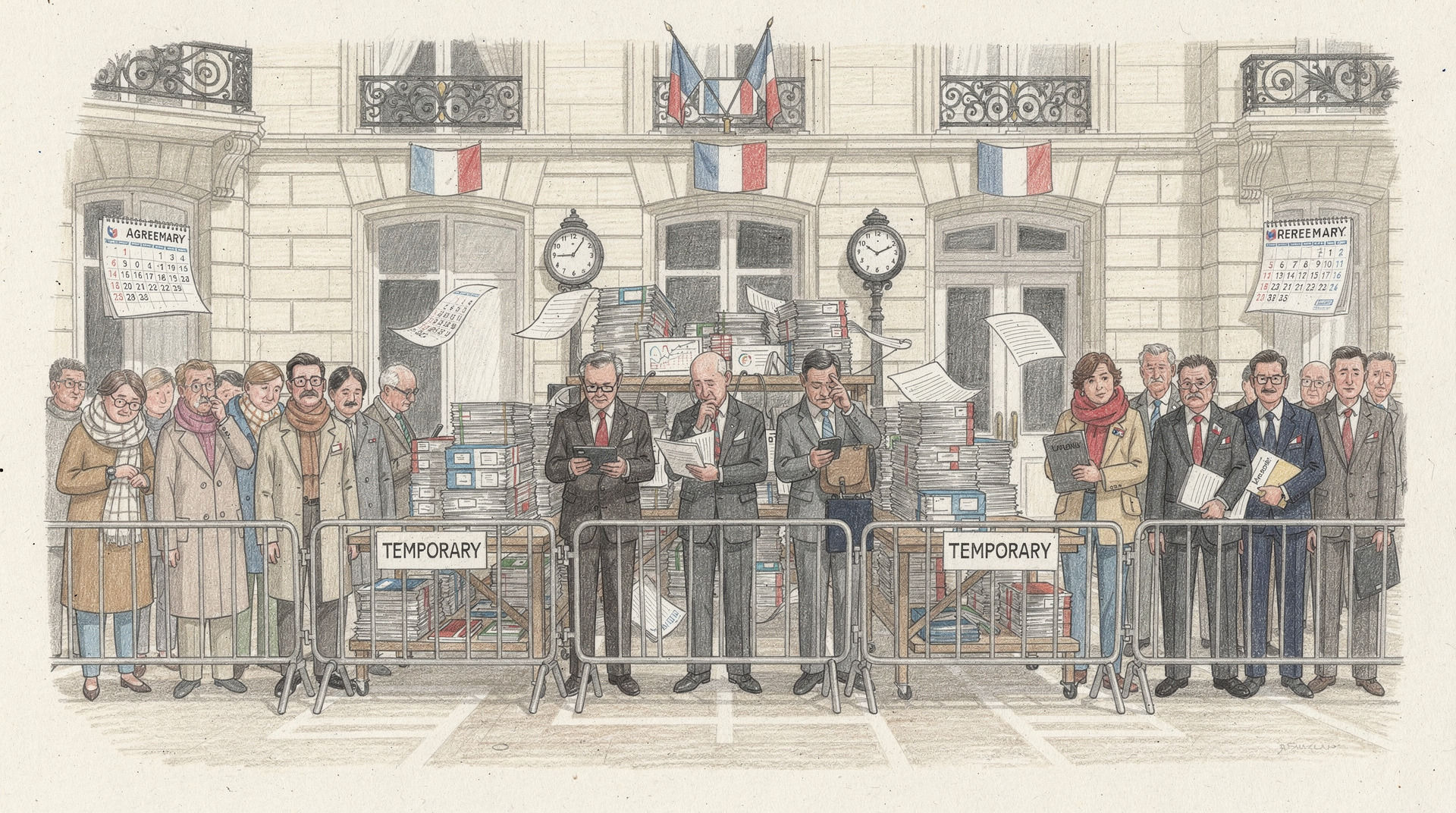
Macron weakened, not removed
The president remains in office, but the analysis makes clear that his authority is badly damaged. Without a loyal majority, presidential power becomes procedural rather than commanding. Macron can appoint, consult and delay, but he struggles to impose direction. The system was designed for strength at the top. Instead, it is producing exhaustion and drift.
Parliament blocks, but cannot govern
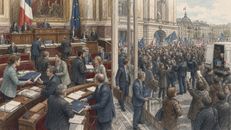
The National Assembly has gained leverage but not responsibility. Opposition forces are strong enough to topple governments, yet unwilling or unable to build an alternative. The report shows how this creates a vicious circle: blocking replaces governing, symbolism replaces policy, and political theatre crowds out problem-solving.
Budget pain waiting in the wings
Behind the institutional drama sits a looming fiscal crunch. France faces high debt, rising interest costs and pressure to rein in spending. The analysis underlines the danger of delay. Without a stable government, budget choices are postponed, reforms stall and credibility with markets and EU partners erodes.
Social tension, no safety valve
Political paralysis feeds public frustration. Protests, strikes and distrust of institutions are already baked into French politics. The report warns that prolonged deadlock removes pressure valves rather than releasing steam. When decisions never come, anger looks for other outlets.
Europe watches an unreliable pillar
France likes to present itself as a motor of Europe. The study quietly punctures that image. A country unable to govern itself struggles to lead on EU reform, defence, enlargement or economic strategy. Partners wait, hedge or move on, while Paris debates process.
The uncomfortable truth: Power without control
France still looks strong on paper, but the machinery underneath is grinding and slow. Institutions built for authority now deliver gridlock, and political actors exploit the system without fixing it. The longer the stalemate lasts, the more normal dysfunction becomes.
If no exit is found, the danger is not sudden collapse but managed decline. France keeps moving, just in circles.