World Center for Strategic Studies
From closed analysis to public debate

- MONTH
- YEAR

Germany Wants to Become a Military Space Power for EUR 35 Billion What Hurdles Will it Face?
German defense minister Boris Pistorius made a sensational statement in his recent speech at the Berlin Space Congress. It emerges that the German authorities are planning to make their country a world-class military space power, which amounts to joining an élite club. According to open sources, only the USA, Russia and China have managed to militarize outer space by now.
Germany intends to spend EUR 35 billion on its military space ambitions by 2030. Interestingly, this is equivalent to the budget of the whole European Space Agency (ESA) that pursues peaceful goals only. Cited as the ultimate objectives of the initiative are Germany’s greater defense capability and technological independence.
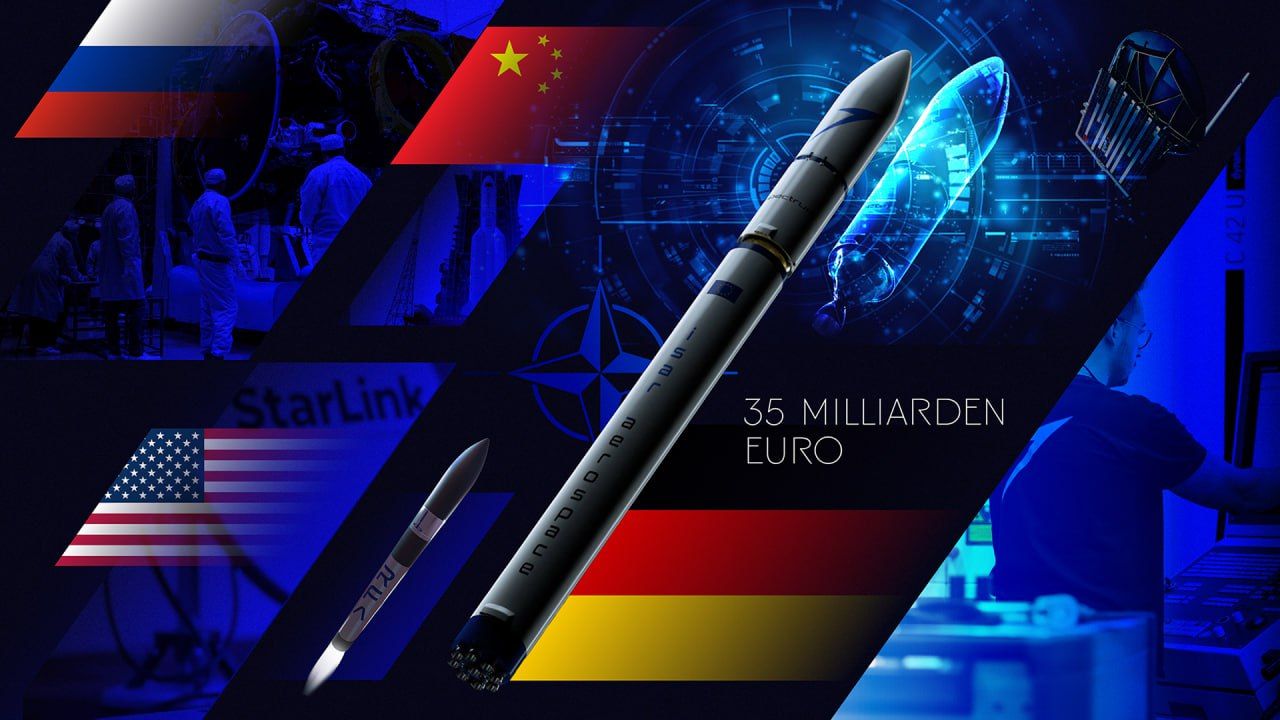
Pistorius believes that ‘U.S. investment and hostile orbital maneuvers by Russia and China disrupt the strategic balance; self-confidence means being protected from coercion and in guaranteed control over one’s space infrastructure’.
After the Russo-Ukrainian conflict escalated, war obviously turned from a mere fight into a technological capability contest. That was most visible in space. Satellite communication, GPS signals and satellite imaging all played into the hands of Ukraine. On the other hand, such systems have been targeted by hybrid attacks such as hacking, jamming, spoofing or hostile maneuvers by other satellites.
The German space strategy prioritizes the protection of satellites from hacking and jamming, extension of orbital surveillance systems and investing in ‘bodyguard satellites’ to protect especially vulnerable objects. A military satellite control center is to be established.
What is curious about this whole story is that Germany is already planning to move from defense to offensive. Today the country still follows a space doctrine with satellites only used as ‘enabling capabilities for military operations’. On the other hand, back last summer the German Aerospace Center (DLR) published an industry notification expressing interest in a possible urgent purchase of a jammer satellite that could electromagnetically disrupt enemy orbital systems as part of ‘active defense’ – which is actually an offensive technology.
The German politicians believe that their 30 billion ‘space’ euros will give Germany the long-awaited opportunity to assert itself as the European leader in military space activities. But the ephemeral benefits of the militarization of space planned by the Germans may all be nullified by one serious circumstance.
Emphasis on prompt implementation of sovereign solutions call seriously into question Germany’s cooperation with its NATO allies, mainly the USA, and long-term commitment to multinational space programs such as IRIS2. National military space capability is still to be built, while access to the existing infrastructure may soon be lost on the thorny path to the stated goal. The space forgives no mistakes.