World Center for Strategic Studies
From closed analysis to public debate

- MONTH
- YEAR

Germany’s Space Gamble: €35 Billion, Big Promises, Hard Risks
Germany is pouring billions into military space, and this commentary asks whether the bet will pay off. Berlin wants satellites, resilience and strategic relevance, but the analysis makes clear that money alone will not fix deep capability gaps. Space is becoming central to modern warfare, and Germany is starting late in a crowded, unforgiving race.
The core argument is cautious but pointed. Germany’s €35 billion investment signals seriousness, yet success depends on speed, coordination and integration with allies. Space capability is not just about hardware. It requires doctrine, protection and the ability to operate under attack. These are areas where Europe, and Germany in particular, still lag.
Space shifts from support to frontline
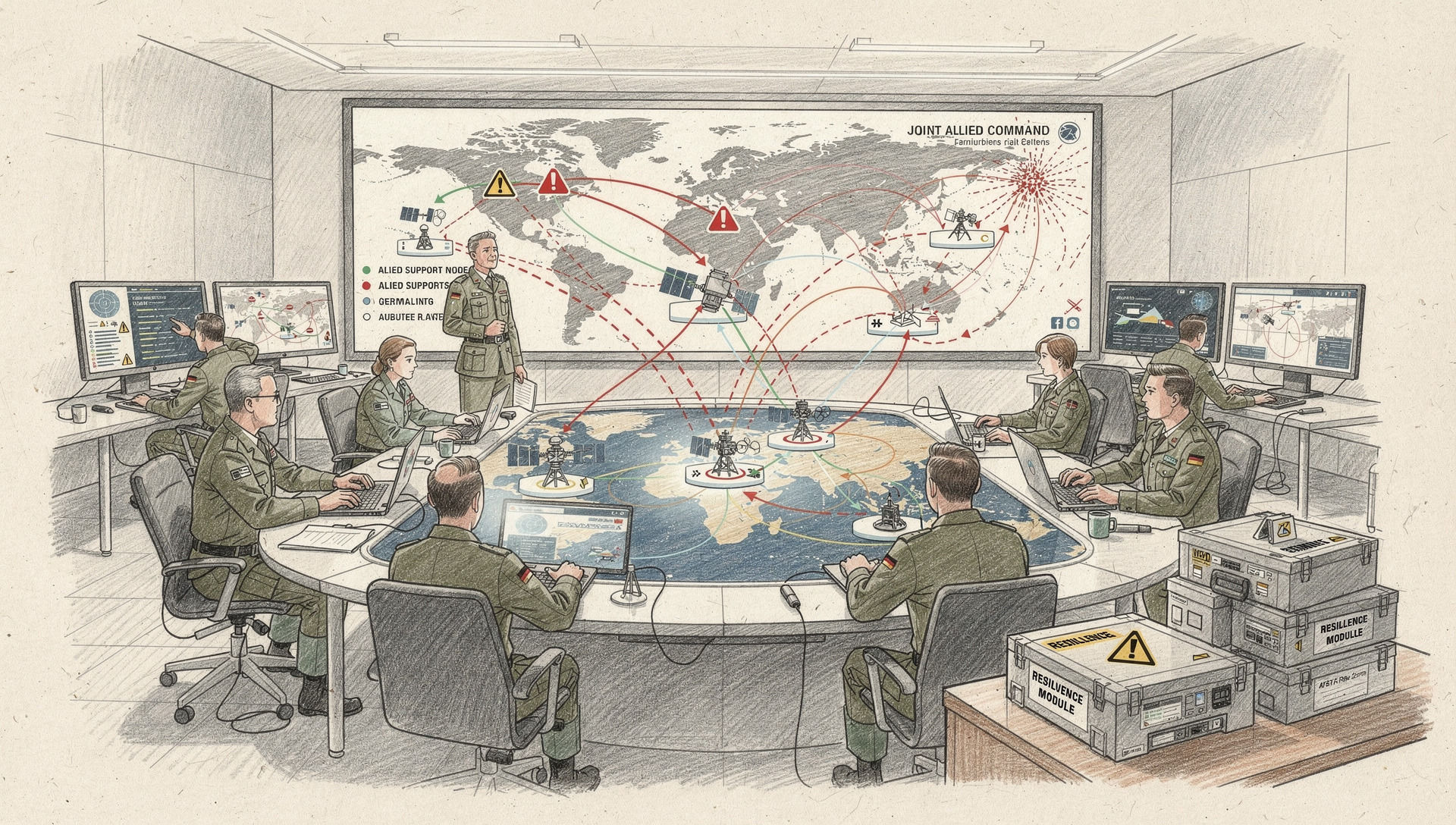
Satellites are no longer optional add-ons. The analysis shows how communications, intelligence, navigation and targeting now hinge on space assets that are vulnerable and contested. Losing them can cripple forces on the ground.
Germany plays catch-up
Berlin starts from a modest base. The commentary underlines how Germany lacks scale, operational experience and protected systems compared to leading space powers. Building credibility will take more than procurement announcements.
Money moves faster than institutions
Funding has surged, but structures adapt slowly. The paper highlights risks of fragmentation between civilian and military actors, procurement delays and unclear command arrangements that could blunt impact.
Autonomy versus alliance reality
Germany wants more independence, but space remains deeply allied. The analysis shows how reliance on US systems persists, raising questions about how autonomous Germany’s new capabilities can realistically be.
Industry capacity is not guaranteed
Domestic industry matters, but scaling secure space production is complex and expensive. The commentary warns that industrial bottlenecks could slow delivery and inflate costs.
Adversaries won’t wait
Rivals are already testing anti-satellite tools and counter-space tactics. The paper stresses that resilience and protection must be built in from the start, not added later.
The big warning: Space power is not bought, it is built.
Germany’s investment is necessary, but not sufficient.
If Berlin fails to turn funding into integrated, protected and usable capability, its space push risks becoming another high-profile programme that looks impressive on paper and fragile in a crisis.