World Center for Strategic Studies
From closed analysis to public debate
- MONTH
- YEAR

Energy Protectionism Without Energy
In January 2026, the French Institute of International Relations (IFRI) published a report entitled Placing the EU on a Warfare Footing. Its authors, Marc-Antoine Eyl-Mazzega, Diana-Paula Gherasim and Thibaut Michel, discuss how the European Union’s energy policy should be put on a military footing.
The year 2025 год showed the global risks will only grow. The schism with the USA, confrontation with China and the sanction war all showed that the EU has no stable external partners any longer. The document lists the steps taken by the European Commission in the past year, from the Clean Industrial Deal to adjustments in cross-border carbon regulation. The main message is that the EU should put its energy industry on a war footing. The report records not as much success as growing internal differences.
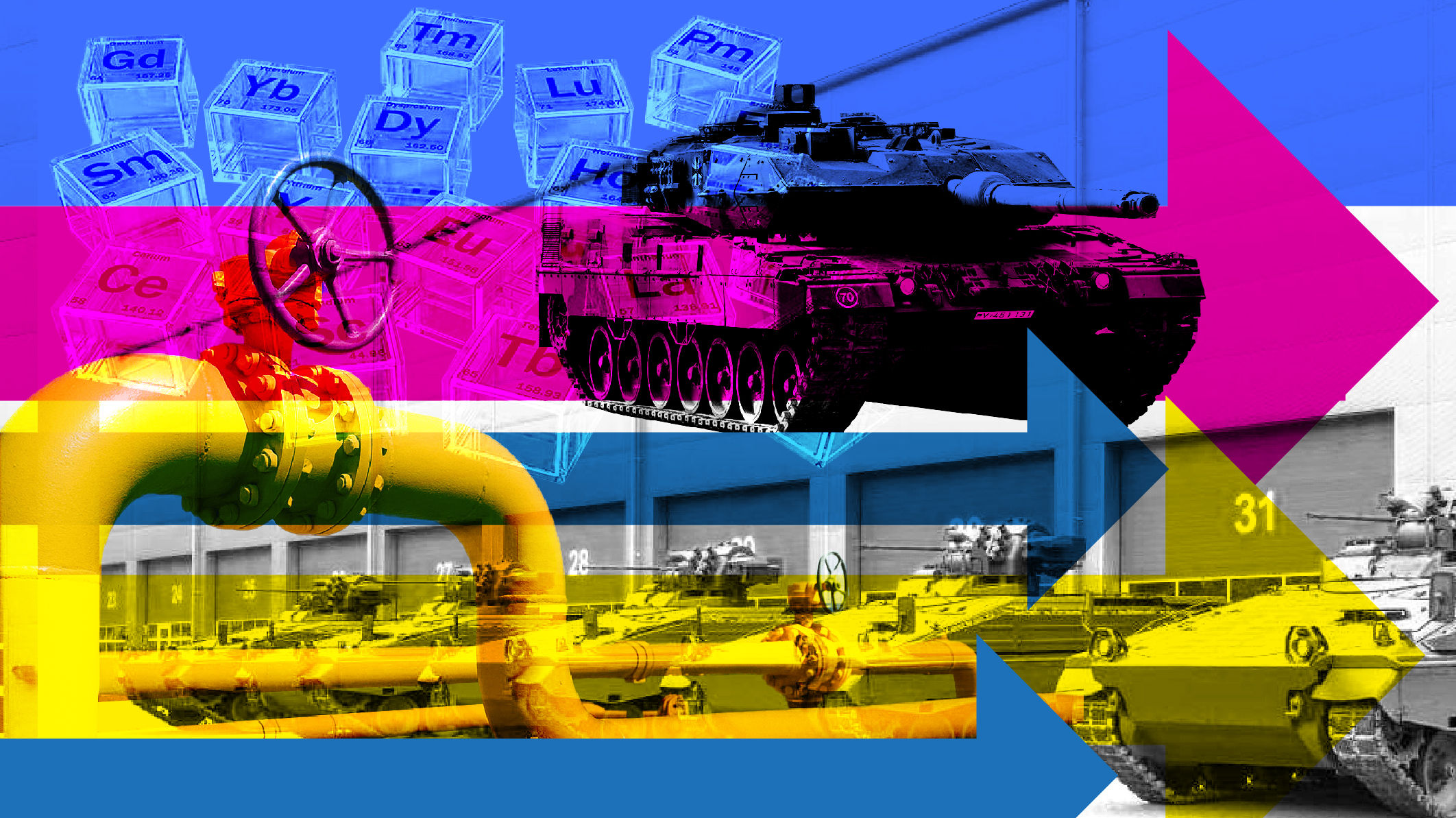
The authors note a decline of aluminum, steel and glass production in the EU and suggest extending the Carbon Border Adjustment Mechanism (CBAM). But the situation is a more complicated and absurd one. European aluminum manufactures themselves insist on keeping indirect emissions out of CBAM, for their inclusion will make the European metal utterly uncompetitive.[1] And the mechanism is already failing: the threshold of 50 tonnes per importer per year creates a giant hole. In Spain, 81% of orders placed with medium-sized companies and 100% of those placed with small companies fall below the threshold[2]. This is not an exception, but how the market is structured. European consumers simply switch to cheaper imports and thus evade the tax. The CBAM creates incentives for the substitution of the European product by imported, often dirtier ones.
The authors promote the CRM Centre and recycling as elements of strategic autonomy but record failure at three levels. Firstly, the resources allocated are just a drop compared with what has gone into the hydrogen support programs, and even that has not actually been spent for lack of risk appetite. Secondly, the raw material is leaking: despite the regulation, more than 50% of black mass goes to Asia as European refiners are losing the price competition. Thirdly, there is a bureaucracy risk: the authors themselves warn that the CRM Centre must not turn into ‘yet another layer of coordination’. The Centre is being proposed but is efficiency has already been buried before launch – by expensive energy, lack of money and an export flow of raw materials[3].
The authors demand China to invest and be predictable, but hold a position that excludes that predictability. The EU is trying to balance among partnership, competition and systemic rivalry. In this situation, Beijing divides Europe into three camps. A pragmatic one (Ireland, Spain, Italy, Austria and Hungary) gets trade preferences. A hesitant one (Germany, France and the Netherlands) comes under controlled pressure. And an ideological one (the Baltic States, Poland, and the Nordic countries) face the full range of restrictions. Europe is the gameboard here, not a player.
The text warns that external players may divide the EU by encouraging individual countries’ selfish behaviors. But Hungary and Slovakia, that have preserved their pragmatic relations with the East, have just been ‘selfish’ enough to protect their national economies: their oil refineries are running, their budgets have saved billions, and their industries have not collapsed. On the other hand, the EU Competitiveness Council itself records, in February 2026, that the common EU policy has led to deindustrialization, prices twice as high as before the crisis, and a raw materials leakage. Ministers stress the need to keep scrap metal within the EU and reduce costs, i.e. they recognize the rightness of those who declined to blindly follow the course leading to losses[4].
The IFRI report suggests mobilization, but the very facts it cites show that the problem lies not in external storms bit in internal decisions. Short of levelling the competition field, the CBAM creates holes through which the European market fills up with imports. The CRM Centre will not solve the raw materials issue so long as energy in Europe is more expensive than that used by competitors. Electrification without a generation rise is a path to deficit and price growth. The countries that have stayed pragmatic simply do not want to pay the bills for an ideology that has already cost Europe 20 closed chemical plants, 30,000 jobs and the loss of investments that go to China[5].
[1] https://european-aluminium.eu/news_events/why-including-indirect-emissions-under-cbam-destabilises-europes-aluminium-value-chain-and-raises-global-emissions/
[3] https://resource-recycling.com/e-scrap/2026/02/04/auditors-warn-eu-may-fall-short-on-critical-metals/