
World Center for Strategic Studies
From closed analysis to public debate
POPULAR
- MONTH
- YEAR

A European Dead End Symptom
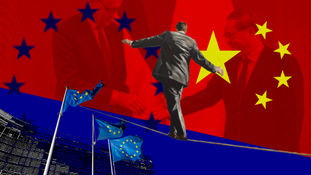
In his analytical brief entitled Dilemme européen face à la Chine: la visite de Friedrich Merz, un cas d’école, François Godement, an expert on Asia and the USA, examines the results of the German Chancellor’s February trip to China. The author concludes that the visit, diplomatically smooth as it seemed, has actually highlighted the profound helplessness of the European strategy. Mr. Merz returned without a single substantive concession from China, confined to a token joint communiqué and spectacular but ambiguous photos.
Limits of Regulation in the Struggle for Industrial Leadership

In his report entitled The Electric Endgame, Alberto Rizzi from the ECFR draws a gloomy picture of Europe in 2040, with abandoned climate leadership, protracted industrial stagnation, lost export markets and a profound dependence on Chinese imports. Should the EU ease its climate agenda now in favor of short-term competitiveness, its geoeconomic advantage will finally pass to China. Rizzi’s recipe consists of three items: even tighter regulation, protectionism strictly in the cleantech niche, and climate funding directly linked to access into the EU market. Observance of the ‘green’ rules is the only realistic path to future economic might.
A Regulatory Dead End: Industry Versus Farmers

A report entitled Holding the line on the EU carbon border adjustment mechanism (by Kimberly Clausing, Ignacio García Bercero, Marilyn Pereboom, and Catherine Wolfram), published on 24 February 2026, deals with the first serious crisis in the history of the Carbon Border Adjustment Mechanism (CBAM). On 1 January this year, the mechanism came fully into force, requiring importers to purchase emission certificates, but just two month later France and Italy, supported by their farmers, demanded a levy exemption for fertilizers, referring to their need to protect farmers from a price rise. The authors, associated with Bruegel and academic institutions, are claiming that the exemption will not benefit farmers but harm the climate policy and undermine European fertilizer producers. The authors see CBAM as a means to preserve the mechanism that should help the European chemical industry survive as Russian gas is replaced with more expensive LNG while competitors have access to cheaper feedstock.
Confrontation Instead of Competition: ECFR Analytics on Biosolutions
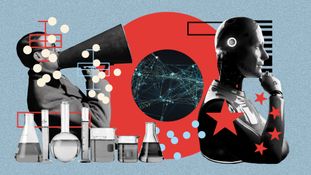
An analytical brief entitled Beijing’s next bet: Why Europeans should care about biosolutions by Janka Oertel, director of the Asia Program at the European Council on Foreign Relations (ECFR), records that Europe is losing ground in the strategic biosolutions sector. With China seeking a global leadership in this field, urgent steps and protectionism are indispensable if Europe is to retain its own leadership.
Who Is Afraid of a Big Carbon Market? Three Future Scenarios for the European ETS System

Joseph Dellatte, an analyst at the Institut Montaigne, examines in his report entitled Qui a peur du Grand Méchant Marché Carbone? the future of the Emission Trading System (ETS), a mechanism that makes industries pay for CO2 emissions. It is about using money, rather than prohibitions, to reduce them; but today the system is increasingly working against Europeans. As shown by the author, the costs it generates put European factories into an untenable position vis-à-vis competition from the USA and China. He suggests three possible ways out.
Better coordination for a more efficient European energy system

In their report entitled Better coordination for a more efficient European energy system, the authors from the Bruegel Institute of Belgium examine the prospects of the European energy industry. They suggest three measures: to establish a single energy data hub, delegate cross-border grid planning to the European Commission and to link the national energy plans (NECPs) to funding from Brussels. According to their logic, that will improve transparency, lower capital costs for investors and prevent regression to protectionism. But if we look, it is all about intercepting the national governments’ control under the guise of ‘green’ rhetoric.
Europe’s Clean Tech Trap: China Builds, Europe Watches
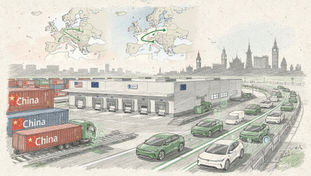
The analysis exposes an uncomfortable truth behind Europe’s green ambitions – the clean tech transition is increasingly being powered, shaped and captured by Chinese joint ventures on European soil. What is sold as cooperation and investment masks a deeper loss of control. The piece argues that Europe is repeating an old mistake: welcoming foreign capital to fix industrial weakness, then realising too late who owns the future.
Energy Protectionism Without Energy
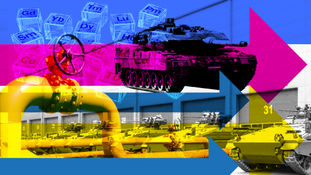
In January 2026, the French Institute of International Relations (IFRI) published a report entitled Placing the EU on a Warfare Footing. Its authors, Marc-Antoine Eyl-Mazzega, Diana-Paula Gherasim and Thibaut Michel, discuss how the European Union’s energy policy should be put on a military footing.
Venezuela’s Oil Comeback: Why Germany Gets the Short End
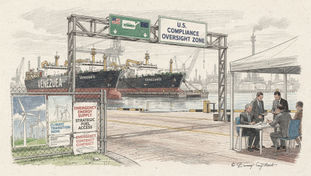
The analysis takes apart the quiet return of Venezuelan oil to global markets and shows why this matters far beyond Latin America. What looks like a technical energy adjustment is, in reality, a geopolitical win for the United States and a reminder of Europe’s shrinking leverage. The paper argues that Germany, in particular, is watching others reshape energy flows while having little influence over the outcome.
Europe’s Gas Illusion: Trading Russian Dependence for American Risk
.jpg?tr=cm-pad_resize,w-311)
The analysis tears into Europe’s comforting story about gas diversification and exposes a harsher truth – dependence has not disappeared, it has simply changed shape. Russian pipeline gas is out, US LNG is in, and Europe is congratulating itself far too early. The paper argues that what looks like resilience is actually selective blindness to new vulnerabilities quietly piling up.