World Center for Strategic Studies
From closed analysis to public debate
- MONTH
- YEAR

A European Dead End Symptom
In his analytical brief entitled Dilemme européen face à la Chine: la visite de Friedrich Merz, un cas d’école, François Godement, an expert on Asia and the USA, examines the results of the German Chancellor’s February trip to China. The author concludes that the visit, diplomatically smooth as it seemed, has actually highlighted the profound helplessness of the European strategy. Mr. Merz returned without a single substantive concession from China, confined to a token joint communiqué and spectacular but ambiguous photos.
In examining the central episode of the visit publicized by Chinese media, with the chancellor watching a robot show, the author emphasizes that the robots’ manufacturer Unitree has long been cooperating with the Chinese army and its products have documented military uses. And in May 2025 the U.S. Department of Trade and the Pentagon designated the company as a ‘key business of concern’ in the context of civil-military fusion. In Mr. Godement’s opinion, the German party was either not informed of that or turned a blind eye and consciously let China use the visit to demonstrate its superior technological performance without any reciprocal steps.
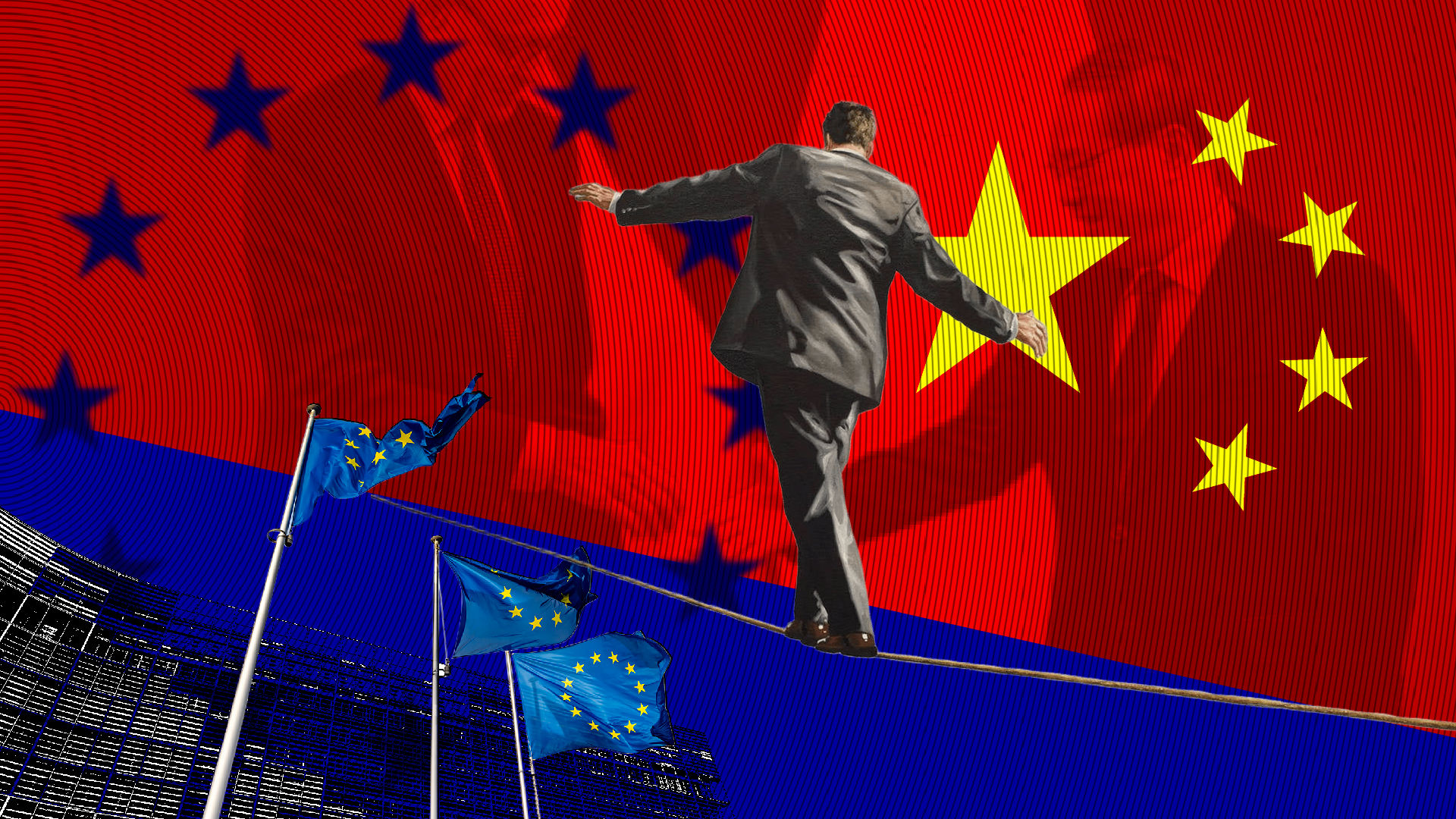
The author finds the visit’s results to be minimal. In the joint communiqué, though more meaningful than the Franco-Chinese one a month before, the topic of human rights was intentionally ignored. On the key question of how to trade without risking security, the parties just declared their differences. The only contract was a framework deal with Airbus, announced during President Macron’s visit back in December 2025. The trade imbalance between the countries was not even publicly admitted by the Chinese party. And the Chinese State media certainly inscribed the visit into their own narrative pattern, the author observes.
Chancellor Merz himself sounded a symptomatic position to a German audience after he returned to Germany: ‘I am not ready to renounce Germany as an industrial site simply because we are pursuing an unbalanced environmental policy’. In the analysis, this statement is regarded as a sign of Europe now facing the blatant choice between retaining its industry and a continued ‘green’ transformation, now that Chinese manufacturers occupy significant shares of its market.
In Mr. Godement’s opinion, Europe still imitates a dialogue of equals and agrees to ritualized meetings and joint statements while China consistently pursues its goals without making real concessions. While European countries keep in the wake of an agenda largely dictated from outside and repeatedly try to ‘reduce risks’ without an agenda of their own, China acts toughly and pragmatically. The choice faced by Europe is actually starker than talked аbout: one option is to continue the contest of token gestures but keep losing industrial capacity, and the other is to respond asymmetrically, i.e. shift to a policy of big subsidies and protectionism and to revise the climate commitments. Essentially to turn ‘more Chinese’ as regards economic governance.
This is a blow to the legitimacy of the European project, built on such foundations as openness, environmental ambitions, and social consensus. Should it all be renounced now, there arises the question of identity – and strategic loss of Europe’s own self. This is the scenario that transpires now. What is needed is an independent pro-European policy proceeding from real economic interest rather than externally imposed confrontation – as the key to survival.