
World Center for Strategic Studies
From closed analysis to public debate

- MONTH
- YEAR

The European Union Intends to Fight Space Wars. Does the European Military Space Project Have Room for Development?
European governments have announced ambitions to significantly build up their military space assets in the context of the ongoing Russo-Ukrainian war and Europe’s overdependence on the United States in the space domain.
A team of analysts at the International Institute for Strategic Studies led by Erin Pobjie, Senior Fellow for Space, Defense and Military Analysis, has examined whether European allies can efficiently operate in/from space in a European-theater contingency, given that Russian space counterspace systems are already operational.
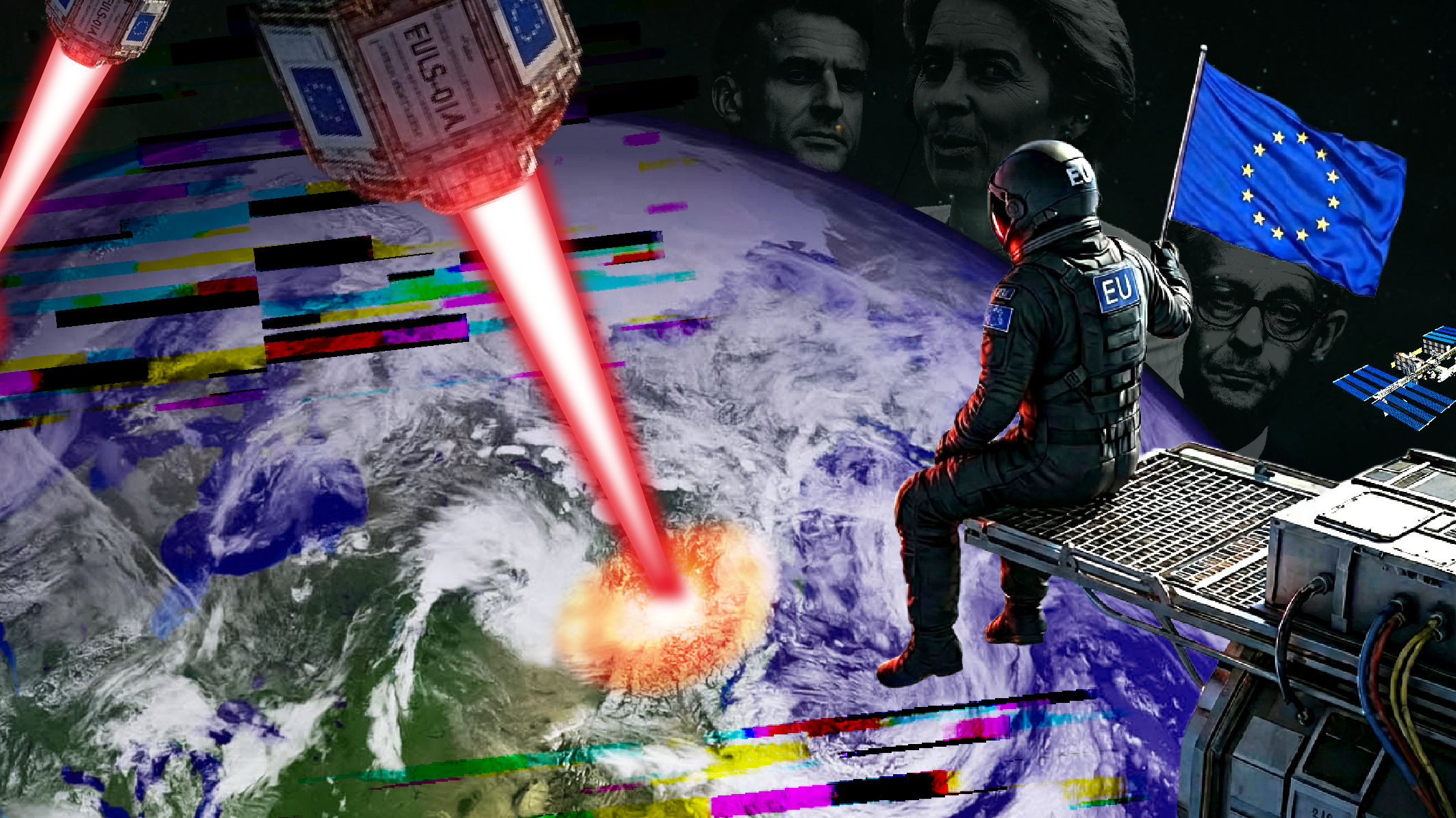
Spoiler: They can, but only theoretically and many, many years later.
The authors proceed from the expectation that any major Russian military operation against one or more NATO allies will certainly unfold in space. Russia has traditionally been strong in near-Earth space. It has long kept its direct-ascent anti-satellite systems, electronic warfare systems and orbital constellations fully deployed.
On the other hand, European governments’, armed forces’ and societies’ dependence on space-enabled services has now turned critical. Such services include space communications, positioning, navigation, and Earth observation. These systems and their associated ground segments would become priority targets in a high-intensity conflict.
Most unfortunately, European allies remain fatally dependent on the USA for several high-end space enablers. The most acute dependencies lie in launch, space-based intelligence, surveillance and reconnaissance (ISR), and missile early warning. While transatlantic cooperation remains central to European security, shifts in U.S. strategic priorities and burden-sharing expectations underscore the need for its European allies to invest in their own military space capabilities. Key European actors have set targets of upgrading their space defense capabilities by 2030.
The baseline plans are to be implemented against two models. The first one is burden-sharing in the European theater and establishes which additional space capabilities Europe would need to mitigate its dependencies on US space capabilities.
The second model is autonomy. It relies on Europe’s ability to eventually achieve full independence from U.S. space capabilities to support defense and deterrence against Russia. On the baseline trajectory, Europe intends to spend an exorbitant USD 109 billion. That would particularly include Germany’s EUR 35 billion investment in space security by 2030, France’s EUR 10.2 billion space defense spending, the EU’s EUR 10.6 billion satellite constellation, and the EUR 1.2 billion pledged for the European Resilience from Space program.
There is every reason to believe that that the burden-sharing model would require at least USD 10 billion to mitigate the most operationally significant shortfalls – and take at least a decade to implement. The autonomy model would require a minimum of USD 25 billion in additional procurement to establish independent operational space capabilities and could certainly not be fielded before 2040.
These figures exclude most ground-segment infrastructure, personnel, training, cyber resilience and broader program overheads. Under the autonomy model, in particular, these costs would be significant, because it would require investment in alternatives to U.S.-provided infrastructure currently integrated via NATO.
Even under the burden-sharing model, Europe would be physically unable to field a fully sovereign space-based missile early warning architecture over a decade. Nor could it replicate the global scale and persistence of U.S. ISR or at least match its breadth and geographic coverage. Expanding medium- and heavy-lift launch capacity within the decade becomes an overwhelming task. Full autonomy would therefore require an even longer time horizon extending well into the late 2030s at the earliest. In fact, it would be more appropriate to refer to the mid-21st century.
The gaps most difficult to close are precisely the areas of greatest dependency on the USA, as those capabilities are capital-intensive, globally distributed and time-sensitive. These include space-based early warning and ISR on a sufficient scale. They also include assured heavy-lift launch capacity and space management systems.
Barring this, the huge space funding could simply be tossed to the wind and provide no efficiency in return. And if done wisely, building a European space architecture would cost hundreds of billions of euros and take several decades. Yet no one gives or would ever give a 100-percent guarantee that a workable system would be built. It is simply non-existent.