World Center for Strategic Studies
From closed analysis to public debate
- MONTH
- YEAR

Oil? Gas? Fertilizer? Just Life.
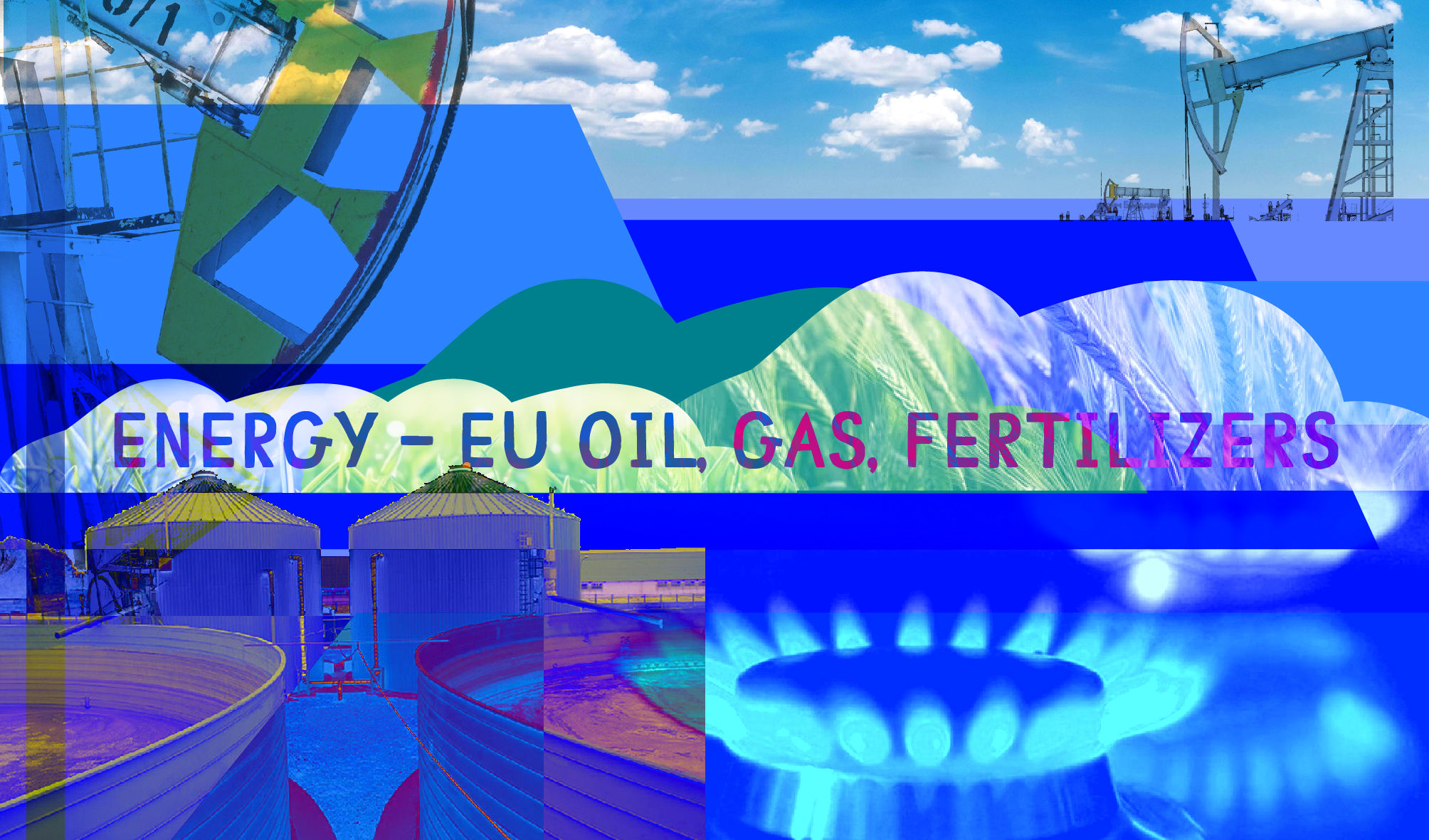
Dear European fellow citizens! I shouldn’t like to be a Cassandra, for she is quite an ungrateful lady; but after assessing the ‘immaculate’ analytics that our opinion leaders dump onto your heads every day, I see I have no choice.
In a hope to be heard and understood, I suggest that you move your ‘EU globe’ away for some time and take a world globe that is more revealing on the issue. Hopefully, the centuries-old European culture of thinking will help you avoid mimicking the Americans who did not discover the Caspian Sea until quite recently and were then surprised to find that Iran is not alive by Hormuz alone.
So we take the complete global map and also open an article about one person whom the whole Brussels henhouse has pecked – for feeling free to have his own opinion, different from the flock’s. He is not an ordinary man but Bart de Wever, a prominent politician and Prime Minister of Belgium. He got a volley of stones from the Brussels Pharisees after his call to repair relations with Russia so that energy supplies resume. ‘We must end the conflict in Europe’s interest… we must normalise relations with Russia and regain access to cheap energy. It is common sense. In private European leaders tell me I am right, but no one dares say it out loud.’ he told the Belgian newspaper L’Echo.
Please note an important aspect: many leaders do agree with him, if in private; that means those ‘many’ also understand something and know the right globe to look at.
Yet in public, back in December 2025, the same leaders agreed to phase out Russian gas by November 2027 and reiterated a target to end Russian oil imports by the end of the same year. As EU energy commissioner Dan Jørgensen told reporters proudly, ‘we have been for too long dependent on energy from Russia, making it possible for Putin to blackmail us with energy, making it possible for Putin to weaponise energy against us,’ and ‘it would be ‘a mistake for us to repeat what we did in the past’.
On whom is Mr. Jørgensen dependent now, and what mistake does he make this time, the old one or a new one? And, most importantly, what does he hope for – with gasoline prices already shooting above two euros per liter and the gas storage facilities 30 per cent filled at best? In the meanwhile Britons already write, quite frankly, that Continental Europe’s gas reserves will last just a few weeks if the conflict with Iran goes on.
In 2025, U.S. LNG accounted for 60 per cent of all EU imports. In this connection, many independent analysts justly pointed to the ‘selective blindness’ of the European Commission that celebrated Europe’s departure from Russia but ignored its new vulnerability to Washington D.C.
By the way, that same Britain has every right to mock its Continental ‘allies’ because, as a National Gas spokesperson said recently, its LNG supply chains are fairly well diversified.
And what can Mr. EU Commissioner boast of in this connection? Of having moved Europe from the Russian needle to an American one, with much more expensive hits?
Now, before we move to the right globe, let us say a few words about our great ally across the ocean. First of all, we give the floor to the Belgian Prime Minister again: ‘Bringing Russia to its knees would only be possible with 100 per cent support from the United States,’ but ‘Washington is sometimes closer to Vladimir Putin than Volodymyr Zelenskyy’. And now let us predict how Trump will treat Europe after the EU gave him a public flick on the nose by enthroning its own man Magyar in Hungary in place of his favorite Orbán.
Based on the foregoing, I’ll express a seditious thought: Trump’s Gulf war (see the globe) is not about putting Iran to its knees. It is about putting Europe to its knees once and for all.
Eggheads from various think tanks clamor: ‘Tensions in the Strait of Hormuz are disrupting global energy flows. Europe must overhaul its energy strategy to focus on renewables, LNG, nuclear power and reducing oil dependency – and finally commit to safeguarding its long-term security.’
Sounds handsome. There is a ‘but’: what will you fill your cars and planes with, heat your houses and fertilize your soil with, now that the Greens have killed your nuclear power plants and your windmills are a little more than entirely dependent on spares and software from China?
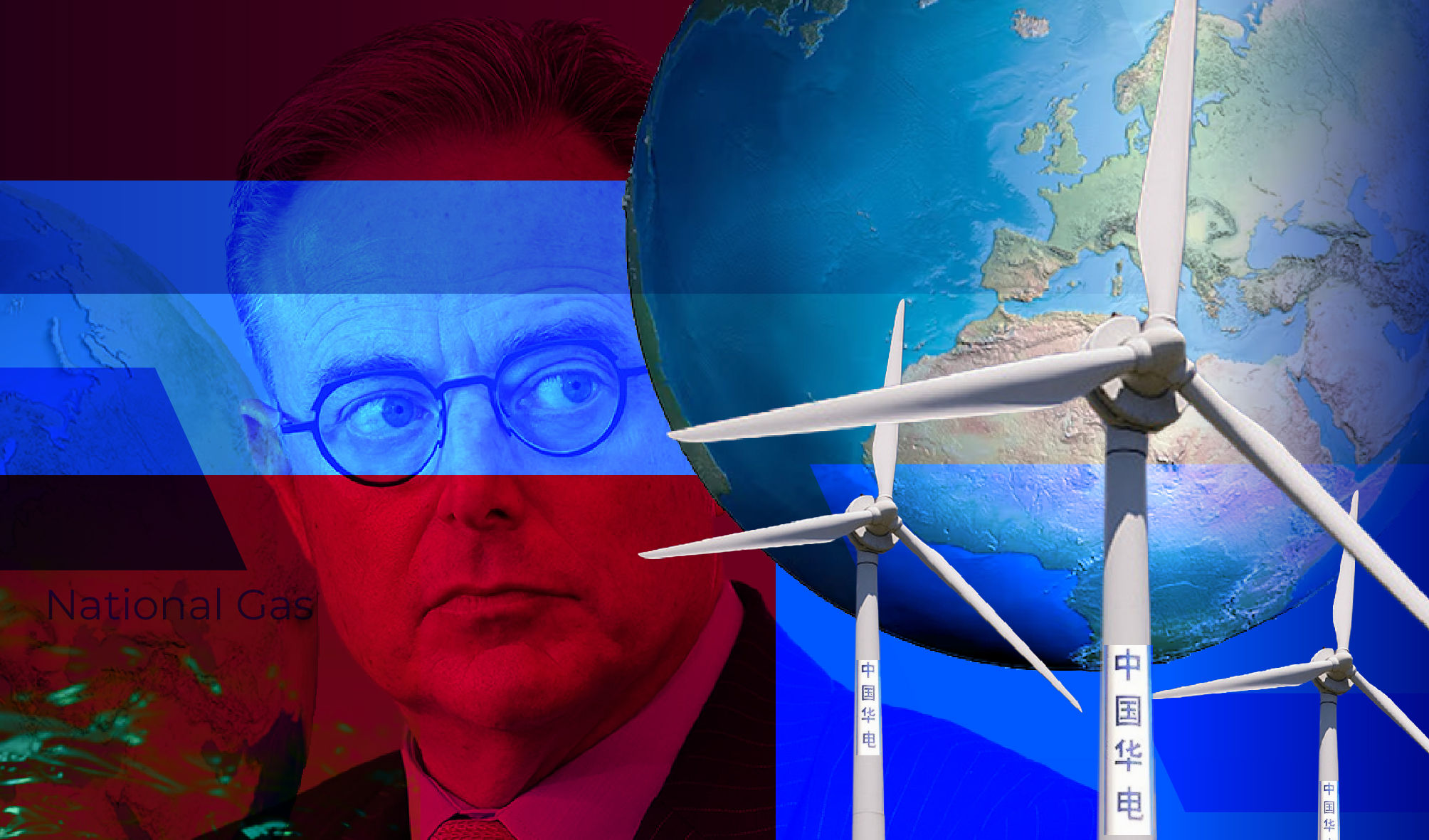
For now, the facts show that after having renounced Russian energy, Europe has become critically dependent on U.S. and China’s ‘goodwill’. And I’d be quite wary of ascribing any goodwill to those two countries. It is contrary to common sense. And what is true and quite logical is that they would like to raise their energy and component prices for the EU.
The same analysts predict: ‘Rising energy prices will impact other petrochemical markets, for example the delivery of fertiliser (leading to higher food prices) and helium (causing a microchip shortage). The European Union and its member-state governments need to focus on developing their competencies in wind energy; securing Europe’s natural gas imports; adapting to the prospect of nuclear energy; and derisking from their continued dependence on oil.’
I have already mentioned the windmills that are all dependent on their Chinese suppliers. Incidentally, Trump said the same thing a month or so ago: ‘They produce these wind turbines themselves and sell them to suckers in Europe, where they are being bought by the thousands’. As for nuclear power, between 1990 and 2026 its share in the European electricity mix fell from a third to some 15 per cent.
I’d rather keep quiet about LNG and helium, with Qatar shipment stoppage really forthcoming and restrictions imposed on helium exports from Russia – for this is a looming disaster. For example, Italy and Belgium have already been directly affected by Qatar’s halt to LNG production. And, as Ali bin Ahmed al-Kuwari, Qatar minister of finance, said at today’s IMF session, the recent spike in energy prices is merely the ‘tip of the iceberg’. He warned the audience that ‘even if you can afford to pay you are not going to be able to source, which is a major, major problem.’
Two commodity items remain to be examined: imported gas (critical to the production of fertilizer and a broad range of foods) and imported oil.
Let’s see what Europe is hoping for. Incidentally, the energy departments of a number of countries (e.g. Italy, Greece and Austria) are already actively developing their own procurement channels and ignoring Brussels recommendations. And Spain even turns to Russia directly. As casually reported by El País, in the first month of the Middle Eastern conflict Russia shipped a record amount of gas to Spain. Import has doubled from its February level despite all sanctions and the Brussels ban. Here we should note that Spain is rather active in assisting Ukraine, which did not prevent her from turning to Russia when stuck. Gas accounts for just 21 percent of Spain’s electricity generation and sets the power price only 15 per cent of the time. The new Hungarian prime minister Péter Magyar also began with a statement that geography cannot be cancelled, so Hungary will have to come to terms with Russia.
But let us see what Europe is hoping for – with a stubbornness worthy of a better cause.
Cooperation with friendly neighbors, such as Algeria, is suggested. Well, let us look at Algeria. Today it provides just 11 per cent of EU gas imports. There are vast offshore gas fields next door, in Libya, but they are not developed at all due to political instability in that country – as if the situation in Algeria were a model of stability.
But what do you think will Libya, Algeria, or Morocco (fertilizer phosphates) demand in return? I shall tell you: a drastic increase in the migration quotas, for they need to dump the overflow of their young and unemployed population. And that same Spain is now forced to announce programs to legalize half a million illegal migrants instead of expelling them. I suppose that is in exchange for Moroccan phosphates. The Spanish seem happy with it.
So we’d better forget the possibility of engaging Northern Africa.
What do we have in store then? Oh yes, the Middle Corridor with which all our ears are stuffed. As they tell us in Brussels, Trump will soon build a transit corridor via Armenia (that will join the EU) to link Central Asia, Azerbaijan, Turkey and Europe together, so we shall get Kazakh and Azeri oil and Turkmen gas.
Curiously, no one mentions that Trump lost his interest in that corridor after the Iran war began. No one says that after the July election Armenia is by no means certain to swap the EAEU for the EU, and Moscow for Brussels. And no one says that China will hardly share Turkmen gas with us or cede any of its influence in Kazakhstan.
So this Middle Corridor of yours, Brussels gentlemen, is a castle on sand too, for it is also far from being politically stable – especially if Azerbaijan is drawn into the Iranian conflict.
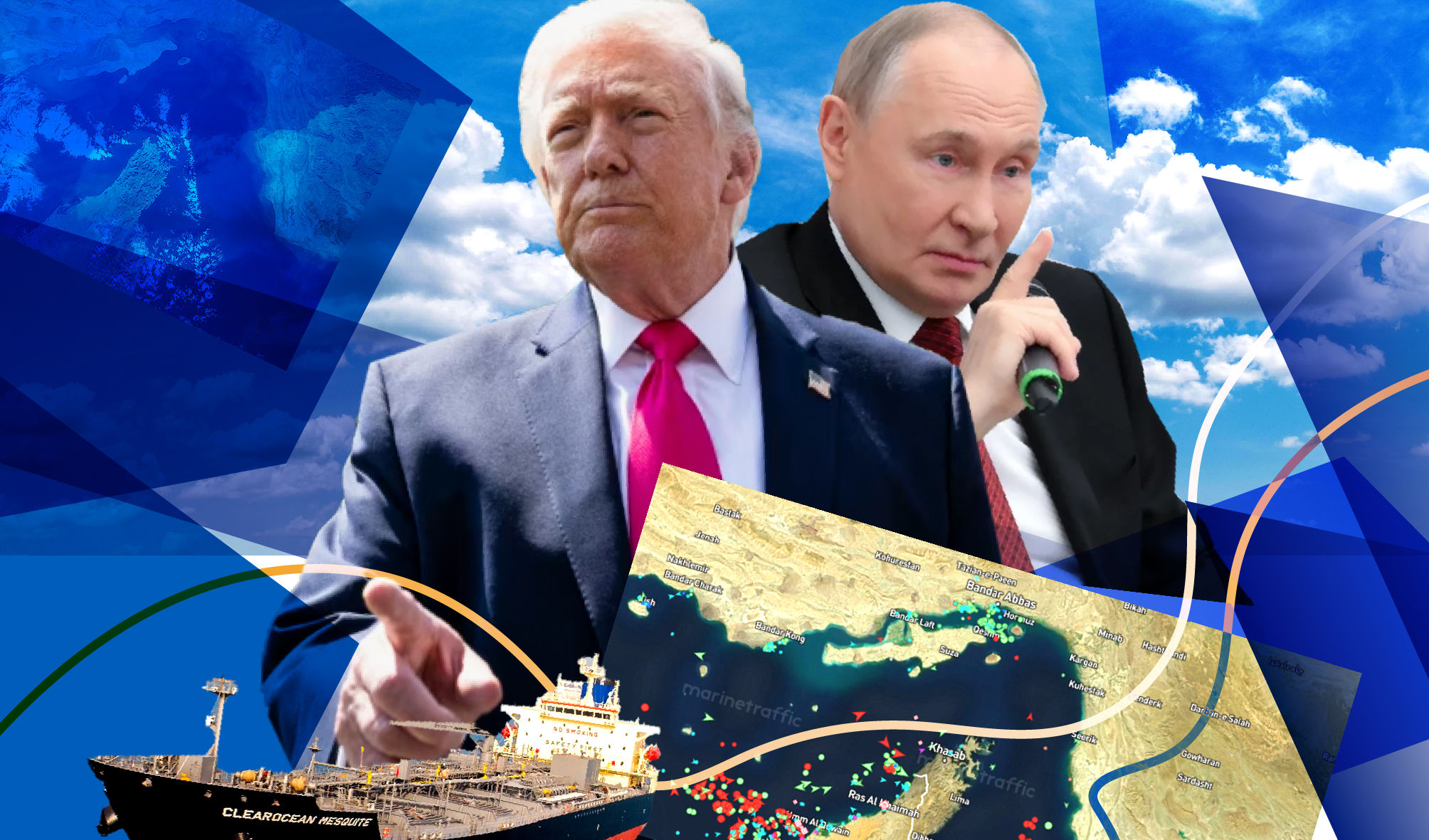
And, finally, a few words about fertilizer and two components critical to its production, namely natural gas and ammonia. Before the Hormuz Strait was closed, it used to carry some 30 per cent of the world’s marine fertilizer shipments. A shortage of critical fertilizer components may force many producers to revise their plans for the staples planting season. In turn, that would disrupt spring sowing in Europe and could reduce the yield and raise food prices after the harvest is taken in. The Gulf countries produce about a quarter of the world’s ammonia supply. And ammonia is basic feedstock for producing nitrogen fertilizer that accounts for more than a half of the fertilizers used globally. And nitrogen fertilizer is mostly used to feed staple cereal crops, including wheat, rice and corn, that form the worldwide dietary basis. Incidentally, the ammonia price has already grown by 20 per cent after the Iran war began.
Of course we could go for both (gas and ammonia) to Russia and Belarus, but the authoritarian nature of their regimes seems to definitely outweigh, on Brussels scales, both the Gulf monarchies’ authoritarian ways and the Algerian, Libyan and Central Asian regimes’ ‘commitment to democracy’. And non-democratic gas and oil are most harmful to Europe’s health.
And I’d rather keep silent on the fact that the sharp energy price spike is sure to ultimately boost inflation – that will have a knock-on effect across all economic sectors and pry into the unfortunate end user’s wallet while somebody tries to explain to him, again, that Putin is to blame for it all.
Things seem perfectly clear. You can’t quarrel with Russia and the USA at once and cherish a hope for some mythical ‘cavalry from behind the hill’ that will come and help. It is not cavalry that will come but people accustomed to surviving in deserts and wastelands – into which Europe will inevitably turn without an industry and agriculture of its own. Of course, that is true unless Europe comes to its senses and returns to pragmatic cooperation even with such ambivalent partners as Russia and Belarus.
For the sake of its own survival.
By Hamlet Weize