World Center for Strategic Studies
From closed analysis to public debate

- MONTH
- YEAR

The Gulf on the Front Line: The End of Strategic Hedging and New Space for Europeans
On March 26, the European Council on Foreign Relations published on its web-site an article The Gulf on the front line: The end of strategic hedging and new space for Europeans written by Cinzia Bianco, a visiting fellow with the Council specializing in Middle East studies. The article is on the prospect of cooperation between the countries of Europe and the Persian Gulf monarchies.
The author describes in substantial detail the issues of military security and geopolitics that the oil monarchies of the Gulf faced. The war on Iran changed the position of these states. Now they will be searching for reliable and stable partners.
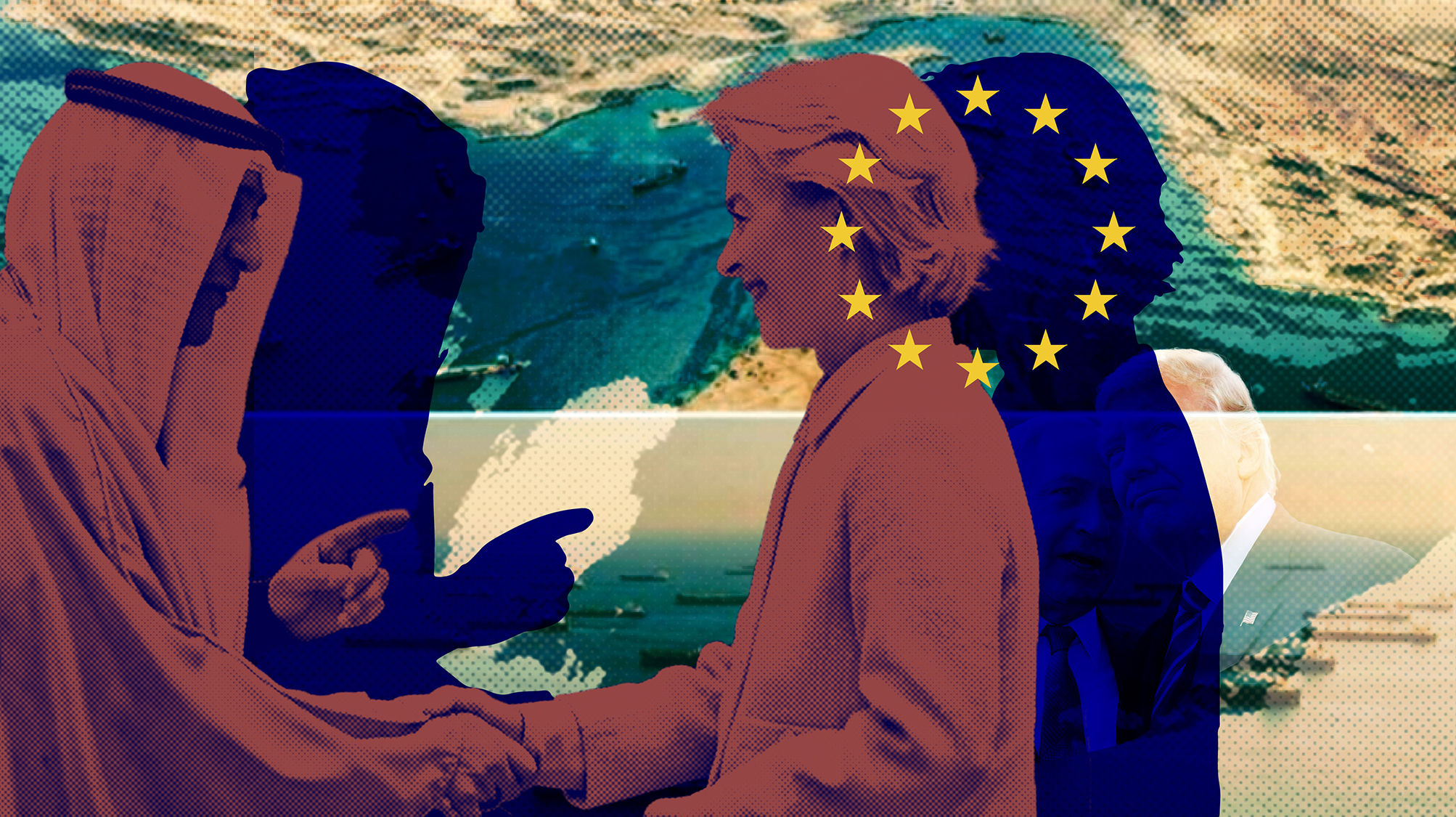
America failed to prioritize defending the Gulf critical infrastructure. Moscow rejected Arab countries’ requests to press Iran to halt attacks on the Gulf states. China refused to take on any meaningful responsibility for the Persian Gulf. Neither Pakistan nor India acted on the alliances they signed with Saudi Arabia and the UAE.
Israel is viewed in most states of the region, especially in Oman and Qatar, as the main architect of this conflict. They see Israel’s intention to expand its influence from the Mediterranean to the Arabian Sea.
The result of the war will determine the future security architecture in the region. One option is a regionally oriented architecture that will lessen the monarchies’ dependency on any one external actor. It opens up opportunities for partnership between Europeans and the Gulf monarchies.
The war on Iran undermines core European interests in terms of energy security, trade and transport infrastructure. It is in the European interest to take more responsibility for the Gulf stability.
Describing the potential parameters for cooperation of European countries with the Gulf monarchies, the author suggests something that the former are unable to do at the moment.
European countries have already shown political solidarity with the Gulf states and a willingness to back that solidarity with security support. Europeans should transform the current naval missions into a permanent, well-resourced maritime security agreement covering both the Strait of Hormuz and the Bab al-Mandab.
Europe must offer escort, minesweeping, air defence support, protection of critical infrastructure (including ports, coastal energy export terminals, offshore oil and gas fields, and undersea cables).
The war will push the Gulf states to focus more on their domestic problems. Europeans should expect them to be less active in supporting regional stabilisation, mediation and reconstruction in Gaza and the Levant. It will therefore be necessary for Europeans and Gulf states to develop a realistic plan to divide the burden and responsibility for containing instability in their shared region.
Why are European countries unable to follow the author’s suggestion? They failed to ensure security at their own borders. The military conflict in Ukraine drags on largely because of what European countries did when they sacrificed their own security and economic cooperation interests for the sake of their interpretation of values. The Gulf monarchies are much further from European values than Russia. They do not hesitate to use military force and meddle in the affairs of their neighbours, they are indifferent to human rights.
The military capabilities of Europe are much smaller than those of the US that failed to impose their will on Iran. For sure, European military missions are not strong enough to oppose either Iran or Israel. Particularly, in a situation when they continue to spend so much on military-technical support of Ukraine.