World Center for Strategic Studies
From closed analysis to public debate

- MONTH
- YEAR

Europe Needs an ASAP Program for Air Defense
On 23 March a brief by Max Bergmann, Otto Svendsen and Jonathan Burchell, experts of the Europe, Asia and Eurasia program, entitled “Europe Needs an ASAP Program for Air Defense”, was posted on the website of the Washington-based Center for Strategic and International Studies (CSIS). The brief deals with matters concerning the production of air defense systems in Europe
The expenditure of air defense interceptor missiles by the USA during its war against Iran, the U.S. defense industry’s inability to promptly replenish the stockpiles and the need to provide Ukraine with such missiles pose challenges to the European air defense system.
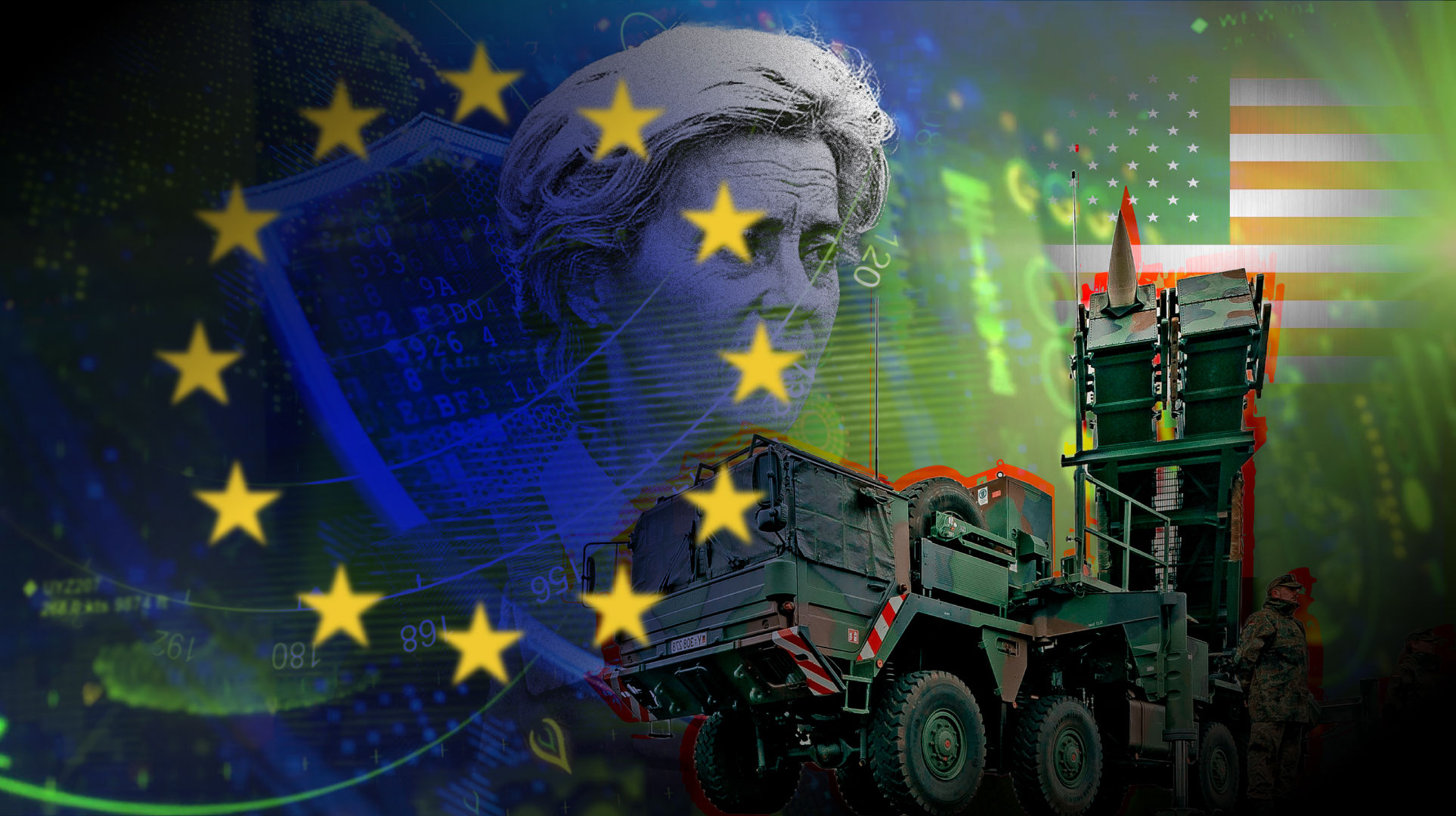
Europe does produce air defense systems, but they cannot be regarded as a single, full substitute for U.S. systems. SAMP/T (developed by the Franco-Italian EUROSAM consortium) is comparable to the Patriot. It can intercept ballistic missiles, high-end cruise missiles, and advanced aircraft using the Aster 30 interceptor. SAMP/T is Europe’s only homegrown long-range system, but it has been acquired by France and Italy only. NASAMS (co-developed by Norway and the USA) is a medium-range system designed to protect against cruise missiles, aircraft and unmanned aircraft, but it lacks a ballistic missile defense role. IRIS-T SLM (produced by Germany’s Diehl Defense) is a cost-effective workhorse to combat high-volume attacks but is less than an ideal platform for high-end missile defense. The United Kingdom’s Sky Sabre system provides a short- to medium-range shield.
Europe’s challenge is not the absence of capable air defense technologies, but the lack of sufficient production scale, especially for interceptors capable of countering ballistic and advanced cruise missile threats.
By comparison, Russia can produce up to 2,000 cruise missiles, 800 to 1,000 9M723 and Kh-47M2 Kinzhal short- and medium-range ballistic missiles, and over 30,000 Geran-2 drones annually.
Europe produces 220 to 250 Aster 30 missiles per year and intends to step up production to over 500 per year by 2028. IRIS-T production is 800 to 1000 missiles per year. It takes several missiles to intercept a single target.
European production of air defense systems is specific in that many interceptors, including the Aster 30 missile used in SAMP/T as well as the CAMM used in Sky Sabre, are produced by the multinational European missile manufacturer MBDA. This implies that expanding interceptor production will necessarily depend on cooperation across a broad European industrial base that includes the United Kingdom and Norway.
The European Union needs to commit EUR5–EUR10 billion in dedicated funding to produce enough interceptors. Money alone, however, will not solve the problem. Missile production relies on complex supply chains, long lead times, and scarce specialist skills. A modern interceptor comprises thousands of components—often sourced from single or near-single suppliers—meaning shortages in rocket motors, seekers, sensors, semiconductors, or explosives can stall output across the entire system.
Production timelines typically exceed 18 months and are difficult to compress even under crisis conditions. These challenges are compounded by Europe’s fragmented industrial structure, with different stages of production spread across multiple countries, slowing output compared to more vertically integrated U.S. production lines.
Any meaningful expansion effort must therefore address supply chains, workforce constraints, and industrial coordination, not just headline funding levels.