World Center for Strategic Studies
From closed analysis to public debate

- MONTH
- YEAR

Britain’s Foreign Policy Trap: New PM, Same Crisis
The Chatham House commentary cuts through the leadership drama and points to the real danger.
Whoever replaces Keir Starmer – Andy Burnham or anyone else – inherits a foreign policy storm.
Britain’s biggest relationships are shifting at speed, especially with the United States and Europe.
The country wants domestic relief, but the world is pushing defence, trade and security bills through the door.
A new prime minister may get a reset. They will not get an escape route.
The leader changes – the pressure does not
Starmer’s resignation may dominate Westminster, but the deeper story is harsher. Britain is entering a more dangerous strategic era with weaker room for manoeuvre and less protection from old assumptions.
The next prime minister will face Ukraine, Russia, NATO pressure, US unpredictability, EU negotiations, China rivalry and economic coercion at once. This is not a tidy handover. It is a hospital pass.
Starmer got some things right
The commentary does not dismiss Starmer’s record. It credits him with steady diplomacy, especially in handling Donald Trump without turning the relationship into a public brawl.
He also kept Britain close to Ukraine and worked with European allies, including Germany and France. After Brexit, that mattered. It showed Britain could still matter in European security even outside the EU.
But the bill was dodged
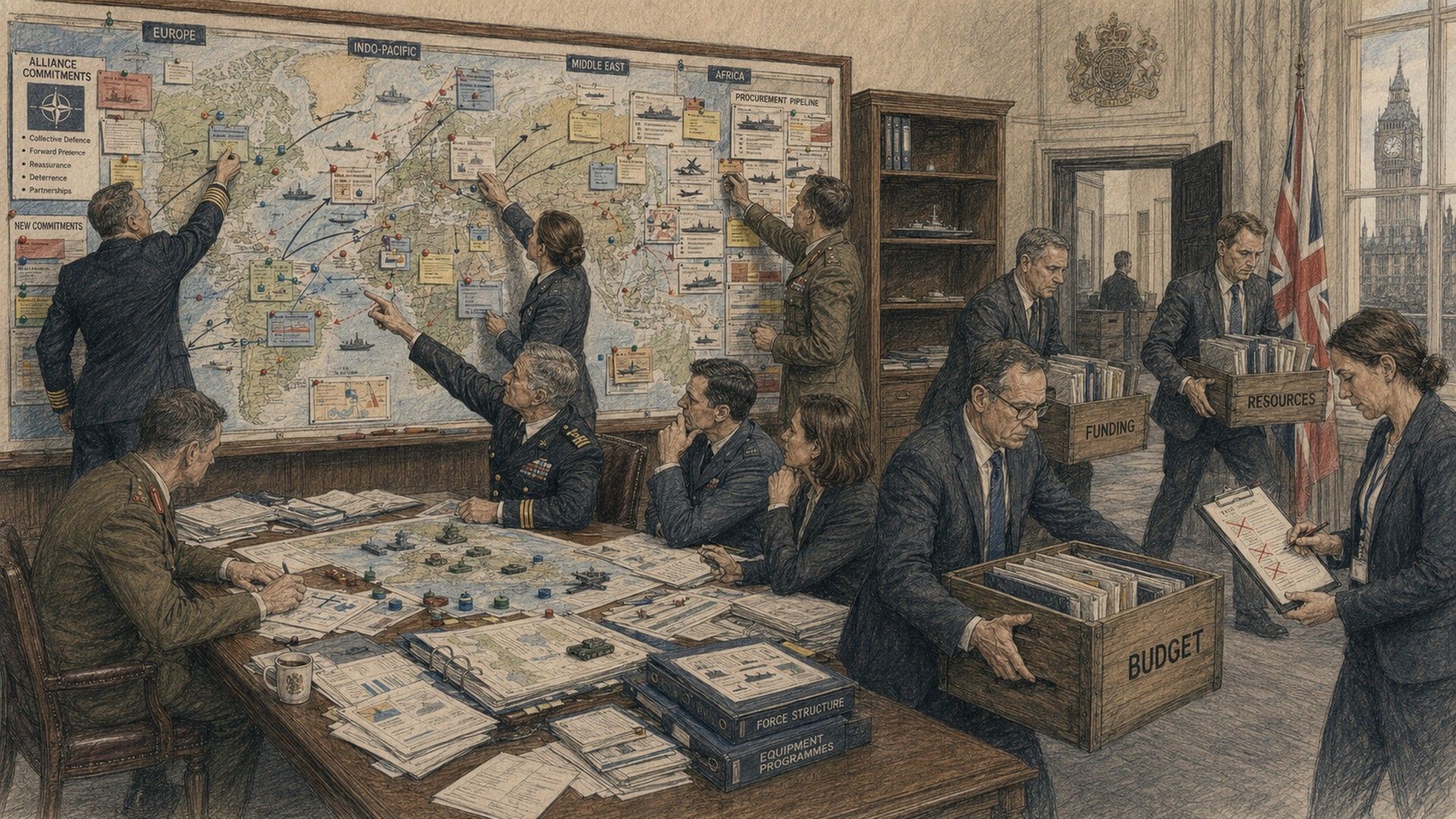
The ugly part is defence. Britain talks like a serious security power, but its military planning has too often promised more than the country is willing to fund.
The problem did not start with Starmer, but his government failed to solve it. London has stacked up commitments, targets and slogans without giving voters a clear account of the cost. That gap is now becoming dangerous.
Washington steps back, London scrambles
The central shock is America. The United States is no longer the automatic European security backstop it once was, and Washington is demanding that allies carry more of the burden.
That leaves Britain exposed. If the US pulls resources from Europe and focuses harder on China, the UK cannot rely on old habits. It needs a longer-term defence bargain with European partners – and it needs to pay for it.
The EU reset is already wobbling
Starmer’s EU reset began with promise, including a new security and defence partnership. But the breakdown of talks over UK access to the EU’s SAFE defence financing scheme showed how fragile the process remains.
For the next prime minister, this cannot be treated as a side issue. Britain needs a serious way into European defence funding and procurement. Europe needs more capability. Britain needs a role. Both sides lose if the reset gets trapped in process.
China rivalry squeezes Britain
The commentary also warns that US–China competition is turning trade, technology and supply chains into weapons. Tariffs, export controls and pressure tactics are now part of the strategic landscape.
Britain has started thinking about economic coercion and has moved to deepen ties with partners such as Japan. But that is not enough. The next government needs a sharper grip on how trade, security and technology now collide.
Whitehall is not ready
The machinery of government is another weakness. The Foreign Office is going through a major restructure just as the world is becoming harder to read.
There is also a shortage of deep China expertise across government. That matters because China is no longer just a foreign policy file. It touches growth, infrastructure, technology, supply chains and national security.
The hard lesson: Britain needs strategy, money and honesty.
The Chatham House warning is clear: a new face in Downing Street will not fix the strategic squeeze. Britain must explain to the public why defence spending, EU cooperation and economic security now matter to daily life.
The next prime minister can reset the tone, but not the facts. The US is less reliable, Europe is more urgent, China is more central and Britain’s old foreign policy comfort zone is gone.
The world has changed. Britain has not caught up.