
World Center for Strategic Studies
From closed analysis to public debate
POPULAR
- MONTH
- YEAR

Geopolitical EU Meets Trump 2.0: Storm Warnings After 100 Days
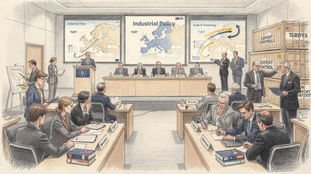
The analysis takes stock of Europe’s position one hundred days into Donald Trump’s return to the White House and finds a Union talking geopolitics while bracing for turbulence it cannot control. The EU wants to act like a strategic power, but Trump’s early moves expose how thin that ambition still is. The piece argues that Europe is navigating the storm with limited instruments, fragile unity and heavy dependence on decisions made in Washington.
Europe and China: Caught Between Dependence and Denial

The analysis delivers a blunt assessment of Europe’s China policy and finds a continent stuck in the middle with shrinking room to manoeuvre. Brussels talks about de-risking, resilience and strategic realism. In practice, Europe remains deeply entangled with China economically while lacking the power or unity to shape the relationship on its own terms. The paper argues that Europe is trying to manage a rivalry it did not choose, with tools that are not strong enough.
Farewell to Human Security: Europe’s Values Get Squeezed Out
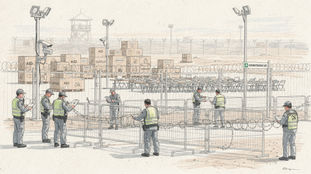
The analysis delivers a stark diagnosis of a quiet but consequential shift in EU thinking. Human security, once held up as a guiding idea that put people at the centre of policy, is fading fast. In its place comes a harder, narrower focus on borders, deterrence and state power. The piece argues that Europe is not openly rejecting its values, but steadily sidelining them under pressure.
America’s Hemisphere First: Europe on the Back Foot After Trump’s Venezuela Strike

The commentary delivers a stark wake-up call to Europe after Donald Trump’s military strike and capture of Venezuela’s president. What should have been a distant regional event has immediate geopolitical recoil for the EU. The piece argues that Europe’s policymakers face a harsher world order where the US prioritises its own strategic agenda, ignores international norms and uses force with growing ease.
Democracy in Europe: Shielding the System or Rewriting It

The analysis takes aim at Europe’s growing unease with its own democratic model and asks an uncomfortable question – is the EU trying to protect democracy, or quietly reinvent it to survive political stress. The piece argues that Europe is no longer confident that existing democratic rules can cope with polarisation, populism and external pressure. The response is not renewal through trust, but tighter control through redesign.
Venezuela’s Oil Comeback: Why Germany Gets the Short End
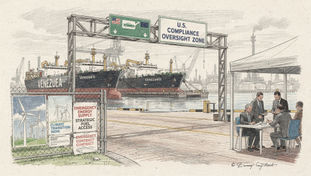
The analysis takes apart the quiet return of Venezuelan oil to global markets and shows why this matters far beyond Latin America. What looks like a technical energy adjustment is, in reality, a geopolitical win for the United States and a reminder of Europe’s shrinking leverage. The paper argues that Germany, in particular, is watching others reshape energy flows while having little influence over the outcome.
Europe and the AGI Shock: Behind Before the Race Starts

The analysis asks a question Europe is quietly afraid of answering – is it ready for the rise of artificial general intelligence. The answer, stripped of polite language, is no. While AGI is still emerging, the paper argues that Europe is already falling behind on the basics: investment, infrastructure, talent and governance speed. By the time AGI becomes real, Europe risks being a rule-taker in a world shaped elsewhere.