World Center for Strategic Studies
From closed analysis to public debate
- MONTH
- YEAR

Europe’s “strategic autonomy” fantasy is collapsing: the EU still can’t stand up to the US or China
This Institut Montaigne piece argues that Europe is being forced into an uncomfortable choice it has spent years trying to dodge. The EU talks endlessly about “strategic autonomy”, but in reality it remains squeezed between America’s hard power and China’s economic pull. The article’s message is blunt – autonomy is not a slogan, it is a cost. And Europe has not paid it. Faced with Beijing’s rise and Washington’s pressure, the EU cannot keep pretending it can have full independence without major compromises.
Strategic autonomy sounds nice – until you test it
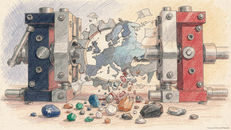
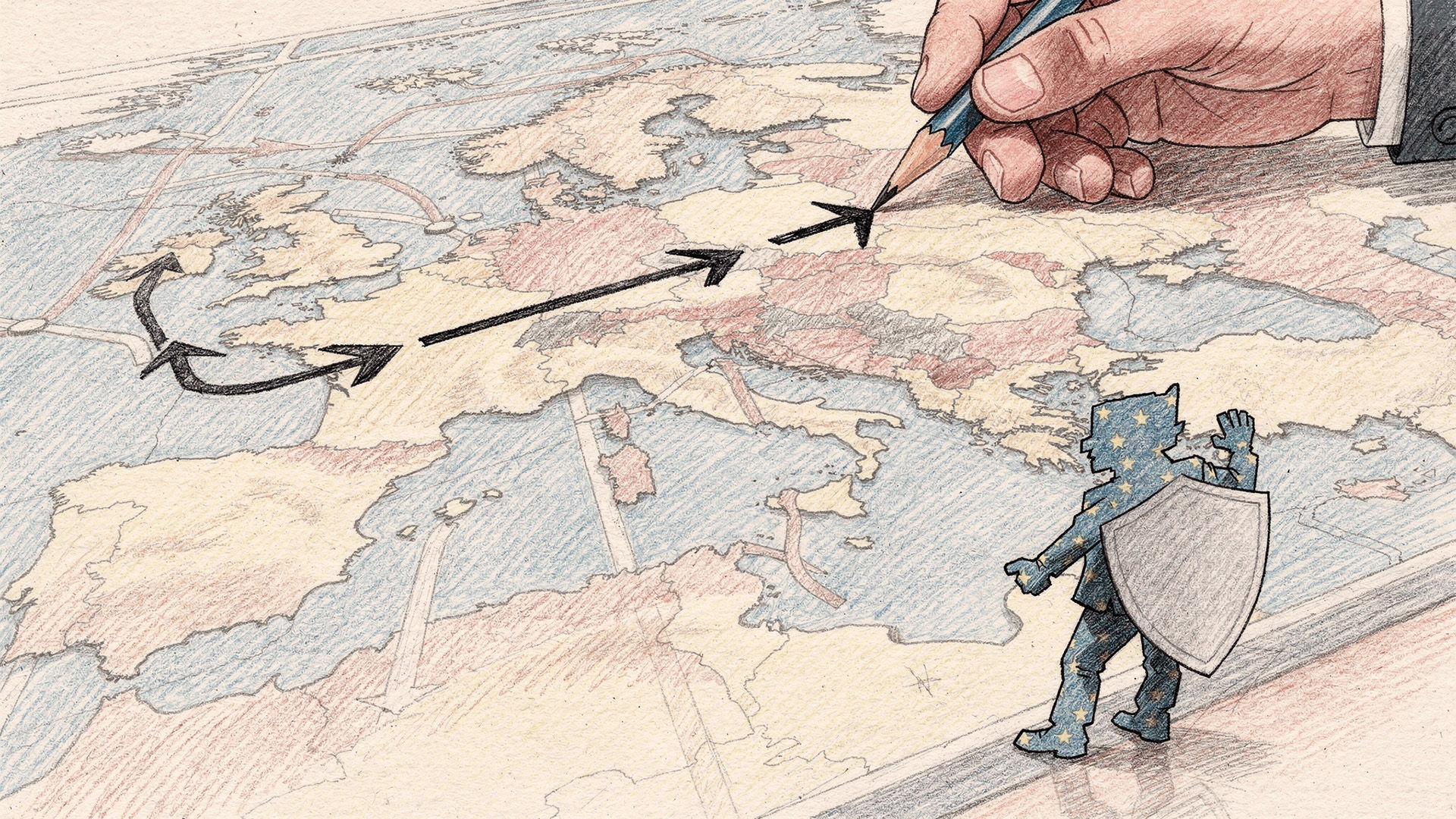
The author frames “strategic autonomy” as a seductive European idea that collapses under pressure. Europe wants to be a power, but it behaves like a middleman – dependent on the US for security and linked to China for trade and industrial supply chains.
When tensions rise, Europe’s room to manoeuvre shrinks fast. Autonomy becomes less a policy goal and more a political comfort blanket.

Washington’s message to Europe: choose the alliance
The United States increasingly expects alignment, especially on China. From technology controls to trade and investment screening, the US wants Europe to move in step.
The article suggests that Europe’s problem is not just external pressure – it is the fact that the US relationship is not optional. Europe’s security dependence makes “independent strategy” difficult to deliver, no matter how often Brussels repeats the phrase.
China is the real long-term challenge
China is portrayed as the deeper strategic threat because it combines economic scale with political ambition. It can leverage Europe’s market access, supply chains, and business interests to dilute EU resolve.
The EU would like to reduce risk without provoking conflict, but Beijing’s model is built around influence, dependency and strategic advantage. That makes a neutral European position increasingly unrealistic.
Europe’s compromise problem: it wants everything at once
The article highlights the EU’s core contradiction. Europe wants autonomy, but also wants American protection. It wants to resist China, but also wants Chinese trade and investment. It wants influence, but avoids the hard tools of power.
This balancing act produces hesitation, mixed messaging and weak enforcement. Europe ends up looking indecisive – and rivals exploit that.
What Europe should do instead
Institut Montaigne argues Europe should prioritise realism over rhetoric. That means accepting that the EU cannot fully separate itself from the US, while still defending European interests through targeted industrial policy, stronger security capabilities, and clearer red lines on critical technologies.
The goal becomes a managed compromise – staying anchored to the transatlantic alliance while reducing vulnerability to Chinese leverage.
The reality check: Europe must choose a path
The article’s conclusion is sharp – the EU cannot keep selling “strategic autonomy” as if it is a free upgrade. Autonomy requires investment, unity and political backbone, and Europe is short on all three.
The uncomfortable truth is that Europe is already being forced to choose – and delaying the decision only makes the choice harsher.
The brutal takeaway: Europe wants autonomy, but won’t pay for it
Europe keeps selling “strategic autonomy” like it’s a free upgrade – a nicer slogan, a tougher posture, zero real cost. But in the real world autonomy means money, power and painful choices, and the EU is dodging all three.
The result is predictable: Europe talks big, then folds under pressure from Washington or Beijing. Unless the EU starts paying the price of independence, it will remain what it already looks like – a bloc that wants to lead, but can’t even control its own fate.