World Center for Strategic Studies
From closed analysis to public debate

- MONTH
- YEAR

Old World Growing Even Older What Migration and Pension Expenses Have to Do with This
The population of the European Union is getting older at an accelerating rate. The number of elderly people is growing in all the countries of the continent, with their birth rates falling just as rapidly. A low-probable or, more precisely, almost non-existent prospect of the latter’s recovery actually leaves the EU countries with just one way to mitigate the economic consequences of ageing: to get increasingly addicted to the migration drug. The costs of flirting with migrants are now evident to everyone in Europe.
The data received from several member countries indicate their willingness to raise the share of migrant workers in the total volume of migration on account of reduced asylum migration and migration for family purposes.
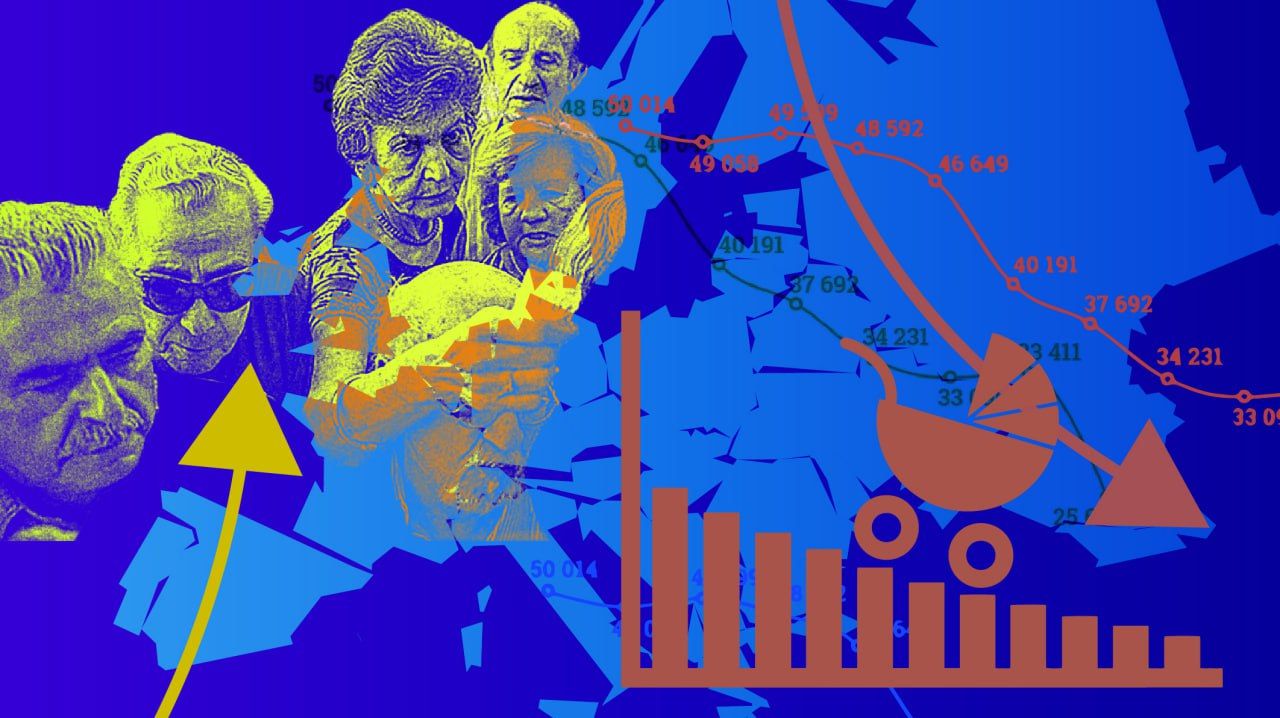
The share of persons aged over 65 divided by the number of persons of working age is predicted to grow sharply in all the EU countries. Population ageing results from two purely demographic trends combined: a decreasing birth rate and a growing life expectancy. Inexorable statistics says that the ageing generation of baby boomers will generally live longer than their parents did. By 2070, the continent’s population will mainly consist of elderly people, with an insignificantly smaller share of people in working age (20 to 64) and a more visible fall in the number of children and young people (aged under 20).
A steady increase in public health expenditures will predictably follow, with education spending expected to decrease as the total number of children dwindles.
Another consequence is that many EU countries will have to reform their public pension schemes in the future. They are sure to become less generous to pensioners. The burden of State pension payments will be offloaded to citizens’ own savings.
As for migration, Europe is clearly expected to pursue a migration policy that facilitates the issue of residence permits to hired workers along with migrant students while trying to restrict access for asylum-seekers and some migrants wishing to join their families.
Put simply, Europe will stake on migrant workers and students. However, it is unclear how politically acceptable such migration will be – for the number of jobs and student places will shrink with the share of working age people and youth. Competition will grow between locals and migrants, and conflict situations will inevitably follow.
Besides, skilled workers and university applicants are obviously a small proportion in the huge numbers of migrants who already besiege Europe. Their overall quality level can hardly be raised.
All that means that by the mid-21st century, then European pensioners will simply be doomed to live with more limited means (the States are almost sure to optimize their pension spending even though some people will fall short of making savings of their own). They will live next to European young people; of these, not all will be able to get a decent education and good employment despite their smaller numbers. For they will have to struggle for that against a layer of migrants with brains – a thin but quite representative one, – while spending on education will decrease. All that amid millions of unorganized and very marginal newcomers to whom Europe has opened its doors so thoughtlessly and who will never return home on their own.