
World Center for Strategic Studies
From closed analysis to public debate

- MONTH
- YEAR

Unsafe ‘Safe Countries’ Is the EU Dumping Its Migration Responsibility on Third Countries Again?
The European Parliament has endorsed an asylum reform that expands the use of the ‘safe third country’ concept and introduces the European Union’s common list of ‘safe countries of origin’. This reform represents more than a technical adjustment of asylum procedures, as it signals a structural reorientation of EU asylum governance toward faster filtering of claims and greater reliance on external actors.
Amal El Ouassif, senior international relations specialist at the Policy Center for the New South (PCNS) and a PhD candidate in Forced Displacement, has examined the issue in detail in her policy brief.
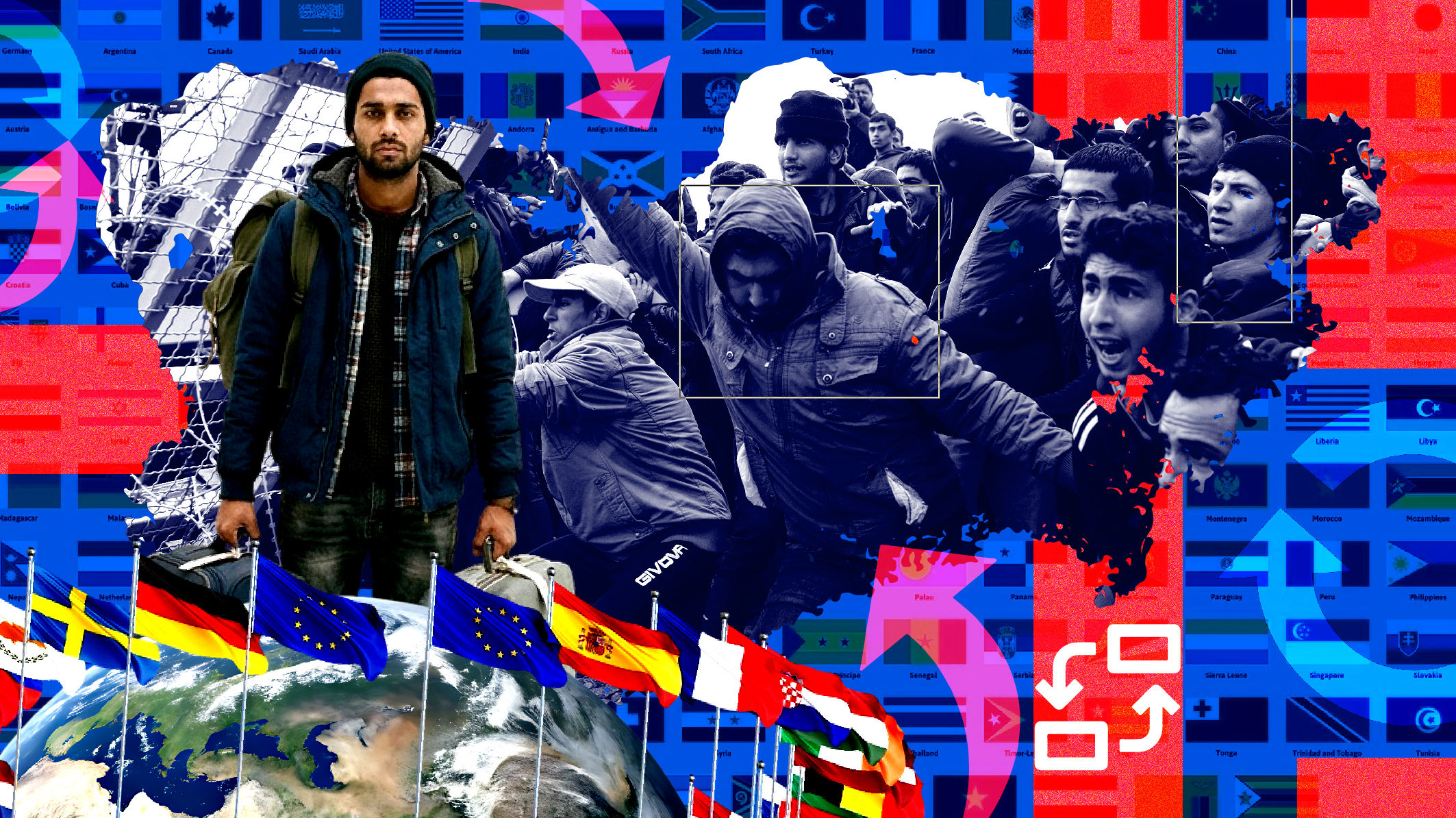
The author concludes that the concept of a safe third country allows EU countries to declare an asylum application inadmissible if there is another country to which the applicant could be redirected and where he/she could formally be considered safe. The reform simplifies the conditions for applying this concept.
It also reflects a deeper transformation in the European Union’s migration policy. European migration governance increasingly relies on externalization, meaning the transfer of responsibilities for migration control and asylum processing beyond EU territory.
The expansion of the safe third country concept introduces a series of complexities that challenge its implementation and raise important legal questions. The list of ‘safe countries’ currently includes Bangladesh, Colombia, Egypt, India, Morocco, Kosovo, and Tunisia.
Ms. Amal El Ouassif writes that a central issue is the definition and assessment of ‘safety’. EU law requires that a country designated as safe must guarantee protection against persecution and ensure respect for the principle of non-refoulement. However, the designation of safety often reflects political judgment rather than a comprehensive and dynamic evaluation. Human rights organizations have repeatedly documented gaps between formal commitments and actual practices.
By facilitating the transfer of asylum seekers to third countries, the EU effectively extends its asylum system beyond its borders. However, this extension is not necessarily followed by a transfer of resources or decision-making authority. Partner countries may find themselves assuming greater responsibilities without commensurate support.
If partner countries perceive externalization as a heavy burden, rather than genuine partnership, their willingness to cooperate may decline to none. This could limit the effectiveness of the reform and lead to renewed fragmentation within the European asylum system.
To sum up, we can safely say that the reform will certainly affect migration flows outside Europe. Limited access to asylum procedures within the EU may lead migrants to look for alternative routes or destinations. That could shift the pressure to other regions or create new mobility patterns. That could also increase dependence on informal networks, which may potentially have security and governance implications. Unpredictability is the first step towards a new chaos.