World Center for Strategic Studies
From closed analysis to public debate
- MONTH
- YEAR

One year liberation day: The delusion of transatlantic economic divorce
On April 7, 2026, the Centre for European Reform published at its web-site an article dedicated to the 1 year anniversary of the EU goods duties imposed by Donald Trump.
On April 2, 2025, Trump signed an order to introduce 20% customs duties on the goods from the EU and declared that date a “Liberation Day”. This past year has shown that it gave the US nothing and exacerbated the problems in the EU.
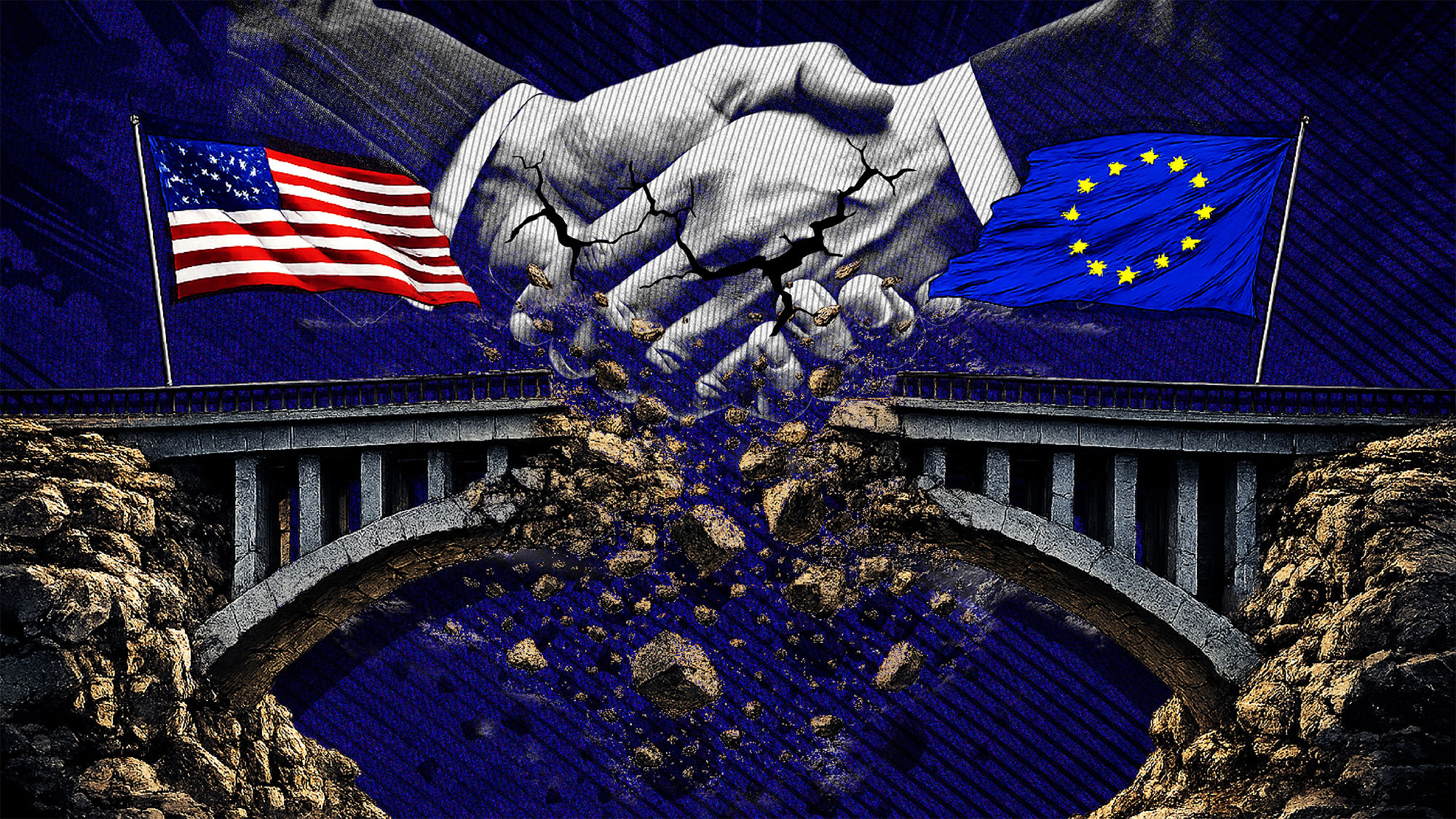
America’s fiscal and trade deficits remain record high, China’s export surge continues, Europe is left increasingly exposed. A year after Liberation Day, Washington and Brussels are still fighting each other, and not China.
The EU-US economic ties remain the largest in the world, with roughly $1.6 trillion and several trillion in cross-border investment.
Europe outproduced the US in traditional industries: steel, vehicles, ships, and civil aircraft. Manufacturing accounts for 16.4% of value added vs. 11% in the US. Traditional industries employ around 30 million people in the EU, 13 million in the US.
But Europe relies heavily on the US for technology, artificial intelligence and software. The EU may seek to reduce risk of dependency on US finance and technology, but US advantages in research, development, and innovations make decoupling of the economies unrealistic.
Washington tried to counter China in the area of critical minerals with the February 2026 Critical Minerals Ministerial and the Minerals Security Partnership bringing together 55 countries and the EU.
However, Trump prioritised stockpiling, he is embracing his own resource nationalism. His cooperation with allies is based on the jingoistic America First principle undermining trust. Building rare earth supply chains requires decades-long cooperation, which is impossible without trust.
Europe is now facing the shock of their competition with China. It is striking the core of Europe’s industrial economy: cars, chemicals, machinery and aerospace. Germany is in the center of this shock. Its industrial production has fallen to roughly 2004 level, hit by an energy shock from decoupling with Russia and exports drop from intensifying Chinese competition.
China’s challenge is not only economic but strategic. It is a system that exports far more than it imports, subsidises advanced manufacturing, and changes the industrial base of its partners.
Some in Europe argue that the EU should pivot to China, like Canada did. But Canada sells such commodities as oil, gas and metals that China imports, and Europe has nothing to sell to China.
The US tariffs against China contributed to industry relocating to third countries such as southeast Asia or Mexico rather than bringing them back to the US.
The EU is about to repeat this experience. The Industrial Accelerator Act introduces requirements limiting China’s content in import. But the EU has free trade agreements with 76 countries. It means that tariffs against China will simply change the supply routes for the Chinese goods.