World Center for Strategic Studies
From closed analysis to public debate

- MONTH
- YEAR

A Ruthless Diagnosis. Europe More Paralyzed than Divided
When crisis strikes, we divide, and division breeds inaction. This is the general understanding about Europe’s role in the world. But a look at events in the Middle East suggests that this is not always the case. Europe is more paralyzed than divided over the illegal US-Israeli war on Iran.
This is the conclusion that Nathalie Tocci, part-time professor at the School of Transnational Governance and honorary professor at the University of Tübingen, makes in her think piece.
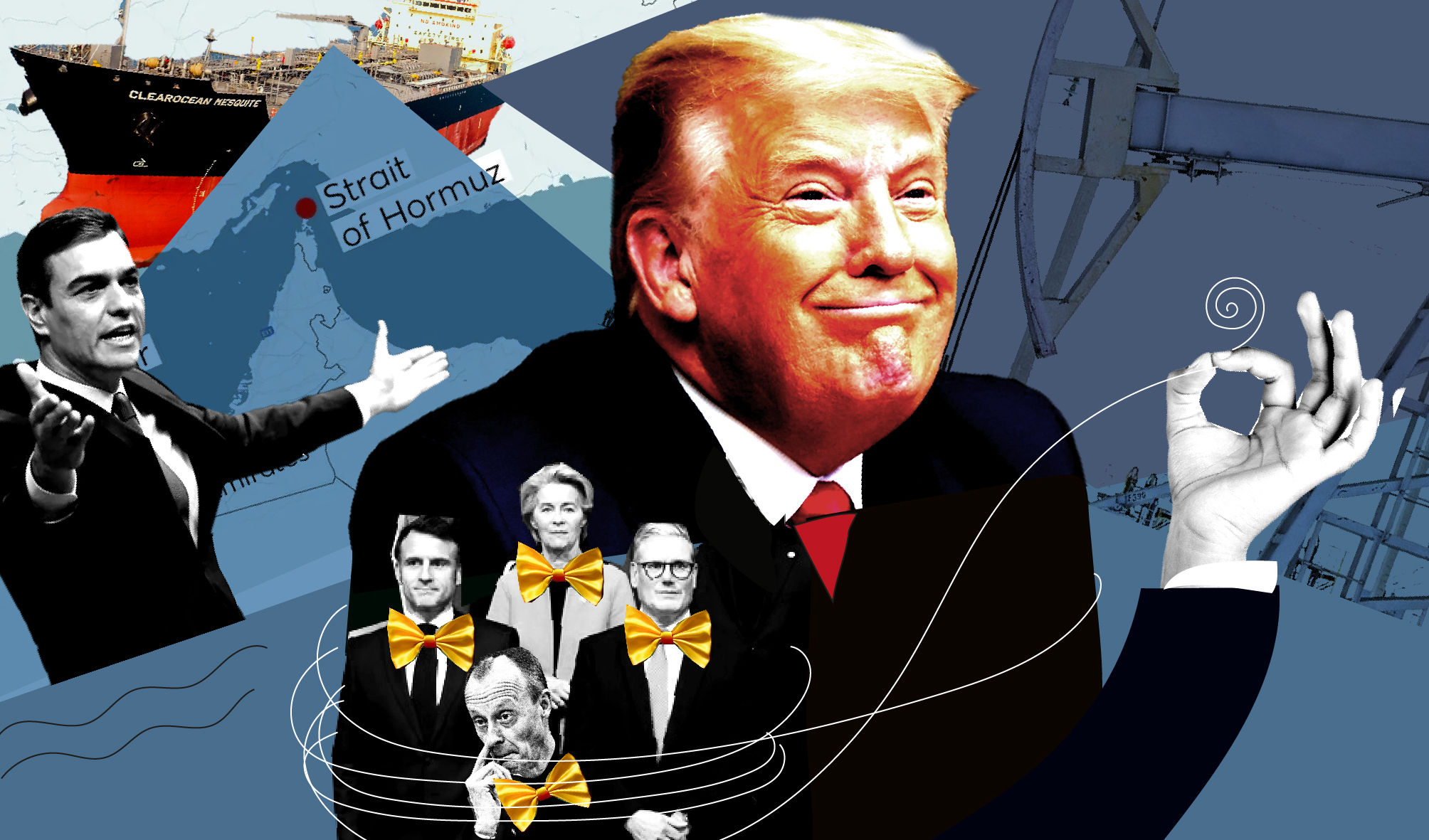
The author believes that, rather than fostering collective action, this crisis is hollowing out Europe’s identity and undermining its ability to act independently and defend its position.
This has already happened within a single generation. The 2003 war in Iraq was the quintessence of European division. France and Germany vehemently opposed the US-led invasion, while the UK, Italy and Spain backed the US aggression, on the contrary. Most former Soviet bloc countries, that were preparing to join the EU, supported Washington unanimously because they saw it as the symbol of future freedom and security.
It was precisely at that time that U.S. defense secretary Donald Rumsfeld made the notorious distinction between ‘old’ and ‘new’ Europe. The Iraq war created a triple partition: within the then EU, between ‘old’ and ‘new’ Europe, and across the Atlantic.
The shock galvanized Europe to urgently reflect on its identity and global role. Millions of Europeans took to the streets to protest against the US war, and renowned intellectuals such as Jürgen Habermas and Jacques Derrida articulated a vision of a common European identity rooted in multilateralism and international law. The Iraq war thus marked a pivotal moment in the formation of a European identity.
It also spurred agency. Unable to prevent the war, Europeans rediscovered their collective purpose within the ‘E3/EU+ 3’ multilateral format (France, Germany and the UK with the EU, plus China, Russia and the USA) that had managed the Iranian nuclear file until its successful conclusion with the 2015 agreement. To this day, that nuclear deal with Tehran, sabotaged by the first Trump administration, remains Europe’ s most significant diplomatic achievement.
Today Europe’s observed response to the new U.S. war against Iran is quite the opposite.
With the exception of the Spanish prime minister, Pedro Sánchez, who courageously condemned the war and refused the use of jointly operated bases on Spanish territory for that purpose, and the Slovenian and Norwegian governments, most European leaders have adopted an ambiguous stance – while recognizing that the US and Israeli attacks violate international law.
Yet the recognition entailed no condemnation. The Italian prime minister Meloni, while admitting that the war violates international law, declared that she neither condemned nor condoned the action. The FRG Chancellor Merz claimed that international law was not a useful framework and that this was not the time to preach to friends and allies. Von der Leyen stated that debating whether the war is one of choice or of necessity ‘partly misses the point’ and that Europe must accept the world as it is.
Europe has long claimed that its collective identity is based on rights, law and multilateralism. This is how European integration has developed internally and how European governments have presented themselves to the world. If Europe abdicates its commitment to democratic rules, norms and law, it simply ceases to exist as a collective entity. European integration is hollowed out from within.
If Europe abandons its principles and laws externally, it will not emerge as a muscular global player but will instead be pushed and pulled by predatory powers such as Russia and the USA, the author argues. The shock of division over Iraq in 2003 nurtured a shared sense of European identity; and today the cowardice of many European leaders is undermining the collective sense of ‘who’ Europe is and what it wants to achieve in the world. Cowed by Washington and drawn into a war, the brunt of whose consequences they and the Middle East will bear, European leaders are undermining their own ability to act. At a time when they give passionate speeches about European independence, their subservience is making Europe far less sovereign on the world stage than it used to be a quarter of a century ago. And that is only the beginning. With politicians acting this way, European identity will increasingly be eroded.